

If you’ve been logging your miles on the A1A, swapping your favorite Boca Raton bistro meals for kale salads, and religiously tracking every calorie only to see the scale refuse to budge, you aren’t alone. It is one of the most soul-crushing experiences in the world of wellness: doing everything "right" and getting zero results.
At VidaVital Medical, we see patients every day who feel like they are failing at weight loss. But here is the truth we want you to hear: It’s not a personal failing, and it’s likely not a lack of willpower.
When traditional dieting fails, it’s usually because your body’s internal "instruction manual": your hormones: is sending the wrong signals. Think of your hormones as the software that runs your metabolic hardware. If the software is glitched, no amount of exercise (the hardware) will produce the output you want.
In this guide, we’re diving into the 10 real reasons your weight loss has stalled and how we use hormone optimization in our Boca Raton clinic to help you finally reclaim your health.
1. Your Thyroid Is "Sleepy" (Hypothyroidism)
Your thyroid is the master regulator of your metabolism. It’s like the thermostat in your home; if it’s set too low, everything stays cold and sluggish. When your thyroid hormones (T3 and T4) are low, your body slows down its calorie-burning engine to conserve energy.
Even if your "standard" lab results come back within the "normal" range, you might still be suffering from subclinical hypothyroidism. We look deeper than standard labs to ensure your thyroid is functioning at an optimal level, not just a "surviving" level.
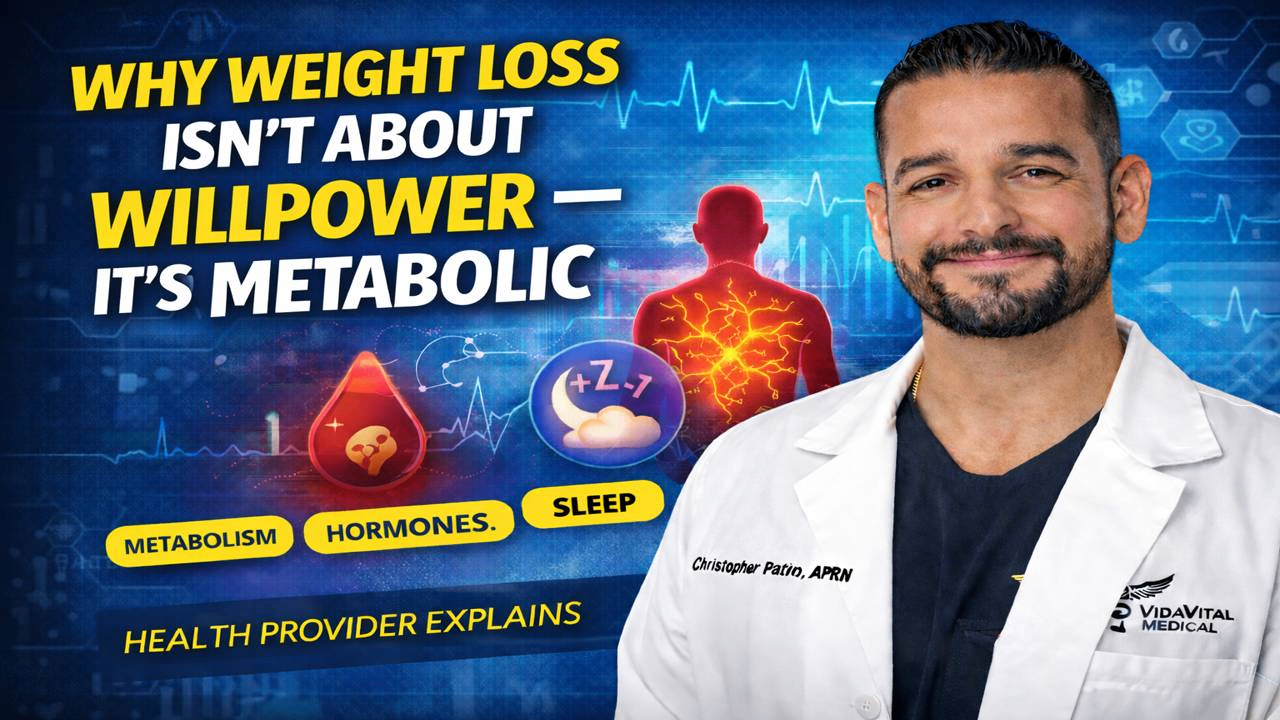
2. Insulin Resistance: The "Fat Storage" Trap
Insulin is a hormone that manages your blood sugar. When you eat, your body releases insulin to move sugar into your cells for energy. However, if your cells become "deaf" to insulin (insulin resistance), your body responds by pumping out even more of it.
High levels of insulin tell your body one thing: Store fat and do not burn it. This creates a biological wall that makes weight loss nearly impossible until insulin levels are brought under control.
3. The Cortisol Connection (The Belly Fat Hormone)
We live high-performance lives here in South Florida, but chronic stress is a weight loss killer. When you’re constantly "on," your adrenal glands pump out cortisol. While cortisol is necessary for the "fight or flight" response, chronically high levels signal your body to store fat specifically in the abdominal area.
If you find yourself with "stubborn belly fat" despite a clean diet, your stress hormones might be the culprit. Fixing this requires more than just a vacation; it requires balancing the endocrine system.

4. Low Testosterone (It’s Not Just for Men)
Muscle is metabolically active tissue: it burns calories even while you’re sleeping. Testosterone is the primary hormone responsible for building and maintaining that muscle. When testosterone levels drop: which happens naturally as we age: muscle mass decreases, and body fat increases.
This isn’t just a "man’s issue." Women also need healthy levels of testosterone for metabolic health and energy. You can learn more about how to boost testosterone naturally and through medical optimization to fire up your fat-burning potential.
5. Estrogen Dominance and Progesterone Imbalance
For many women (and some men), an imbalance between estrogen and progesterone can lead to significant weight gain, particularly around the hips and thighs. Estrogen is a growth hormone; when it isn’t balanced by progesterone, it can lead to water retention and increased fat storage.
As we approach perimenopause or andropause, these fluctuations become more volatile, making weight management feel like a losing battle.
6. Your "Hunger Hormones" Are Out of Sync
Have you ever felt like you just can't stop thinking about food? That’s likely an imbalance between Ghrelin (the "I'm hungry" hormone) and Leptin (the "I'm full" hormone).
If you are "leptin resistant," your brain never gets the signal that you’ve had enough to eat. This often happens due to poor sleep, high stress, or a diet high in processed sugars. When we optimize these signals, the "white-knuckle" cravings often disappear.
7. The Role of Peptides in Metabolic Health
Traditional dieting often ignores the cellular communication happening in your body. This is where peptide therapy comes in. Peptides are short chains of amino acids that act as signaling molecules. They can help "nudge" your body to release growth hormones, improve insulin sensitivity, and accelerate fat loss.
Many patients ask, "Are peptides safe?" When administered under the expert supervision of our medical providers, peptides can be a transformative tool in breaking through weight loss plateaus that have lasted for years.
8. Poor Gut Health and the Microbiome
Your gut is often called the "second brain," but it’s also a major hormonal hub. If your gut microbiome is imbalanced, it can lead to systemic inflammation. Inflammation interferes with hormone signaling, particularly insulin and leptin. If your gut is "leaky" or inflamed, your body will prioritize survival over fat loss every single time.
9. Nutrient Deficiencies Mimicking Slow Metabolism
You could be eating plenty of calories but still be "starving" at a cellular level. Deficiencies in Vitamin D, B12, Magnesium, or Zinc can halt the chemical reactions needed for fat metabolism. For example, Vitamin D acts more like a hormone than a vitamin; low levels are strongly linked to obesity and metabolic syndrome.
10. The "Willpower Myth" and Mood Health
Weight loss isn't just physical; it's emotional and neurological. If your neurotransmitters (like serotonin and dopamine) are low, you are more likely to seek out "comfort foods" to get a temporary chemical boost.
Addressing the connection between hormones, peptides, and mental wellness is a core part of our philosophy. When you feel better mentally, the lifestyle choices required for weight loss become much easier to maintain.
How to Fix It: The VidaVital Approach
If the list above feels overwhelming, remember: you don't have to solve this alone. At VidaVital Medical, we don't believe in "cookie-cutter" weight loss programs. Your biology is unique, and your treatment should be too.
Step 1: Comprehensive Testing
We start with advanced blood panels that go beyond the basics. We look at your full hormonal profile, inflammatory markers, and nutrient levels to see exactly where the "blockage" is.
Step 2: Personalized Hormone Optimization
Once we identify the gaps, we create a plan to restore balance. This might include Bioidentical Hormone Replacement Therapy (BHRT), thyroid support, or peptide therapy to get your metabolism back on track.
Step 3: Longevity Coaching
Weight loss is a marathon, not a sprint. Our longevity coaching provides the ongoing support, nutritional guidance, and accountability you need to ensure the weight stays off for good.

Why Boca Raton Chooses VidaVital Medical
We understand the unique lifestyle of our South Florida community. Whether you are visiting our offices in Coral Gables, Brookfield, Omaha, or right here in our flagship Boca Raton area, you can expect a level of care that prioritizes your long-term health over "quick fixes."
Weight loss shouldn't be a battle against your own body. By optimizing your hormones, you stop fighting your biology and start working with it.
Takeaway Checklist:
- Stop Blaming Yourself: If diet and exercise aren't working, it’s likely a hormonal "glitch."
- Get the Right Labs: Standard blood work often misses subclinical hormonal issues.
- Prioritize Sleep: 7–8 hours is non-negotiable for hormone regulation.
- Manage Stress: High cortisol will lock your fat cells, especially in the midsection.
- Partner with Experts: Work with a team that understands the complex interplay of hormones and metabolism.
Are you ready to stop guessing and start seeing results? You deserve to feel vibrant, energetic, and comfortable in your own skin.
Ready to start your journey? Reach out to us at VidaVital Medical today to schedule your comprehensive hormonal evaluation. Let's build your personal health team and get you back to the best version of yourself.