

You've probably heard the success stories about GLP-1 drugs like Ozempic and Wegovy from neighbors here in Palm Beach County. Maybe you've even tried traditional weight loss programs at local clinics without lasting results. If you're wondering whether these new medications are truly better than medically managed weight loss programs, or if they're just another expensive trend, you're asking exactly the right question.
The truth is more nuanced than most people realize, and the answer depends heavily on factors that many patients (and even some doctors) overlook entirely.
What Most People Get Wrong About GLP-1 Weight Loss Drugs
The biggest misconception? That GLP-1 medications are a magic bullet that works without ongoing support.
Here in South Florida, we're seeing patients who assume these injections work like a permanent fix. But the research tells a different story. While clinical trials show impressive results, 12-18% body weight loss, real-world outcomes are significantly lower. Among patients who stayed on semaglutide for obesity for a full year, the average weight loss was only 7%.
Even more concerning: 50-75% of patients discontinue GLP-1 treatment within the first year. That means three out of four people stop their medication before seeing sustained results, often due to side effects, cost concerns, or lack of proper medical guidance.

Another major misunderstanding is timeline expectations. GLP-1 drugs reach their maximum effectiveness for weight loss at 24-30 weeks, that's roughly six to seven months. Many Palm Beach County patients expect dramatic results within the first month and become discouraged when changes feel gradual.
GLP-1 Drugs vs. Medically Managed Programs: The Real Comparison
When we look at head-to-head effectiveness, GLP-1 medications do outperform traditional medically managed weight loss programs in clinical settings. Research from the University of Chicago found that alternative weight-maintenance programs are "slightly less effective" than long-term, full-dosage GLP-1 use.
But here's where it gets interesting: the gap narrows dramatically in real-world conditions.
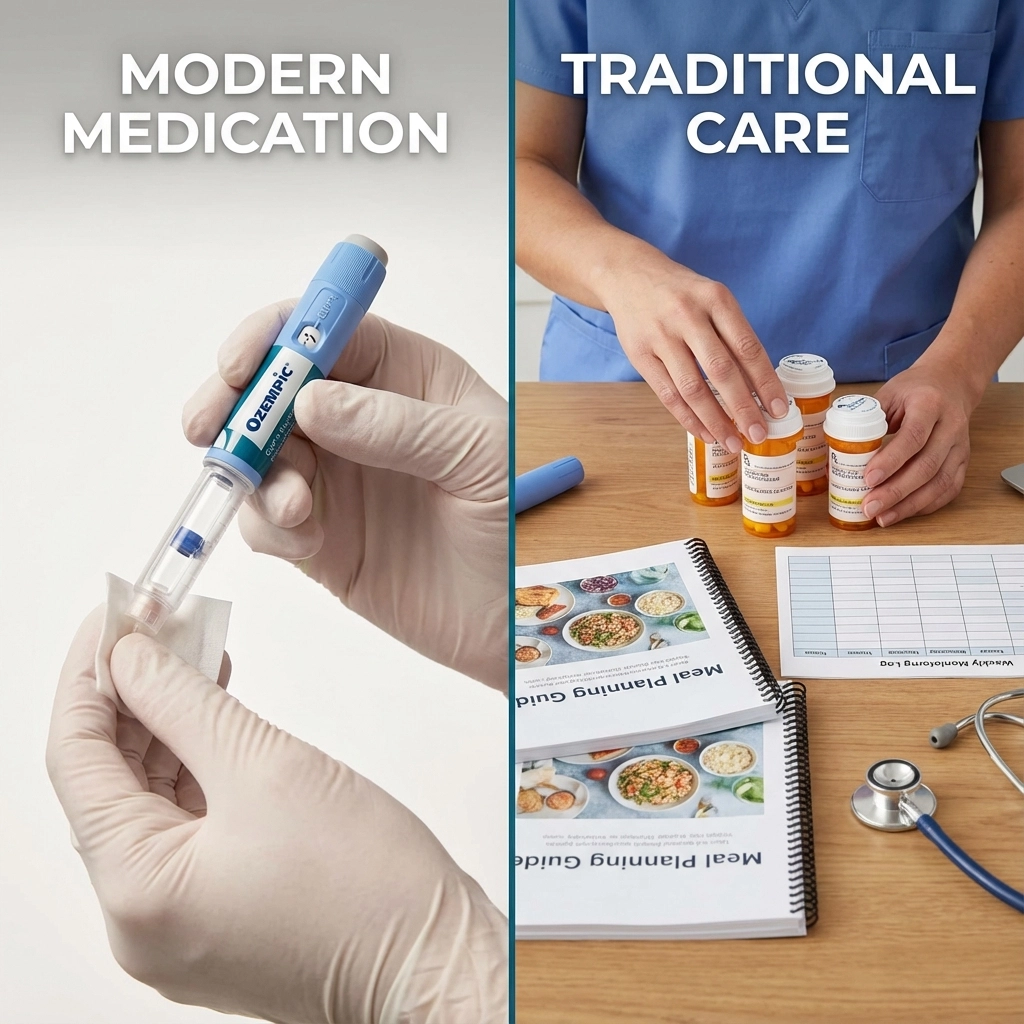
Traditional medically managed programs typically combine:
- Prescription appetite suppressants (like phentermine)
- Nutritional counseling and meal planning
- Regular medical monitoring
- Behavioral support and lifestyle coaching
- Sometimes additional therapies like B12 injections or lipotropic compounds
While these programs may not achieve the same peak weight loss percentages as GLP-1 drugs, they often have better long-term adherence rates. Patients in comprehensive medical weight loss programs typically stay engaged for 6-12 months, compared to the high dropout rates we see with GLP-1 medications.
The cost factor is also significant for many Florida residents. GLP-1 drugs can cost $800-1,200+ monthly without insurance coverage, while medically managed programs often run $200-400 monthly including medications, monitoring, and support.
Why Medical Oversight Matters More Than You Think
Whether you choose GLP-1 medications or a traditional medically managed approach, professional medical supervision is crucial for long-term success. This is especially important here in Palm Beach County, where many patients are managing multiple health conditions alongside weight concerns.
For GLP-1 medications, medical oversight helps with:
- Proper dosing titration to minimize side effects
- Managing drug interactions with other medications
- Monitoring for potential complications like gastroparesis
- Adjusting treatment when weight loss plateaus
- Developing transition strategies if you need to stop the medication
For traditional medically managed programs, supervision ensures:
- Safe use of prescription appetite suppressants
- Regular monitoring of blood pressure, heart rate, and other vital signs
- Nutritional adequacy as you reduce caloric intake
- Identification and management of underlying metabolic issues
- Behavioral support to address emotional eating patterns
Many patients in South Florida have tried DIY approaches or programs with minimal medical oversight, only to regain weight or experience health complications. The difference between supervised and unsupervised weight loss isn't just about results, it's about safety.
Timeline and What to Expect: Setting Realistic Goals
Months 1-2: Foundation Phase
Whether you start GLP-1 medications or a traditional program, the first 8 weeks focus on establishing routines and managing initial side effects. With GLP-1 drugs, you might experience nausea, constipation, or fatigue as your body adjusts. Traditional programs often involve appetite suppressant adjustment and intensive nutritional education.
Months 3-6: Active Weight Loss
This is when you'll see your most significant results. GLP-1 patients typically lose 1-2 pounds weekly during this phase, while traditional medically managed programs often produce 1-1.5 pounds weekly. Both approaches require consistent medical check-ins, monthly with GLP-1s, often every 2-3 weeks with traditional programs.
Months 6-12: Maintenance Focus
GLP-1 weight loss typically plateaus around 6-7 months. Traditional programs shift toward long-term lifestyle strategies during this phase. This is when medical oversight becomes even more critical, as both approaches require strategic adjustments to maintain progress.
Beyond Year One
Long-term success with either approach depends on sustained lifestyle changes and ongoing medical support. Research shows GLP-1 effects on blood sugar control may diminish after two years, while weight loss effects can be maintained longer with proper management.
The Hybrid Approach: Best of Both Worlds
Many successful patients here in Palm Beach County aren't choosing between GLP-1 drugs and traditional medically managed programs, they're combining elements of both.
This might include:
- Starting with a traditional medically managed program to establish healthy habits
- Adding GLP-1 medication if initial progress stalls
- Using traditional program components (nutritional counseling, behavior modification) to support GLP-1 treatment
- Transitioning from GLP-1 to traditional maintenance strategies for long-term sustainability
This hybrid approach often produces the best long-term outcomes because it addresses both the biological and behavioral aspects of weight management.

Which Approach Is Right for You?
Consider GLP-1 medications if you:
- Have a BMI over 30 (or over 27 with weight-related health conditions)
- Haven't succeeded with multiple traditional weight loss attempts
- Can commit to long-term treatment (potentially years)
- Have insurance coverage or can manage the monthly cost
- Don't have contraindications like personal/family history of thyroid cancer
Consider traditional medically managed programs if you:
- Prefer a comprehensive approach addressing behavior and lifestyle
- Want lower monthly costs with predictable pricing
- Have contraindications to GLP-1 medications
- Prefer frequent check-ins and hands-on medical support
- Want to develop sustainable habits rather than relying on medication long-term
Consider a hybrid approach if you:
- Want maximum flexibility and options
- Have complex medical conditions requiring intensive monitoring
- Are interested in transitioning between approaches based on results
- Want the security of having multiple strategies available
Frequently Asked Questions
Q: How long do I need to stay on GLP-1 medications?
A: Most experts recommend treating GLP-1 drugs like chronic disease management, potentially long-term or indefinitely. Stopping typically results in weight regain within months. This is why the high discontinuation rates (50-75% within a year) are so concerning.
Q: Can I switch from GLP-1 to a traditional program later?
A: Yes, but this transition requires careful medical planning. Your doctor needs to develop strategies to prevent weight regain while establishing new eating and exercise habits. Many Palm Beach County patients successfully make this transition with proper support.
Q: Do insurance companies cover medically managed weight loss programs?
A: Coverage varies significantly. Some insurance plans cover GLP-1 medications for diabetes but not obesity. Traditional medically managed programs are often considered cosmetic unless you have specific health conditions. Always check with your provider and the clinic about payment options.
Q: What happens if I have side effects with GLP-1 drugs?
A: Common side effects like nausea, constipation, and fatigue often improve with time and dosing adjustments. However, more serious effects like severe gastroparesis require immediate medical attention and potentially switching to alternative approaches.
Q: How do I find qualified medical supervision in Palm Beach County?
A: Look for providers who specialize in medical weight management, have experience with both GLP-1 medications and traditional approaches, and offer comprehensive monitoring. Board certification in obesity medicine or endocrinology is ideal.
The Bottom Line: Success Depends on Sustainability
The "better" choice between GLP-1 drugs and traditional medically managed programs isn't about which produces more dramatic short-term results. It's about which approach you can sustain long-term with proper medical support.
Both approaches work when implemented correctly with appropriate medical oversight. The key is finding a provider who can help you navigate the options, manage your individual health needs, and adjust your plan as circumstances change.
If you're ready to explore medically supervised weight loss options that fit your lifestyle and health goals, VidaVital Medical offers comprehensive programs designed for busy adults in South Florida. Our approach combines the latest medical treatments with practical lifestyle strategies, ensuring you have the support needed for lasting success.
Remember: the most effective weight loss program is the one you can stick with under professional medical guidance. Your journey toward sustainable weight management starts with making that first appointment.