

Published: January 1, 2026 | By: Dr. Sarah Chen, MD
You know that feeling when you get up from your desk and your knees remind you that you're not 25 anymore? Or when reaching for something overhead makes your shoulder protest in ways it never used to? You're not imagining things, and you're definitely not alone.
Here's what most people don't realize: those aches and stiffness that seem to appear overnight after 40 aren't just "normal aging" you have to accept. Peptide therapy is emerging as a game-changing approach to joint health that goes beyond masking pain: it actually helps your body repair and rebuild the tissues that keep you moving freely.
Let's get real about what's happening to your joints and how cutting-edge peptide treatments can help you reclaim your mobility and comfort.
Why Your Joints Start Protesting After 40
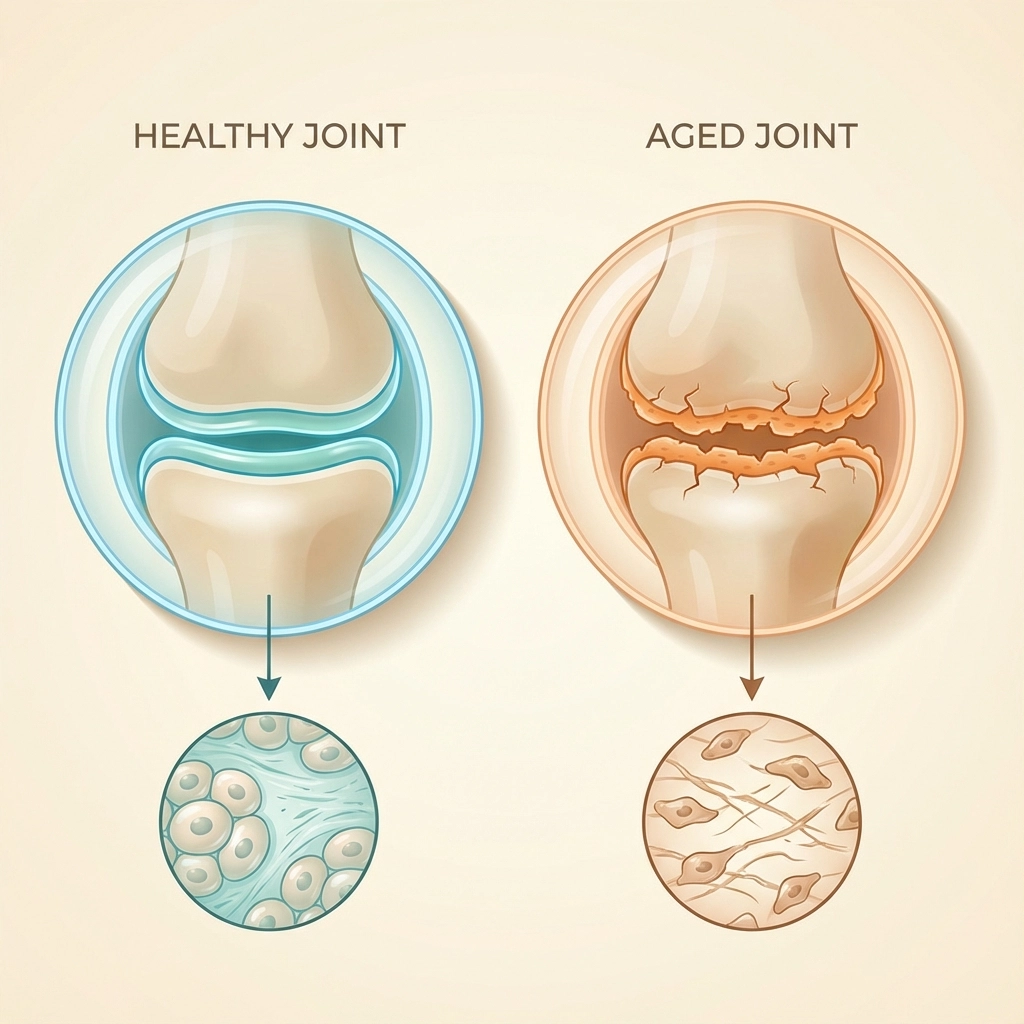
Sound familiar? You wake up feeling like the Tin Man from Wizard of Oz, needing a few minutes (and maybe some coffee) before your body remembers how to move smoothly. This isn't just in your head: significant changes happen to our joint health starting around age 40.
Collagen production drops by about 1% each year after age 30, accelerating after 40. Your cartilage becomes thinner, synovial fluid (the lubricant in your joints) decreases, and inflammation tends to stick around longer than it used to. Add in decades of wear and tear from sports, exercise, or just daily life, and you've got a perfect storm for joint discomfort.
But here's the thing: peptide therapy works by signaling your cells to repair damaged tissues and reduce inflammatory responses, targeting the root causes rather than just covering up symptoms.
How Peptide Therapy Actually Helps Your Joints
Think of peptides as your body's repair crew supervisors. These short chains of amino acids carry specific instructions to your cells, telling them to get busy with healing and regeneration. For joint health, they're particularly effective because they:
- Reduce inflammation at the cellular level – Unlike NSAIDs that temporarily block pain signals, peptides help decrease the inflammatory cascade that causes ongoing joint damage
- Promote tissue repair and regeneration – They stimulate your body's natural healing processes for cartilage, tendons, and ligaments
- Improve blood flow to joints – Better circulation means more nutrients and oxygen reaching damaged tissues
- Enhance collagen production – Your joints get the building blocks they need to maintain structure and flexibility
The research backing this up is solid. Animal studies show that specific peptides promote tissue-to-bone healing and significantly reduce inflammation at injury sites. More importantly for you, human patients typically notice improvements within 4–6 weeks, with optimal results appearing around 8–12 weeks.
The Star Players: BPC-157 and TB-500
Let's talk about the two peptides that are absolutely crushing it in the joint health space: BPC-157 and TB-500.
BPC-157: Your Joint's Best Friend
Known as the "Body Protection Compound," BPC-157 accelerates healing of tendons, ligaments, and muscle tissue while reducing inflammation. What makes it special for joint health is its ability to promote angiogenesis, basically, it helps grow new blood vessels in injured areas so healing nutrients can get where they need to go.
Real talk: BPC-157 has shown remarkable results for people dealing with:
- Chronic joint pain and stiffness
- Tennis elbow and other repetitive strain injuries
- Knee pain from old sports injuries
- Lower back issues from years of desk work
TB-500: The Recovery Accelerator
TB-500 complements BPC-157 by supporting muscular, ligament, tendon, and connective tissue repair. Think of it as the construction foreman that makes sure all the repair work is coordinated and efficient.
When used together: often called the "Wolverine Stack" by practitioners: these peptides create what many describe as an ultimate recovery protocol. You're not just managing symptoms; you're actually helping your body rebuild stronger, more resilient joint tissues.
What to Expect: Your Timeline to Better Joint Health
Let's be honest: the idea of injecting peptides can feel overwhelming at first. But here's what you can realistically expect:
Weeks 1-2: You might not feel much yet, but your body is getting to work at the cellular level. Some people report better sleep and slightly less morning stiffness.
Weeks 3-6: This is when most people start noticing real changes. Patients typically experience reduced joint discomfort, improved flexibility, and faster recovery from activities during this phase.
Weeks 8-12: The sweet spot. Optimal results typically appear around 8–12 weeks, with many reporting they feel like they've "turned back the clock" on their joint health.

Beyond Pain Relief: The Mobility Benefits You'll Love
Here's what gets exciting about peptide therapy for joint health: it's not just about reducing pain. The benefits that patients rave about include:
- Getting back to activities you've avoided – Whether that's playing with grandkids, returning to tennis, or just walking longer distances without discomfort
- Sleeping through the night – No more waking up because you rolled onto a sore shoulder
- Improved exercise recovery – Your weekend warrior activities won't leave you hobbling on Monday
- Better posture and movement patterns – When joints don't hurt, your body naturally moves more efficiently
One patient recently told me, "I didn't realize how much I'd been limiting myself until I stopped limiting myself." That's the power of addressing joint health at the cellular level rather than just masking symptoms.
Safety and What Makes VidaVital's Approach Different
You're probably wondering about safety: these concerns are completely normal and valid. Here's the reassuring truth: peptide therapy has an excellent safety profile when administered properly under medical supervision.
The peptides we use for joint health are:
- Naturally occurring in your body – We're not introducing foreign substances, just providing higher concentrations of what you already make
- Well-tolerated with minimal side effects – Most people experience no significant adverse effects
- Administered via precise subcutaneous injection – This ensures targeted delivery and proper absorption
At VidaVital Medical, we don't just hand you a prescription and send you on your way. Our comprehensive approach includes:
- Thorough evaluation of your joint health and medical history
- Customized peptide protocols based on your specific needs and goals
- Ongoing monitoring and adjustment to optimize your results
- Education and support throughout your treatment journey
Getting Started: Your Path to Better Joint Health
Ready to explore whether peptide therapy might be right for your joint health? Here's how to move forward intelligently:
Step 1: Honest Assessment
Take stock of how joint issues are actually affecting your life. Are you avoiding activities you love? Having trouble sleeping? Feeling older than your years?
Step 2: Medical Consultation
Schedule a consultation to discuss your symptoms, medical history, and treatment goals. We'll help determine if you're a good candidate for peptide therapy.
Step 3: Customized Treatment Plan
If appropriate, we'll design a protocol specifically for your needs, including dosage, duration, and monitoring schedule.
Step 4: Start Your Journey
Begin treatment with full support and education about what to expect at each phase.
Frequently Asked Questions
Q: How long do I need to be on peptide therapy for joint health?
A: Most patients see significant benefits within 8-12 weeks, but treatment duration varies based on individual needs and goals. Some people use peptides cyclically, while others find ongoing benefits with longer-term protocols.
Q: Can I combine peptide therapy with other joint treatments?
A: Absolutely. Peptide therapy works well alongside physical therapy, exercise, and other joint health strategies. We'll help coordinate with your other healthcare providers.
Q: Are there any activities I need to avoid during treatment?
A: Generally no restrictions, though we may recommend gradually increasing activity levels as your joints heal and strengthen.
Q: What if I'm already taking medication for joint pain?
A: We'll review all your current medications and supplements to ensure safe, effective combination therapy.
Your Best Years Don't Have to Be Behind You
If you're tired of accepting joint pain and stiffness as an inevitable part of getting older, you're ready to explore what peptide therapy can do for you. The science is solid, the safety profile is excellent, and the results speak for themselves.
You deserve to move through life with comfort, confidence, and freedom. Let's talk about how peptide therapy might help you get there.
About the Author: Dr. Sarah Chen, MD, is the Medical Director at VidaVital Medical, specializing in regenerative medicine and peptide therapy. With over 15 years of experience in anti-aging and functional medicine, Dr. Chen is passionate about helping patients over 40 reclaim their vitality and quality of life through evidence-based treatments.
This content is for educational purposes only and should not replace professional medical advice. Individual results may vary. Consult with a qualified healthcare provider before starting any new treatment.