

Hot flashes, night sweats, and mood swings can turn everyday life upside down for countless women in North America navigating menopause. These symptoms signal your body’s natural hormone production is shifting, often leaving you exhausted, uncomfortable, or uncertain about what comes next. Hormone replacement therapy offers targeted relief by replenishing lost estrogen and progesterone, addressing the root cause of menopause-related discomfort. This guide explains what HRT is, how it works, and how personalized treatment can help restore your vitality under expert medical supervision.
Table of Contents
- What Is Hormone Replacement Therapy?
- Types of Hormone Therapy for Menopause
- How Hormone Therapy Relieves Symptoms
- Safety, Risks, and Fda Guidance Updates
- Requirements, Costs, and What to Avoid
Key Takeaways
| Point | Details |
|---|---|
| Hormone Replacement Therapy (HRT) alleviates menopausal symptoms | HRT addresses root causes of symptoms like hot flashes and night sweats by replacing declining estrogen and progesterone. |
| Personalized treatment is essential | Individualized care based on health history and symptom severity is key to effective HRT. |
| Various delivery methods available | HRT can be delivered via pills, patches, or local vaginal treatments, allowing flexibility based on patient preference. |
| Informed discussions about risks are vital | Understanding the safety profile and risks associated with HRT should involve open conversations with healthcare providers. |
What Is Hormone Replacement Therapy?
Hormone replacement therapy, or HRT, is a medical treatment designed to relieve the symptoms you experience when your body stops producing adequate amounts of estrogen and progesterone during menopause. Your body’s natural hormone production doesn’t shut off overnight. It gradually declines over months and years, creating that frustrating period where hot flashes interrupt your day, night sweats drench your sheets, and vaginal dryness makes intimacy uncomfortable. HRT works by replacing the hormones your ovaries no longer produce in sufficient quantities, essentially giving your body the hormonal support it’s missing. The treatment addresses the root cause of many menopausal symptoms rather than just masking them temporarily.
The medications come in multiple forms to fit your lifestyle and preferences. You can take pills, patches, creams, gels, or vaginal rings, depending on what works best for your body and schedule. Some formulations contain estrogen alone, while others combine estrogen with progesterone (or progestin, the synthetic version). Your VidaVital Medical provider will determine which combination suits your individual needs. The choice matters because if you still have your uterus, progesterone protection becomes essential to reduce the risk of endometrial cancer. This is why personalized treatment planning isn’t optional. It’s fundamental to safe, effective hormone therapy.
HRT isn’t a one-size-fits-all solution, and it’s not appropriate for everyone. Research shows that starting treatment early in menopause, when symptoms first begin, offers different benefits and risk profiles than starting years later. Some women experience dramatic relief from symptoms within weeks. Others need dosage adjustments or different formulations to find what feels right. The timing of initiation, your personal health history, family medical background, and current symptoms all shape what your treatment should look like. This is exactly why VidaVital Medical emphasizes individualized care with regular monitoring and adjustments as your body changes.
Pro tip: During your initial consultation, keep a detailed symptom diary for two weeks before your appointment noting when hot flashes occur, how night sweats affect your sleep quality, and how symptoms impact your daily activities—this specific information helps your provider create the most effective personalized treatment plan.
Types of Hormone Therapy for Menopause
When you start exploring hormone therapy options, you’ll quickly discover that one approach doesn’t work for every woman. The type of hormone therapy your VidaVital Medical provider recommends depends on your specific symptoms, your medical history, and whether you still have your uterus. The two main categories are systemic hormone therapy and localized vaginal treatments, each designed to address different aspects of menopausal symptoms.
Systemic Hormone Therapy delivers hormones throughout your entire body and is the standard approach for managing widespread menopausal symptoms like hot flashes, night sweats, and mood changes. These hormones travel through your bloodstream, reaching cells throughout your body to provide relief from your most disruptive symptoms. Systemic hormone therapy comes in multiple delivery methods that give you flexibility in how you receive treatment. Oral pills remain the most recognizable option, but many women prefer skin patches because they deliver consistent hormone levels throughout the day without the digestive processing that pills require. Some women find gels, sprays, or vaginal rings work best for their lifestyle and skin sensitivity. The choice between estrogen-only therapy or combined estrogen and progesterone therapy depends on your uterus status. If you’ve had a hysterectomy, your provider may recommend estrogen alone. If your uterus is intact, progesterone becomes essential because it protects your uterine lining from overgrowth and reduces cancer risk.
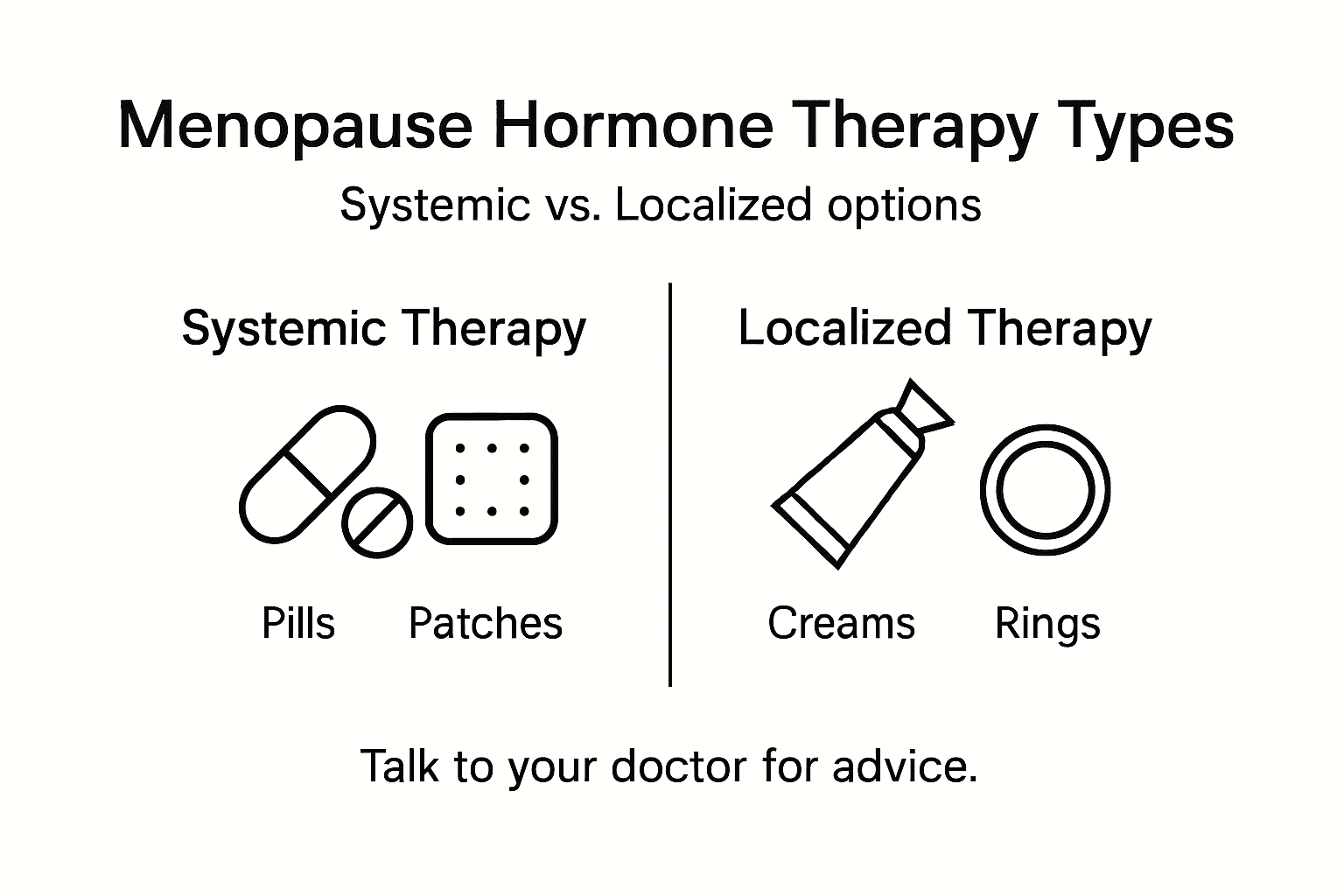
Localized Vaginal Therapy targets the specific symptoms affecting your intimate health and comfort. Vaginal dryness, painful intercourse, and urinary symptoms respond well to low-dose estrogen treatments applied directly where they’re needed. These vaginal treatments use tablets, creams, or rings that work locally with minimal systemic absorption, meaning the hormones stay primarily in your vaginal tissues rather than circulating throughout your entire body. This localized approach means lower overall hormone exposure while still providing significant relief from genitourinary symptoms that can seriously impact your quality of life and intimacy.
Your provider might also recommend combination approaches that address both systemic and localized symptoms simultaneously. Some women take systemic therapy for hot flashes while using vaginal treatment for dryness. Others find that adjusting their systemic dose eventually resolves all symptoms. The key is working with your VidaVital Medical team to find your optimal balance.
Here’s a comparison of systemic and localized hormone therapy approaches:
| Feature | Systemic Hormone Therapy | Localized Vaginal Therapy |
|---|---|---|
| Primary Goal | Relief of whole-body symptoms | Targeted relief for vaginal issues |
| Common Delivery Forms | Oral pills, patches, gels, sprays | Creams, tablets, vaginal rings |
| Main Symptoms Treated | Hot flashes, night sweats, mood | Vaginal dryness, pain, urinary |
| Systemic Hormone Level | Hormones circulate body-wide | Minimal bloodstream absorption |
| Cancer Risk Profile | Progesterone needed with uterus | Lower overall hormone exposure |
Pro tip: Start with a symptom priority list before your appointment, ranking which symptoms bother you most since this directly influences whether your provider recommends systemic therapy first, localized treatment, or a combination approach.
How Hormone Therapy Relieves Symptoms
The mechanism behind hormone therapy’s effectiveness is straightforward, yet profound. Your menopausal symptoms don’t just happen randomly. They occur because your body’s production of estrogen and progesterone has dropped significantly, disrupting the hormonal signals that regulate everything from your body temperature to your mood and sleep cycles. When you start hormone therapy, you’re essentially restoring the chemical messengers your body has lost, allowing your systems to function normally again. Think of it like turning up the volume on a radio that’s been fading. The stations were always broadcasting, but without proper signal strength, you couldn’t hear them clearly. Hormone therapy amplifies that signal back to functional levels.
Hot flashes and night sweats are among the most disruptive menopausal symptoms, and systemic hormone therapy effectively reduces hot flashes and night sweats by restoring your body’s natural thermoregulation. These sudden temperature spikes happen because your hypothalamus, the part of your brain that controls temperature, becomes hypersensitive to normal body temperature variations when estrogen drops. When you replace estrogen, your hypothalamus regains its ability to accurately interpret your body’s actual temperature, and those distressing episodes diminish or disappear. Sleep improves dramatically for many women because they’re no longer jolted awake by drenching sweats. Mood swings also settle as your hormone levels stabilize, since estrogen influences serotonin and other neurotransmitters that affect emotional well-being.

Vaginal and urinary symptoms respond especially well to localized hormone therapy. Vaginal dryness, painful intercourse, and urinary urgency occur because the vaginal tissues depend on estrogen to maintain their natural moisture and elasticity. When estrogen declines, these tissues become thin and dry, making physical intimacy uncomfortable and affecting your confidence and relationships. Low-dose vaginal estrogen treatments applied directly to affected areas restore tissue health without flooding your entire system with hormones. The relief is often noticeable within weeks, allowing you to reclaim your intimate life without the significant systemic hormone exposure of oral or patch therapy.
Beyond immediate symptom relief, hormone therapy provides longer-term protective benefits. When started within 6 to 10 years after your menopause begins, therapy helps preserve bone density and supports cardiovascular health. Your bones don’t just support your frame, they’re living tissue that constantly breaks down and rebuilds. Estrogen is essential for maintaining that balance. Without adequate estrogen, bone loss accelerates, potentially leading to osteoporosis later in life. VidaVital Medical’s approach focuses on starting therapy when you need it most and monitoring your response carefully to ensure you experience maximum benefit with appropriate dosing.
Pro tip: Track your symptom improvements over the first 4 to 6 weeks by noting the frequency and intensity of hot flashes, sleep quality, and mood changes, then share this detailed record with your provider to help fine-tune your dose or adjust your therapy method if needed.
Safety, Risks, and FDA Guidance Updates
Hormone therapy has a complex safety profile that depends heavily on who you are, when you start treatment, and your personal health history. This is why generic statements about hormone therapy safety miss the mark. The FDA has approved hormone therapy specifically for short-term symptom relief and osteoporosis prevention, recognizing that for many women, the benefits of managing debilitating menopausal symptoms outweigh potential risks. However, understanding those risks and having honest conversations with your VidaVital Medical provider about your individual situation is non-negotiable.
Research shows that hormone therapy is generally safe for healthy women under age 60 or within ten years of menopause onset, with symptom relief benefits outweighing risks in this population. Age matters significantly. If you start hormone therapy in your 50s when symptoms first appear, your risk profile looks different than a woman starting in her 70s. Timing is crucial. Women who begin treatment within the first decade after menopause appears to have lower risks of cardiovascular disease and mortality compared to those who delay treatment for many years.
That said, real risks exist and warrant honest discussion. Prolonged hormone therapy use increases breast cancer risk, though the increase is modest and must be weighed against symptom severity and quality of life impact. Blood clots and strokes are possible but uncommon, particularly in younger women without other risk factors. Your personal health history shapes your risk significantly. If you have a family history of breast cancer, a previous blood clot, or uncontrolled high blood pressure, your VidaVital Medical provider will carefully evaluate whether hormone therapy is appropriate or if alternative treatments better suit your situation. This is why individualized assessment matters more than following a one-size-fits-all protocol.
The FDA’s current guidance emphasizes using the lowest effective dose for the shortest duration necessary to achieve symptom relief. This practical approach acknowledges that hormone therapy offers real benefits for many women while respecting legitimate safety concerns. Your provider will monitor you regularly, adjusting your dose as symptoms evolve and reassessing whether continued therapy remains appropriate. Some women need hormone therapy for only a few years during their most intense menopausal years. Others benefit from longer-term use because their symptoms remain significant. The key is active partnership with your healthcare team, regular check-ins, and honest communication about how you’re feeling.
Pro tip: Before your appointment, write down any family history of breast cancer, blood clots, heart disease, or stroke, plus your personal health conditions and medications, since this information directly shapes your provider’s recommendations about whether hormone therapy is right for you and which specific formulation minimizes your individual risks.
Requirements, Costs, and What to Avoid
Starting hormone replacement therapy isn’t something you can order online and self-manage. You need a medical consultation with a qualified healthcare provider who understands your complete health picture, can evaluate your symptoms objectively, and will monitor your progress over time. This requirement exists for good reason. Your provider needs to review your personal and family medical history, perform an examination, and potentially order blood work to establish baseline hormone levels and rule out conditions that might contraindicate hormone therapy. At VidaVital Medical, this consultation process is thorough because your safety depends on it. During your initial appointment, you’ll discuss symptom severity, treatment goals, and any health concerns that might affect your therapy choices.
Costs for hormone replacement therapy vary significantly based on several factors. The type and duration of therapy, insurance coverage, and local healthcare systems all influence what you’ll pay out of pocket. Most United States insurance plans cover hormone therapy for menopause symptoms, which can substantially reduce your costs. A monthly prescription for oral hormones might cost anywhere from $20 to $100 with insurance, while some specialty formulations or compounded hormones could exceed $200 monthly without coverage. Patches and gels often fall in similar ranges. The consultation fees, blood work, and follow-up appointments add to total costs, though many insurance plans cover these services. Before starting treatment, contact your insurance company directly to understand your specific coverage, deductibles, and whether your provider is in-network, as this dramatically affects your final expenses.
Here’s a quick summary of key costs and coverage factors for HRT:
| Factor | Typical Range or Detail | Impact on Patient Cost |
|---|---|---|
| Monthly Prescription | $20–$100 with insurance | Out-of-pocket cost varies by drug type |
| Specialty/Compounded | $200+ without insurance | Higher costs, less insurance support |
| Additional Fees | Consultations, labs, follow-ups | Often covered, check your policy |
| Insurance Coverage | Most U.S. plans include HRT | Coverage limits and copays vary |
Critical contraindications exist that make hormone therapy inappropriate. You should avoid hormone therapy if you have a history of breast cancer, active cancer of any kind, or unexplained vaginal bleeding that hasn’t been evaluated. Previous blood clots, strokes, or significant liver disease also warrant avoiding HRT without extensive medical evaluation. If you have uncontrolled high blood pressure or a recent heart attack, your provider will likely recommend waiting or exploring alternatives. These aren’t arbitrary restrictions. They’re based on decades of clinical research showing that hormone therapy could worsen these conditions. If you’re uncertain whether your health history disqualifies you from hormone therapy, bring your complete medical records to your VidaVital Medical consultation so your provider can make an informed determination.
Beyond medical contraindications, avoid the temptation to purchase hormone therapy from unregulated online sources or compounding pharmacies without medical supervision. Bioidentical hormones from unregulated compounders lack FDA oversight and quality assurance, meaning you can’t be certain about hormone potency or purity. Ongoing medical supervision is critical throughout your treatment. You’ll need regular follow-up appointments to assess how well your current dose manages symptoms, monitor for side effects, and adjust your therapy as your body changes through menopause and beyond.
Pro tip: Call your insurance company at least one week before your VidaVital Medical consultation to confirm coverage details, get a list of in-network providers, and ask whether your plan requires authorization before hormone therapy can begin, preventing unexpected billing surprises.
Regain Your Vitality with Personalized Hormone Replacement Therapy at VidaVital Medical
Many women struggling with menopausal symptoms face disruptive challenges like hot flashes, night sweats, and uncomfortable vaginal dryness. These issues affect daily life and intimate relationships profoundly. The article highlights how hormone replacement therapy provides targeted relief by restoring hormonal balance but also stresses the importance of personalized care and medical supervision to ensure safety and effectiveness.
At VidaVital Medical, we understand that your menopause journey is unique. Our expert providers specialize in customized hormone therapy plans that address your specific symptoms and health history. Whether you seek systemic solutions for whole-body relief or localized vaginal treatments, our evidence-based approach ensures you receive the right hormones at the right doses. We prioritize your safety by thoroughly assessing your medical background and monitoring your progress closely.

Take control of your menopausal health today. Visit VidaVital Medical to schedule a consultation where your symptoms and concerns will guide your personalized hormone replacement therapy plan. Don’t wait for symptoms to worsen or lower your quality of life. Connect now and discover how expert care can restore your balance and vitality with confidence and compassion.
Frequently Asked Questions
What is hormone replacement therapy (HRT) and how does it work?
Hormone replacement therapy (HRT) is a medical treatment designed to relieve menopausal symptoms by replacing hormones like estrogen and progesterone that your body no longer produces adequately. HRT helps restore hormonal balance and addresses the root cause of many menopausal symptoms, rather than just masking them.
What are the different types of hormone therapy available for menopause?
There are two main types of hormone therapy: systemic hormone therapy and localized vaginal therapy. Systemic hormone therapy provides hormonal relief throughout the body for symptoms like hot flashes and night sweats, while localized vaginal therapy targets specific issues like vaginal dryness and discomfort during intercourse.
How long does it take to see results from hormone therapy?
Many women begin to feel relief from menopausal symptoms within weeks of starting hormone therapy. However, individual responses may vary, and some may require dosage adjustments or different formulations to achieve optimal results.
Are there any risks associated with hormone replacement therapy?
Yes, hormone replacement therapy has a complex safety profile that varies based on individual health history, age, and timing of treatment. While it can offer significant benefits, risks include mild increases in breast cancer risk and potential cardiovascular issues, particularly with prolonged use. It’s essential to discuss your specific situation with a healthcare provider to weigh the benefits against risks.
Recommended
- A Beginner’s Guide to Hormone Replacement Therapy for Women
- BHRT for Women’s Health: 5 Surprising Signs Your Hormones Are Out of Balance (And How Therapy Helps) – VidaVital MD
- FDA Changes Everything: Why Hormone Therapy Is Safer Than You Think in 2026 (What Your Doctor May Not Tell You) – VidaVital MD
- The Ultimate Guide to Hormonal Optimization – VidaVital MD