
A Medical Explanation of Stubborn Weight Gain in Adults
By Christopher Patino, APRN
VidaVital Medical
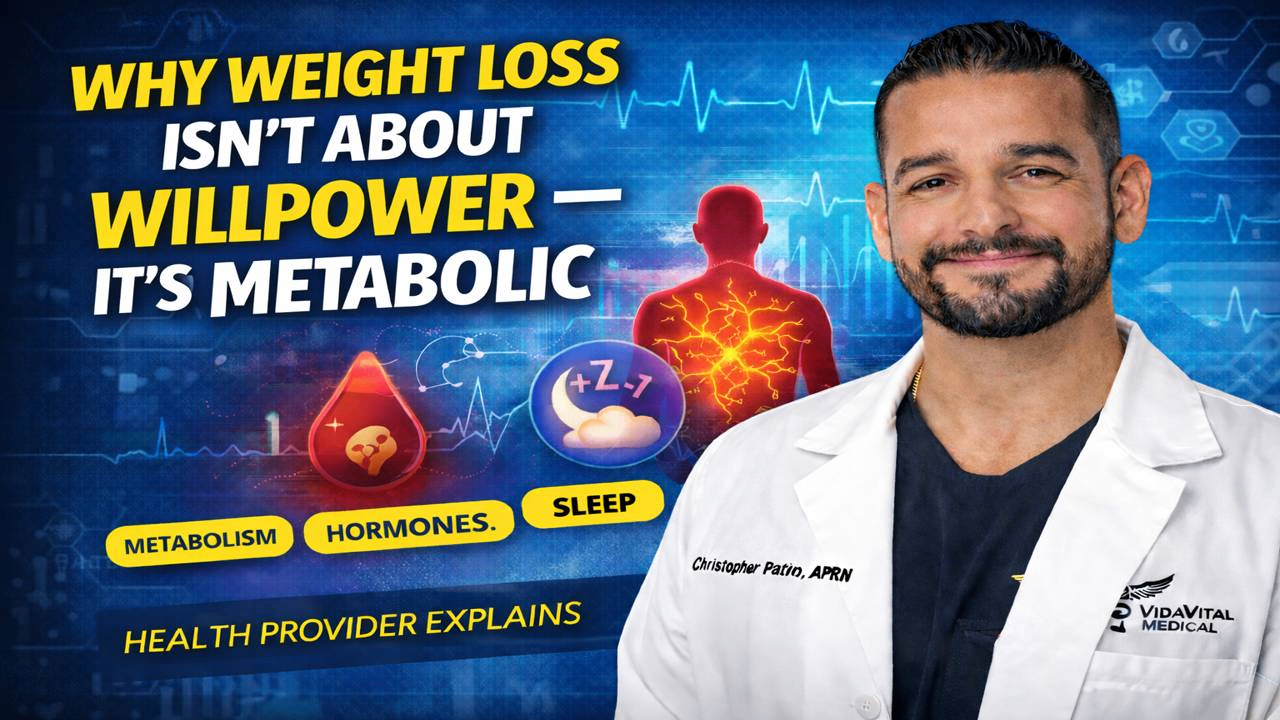 medical weight loss program, metabolism, and hormones” style=”max-width: 100%; height: auto;”>
If you’ve tried eating less, exercising more, and still struggle with stubborn weight, you’re not alone — and more importantly, you’re not failing.
For many adults, especially as they get older, weight gain is not a motivation or discipline problem. It’s a metabolic and hormonal issue. This misunderstanding is one of the biggest reasons traditional diets and workout plans stop working over time.
To explain this clearly, Christopher Patino, APRN breaks down the medical side of weight loss in the video below.
🎥 Watch the full provider explanation here:
👉 https://youtu.be/qURtf6cA6Vo
At VidaVital Medical, weight loss is treated as a medical process, not a willpower test.
The Myth of Willpower-Based Weight Loss
For years, weight loss advice has been reduced to one simple message: eat less and move more. While calories and activity do matter, this approach ignores how the body actually regulates weight. Weight regulation is driven by biology — including hormones, metabolism, insulin response, stress, sleep, and muscle mass — not just behavior.
Why Weight Loss Gets Harder Over Time
Many patients notice that weight loss becomes more difficult in their 30s, 40s, and beyond. This is not accidental — it’s physiological. As we age, systems shift:
- Hormones that regulate fat storage and metabolism change
- Insulin sensitivity may decline
- Stress hormones like cortisol can remain elevated
- Muscle mass decreases, lowering metabolic rate
- Sleep quality and recovery decline
Why Calories Alone Don’t Explain Stubborn Weight Gain
Medical weight loss looks deeper at metabolic efficiency, hormonal balance, insulin resistance, inflammation, stress load, sleep quality, and body composition.
What Medical Weight Loss Actually Means
At VidaVital Medical, the process begins with a comprehensive medical evaluation, which may include a metabolic and hormonal assessment and lab testing when medically appropriate. This information allows licensed medical providers to build a personalized plan.
To learn more about our approach, visit our medical weight loss page.
What a Personalized Medical Weight Loss Plan May Include
Plans may include nutritional guidance, prescription-based weight loss support, hormone optimization, peptide therapy, and strategies to protect muscle mass. The goal is sustainable fat loss while protecting overall health with ongoing medical oversight.
Why Weight Loss Shouldn’t Be About Shame
Understanding the biology behind weight gain replaces blame with clarity. When people stop fighting their bodies and start understanding them, progress becomes possible again.
🎥 Watch the full provider explanation here:
👉 https://youtu.be/qURtf6cA6Vo
About the Author
Christopher Patino, APRN, is a medical provider at VidaVital Medical specializing in medical weight loss, metabolic health, and hormone optimization.