

If you've been riding the weight loss rollercoaster for years: trying every diet trend, counting every calorie, and watching the same stubborn pounds return no matter how hard you work: let's start here: it's not your fault, and you're not alone.
The truth? Your body isn't broken. You don't lack willpower. What you've been missing is something most traditional weight loss program in Las Vegass completely overlook: a medical understanding of how your unique metabolism actually works.
Here in Las Vegas, more adults are discovering that sustainable weight loss isn't about deprivation or quick fixes. It's about working with your body's biology, not against it. And that's exactly where medically managed weight loss programs: using FDA-approved medications like Semaglutide and Tirzepatide: are changing the game entirely.
Why the Number on the Scale Only Tells Part of Your Story
Let's talk about what actually matters when it comes to your health. Sure, weight is one metric. But what about your energy levels? Your sleep quality? How your clothes fit? Your blood sugar stability? These are the real markers of metabolic health: and they're often invisible on a standard bathroom scale.

When we focus exclusively on pounds lost, we miss the bigger picture. Your body composition: the ratio of muscle to fat, where you carry weight, how efficiently your cells use energy: matters far more than a single number. Two people at the same weight can have completely different health profiles based on their metabolic function.
This is why medically managed weight loss programs start with comprehensive assessments that go way beyond stepping on a scale. We're looking at:
- Hormonal balance and how it affects your hunger signals
- Metabolic rate and how efficiently your body burns fuel
- Body composition analysis to track actual fat loss versus muscle preservation
- Lifestyle factors including stress, sleep, and eating patterns
- Medical history and any conditions affecting your weight
Think of it as building your personal health blueprint. Because what worked for your friend, your coworker, or that influencer on social media? That might not be right for your body at all.
The Science Behind Semaglutide and Tirzepatide: More Than Appetite Suppressants

Here's where things get really interesting. Semaglutide and Tirzepatide aren't your typical diet pills or stimulants. These FDA-approved medications work by mimicking natural hormones your body already produces: specifically, hormones that regulate appetite, blood sugar, and how your body processes food.
Semaglutide is a GLP-1 receptor agonist, which means it acts like incretin, a hormone released in your gut after eating. When this hormone is activated, it sends signals to your brain that you're satisfied, helps regulate blood sugar levels, and slows digestion so you feel fuller longer. The result? You're not battling constant hunger or obsessing over your next meal.
Tirzepatide takes this a step further by activating both GLP-1 and GIP receptors, offering a dual-action approach to metabolic regulation. Clinical studies have shown remarkable results: not just in weight reduction, but in improvements to cardiovascular health markers, blood pressure, and insulin sensitivity.
But here's the critical part that gets lost in social media hype: these medications are tools, not magic bullets. They work best when integrated into a comprehensive medical program that addresses nutrition, movement, sleep, stress, and behavioral patterns. Taking them without proper clinical oversight is like trying to build a house with just a hammer: you need the full toolkit and someone who knows how to use it.
What Clinical Oversight Actually Means (And Why It Matters)
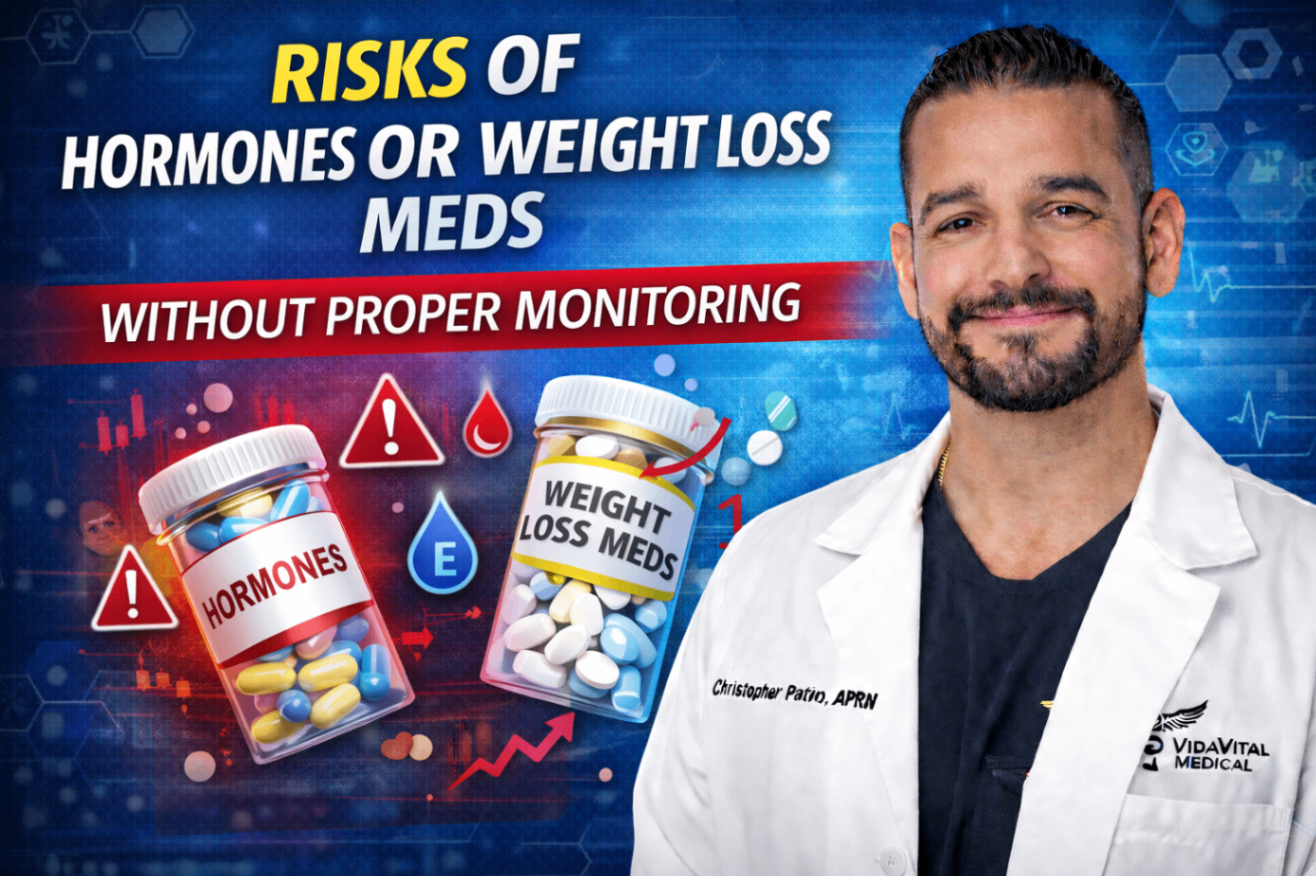
You've probably seen the ads. Maybe you've even been tempted by online services promising to ship medications directly to your door after a quick questionnaire. And look, we get it: convenience is appealing, especially in a city that never sleeps like Las Vegas.
But there's a massive difference between prescription access and actual medical care. Here's what clinical oversight brings to your weight loss journey:
Proper dosing and titration: These medications need to be started at specific doses and adjusted gradually based on how your body responds. Too much too fast can lead to uncomfortable side effects. Too little won't be effective. Your provider monitors your progress and makes informed adjustments.
Comprehensive lab work: Before starting any weight loss medication, you need baseline testing: thyroid function, kidney health, liver enzymes, blood sugar levels, and more. These aren't optional; they're essential for your safety.
Side effect management: While these medications are generally well-tolerated, some people experience nausea, digestive changes, or other effects. A medical team can help you navigate these issues with practical strategies, supportive medications when needed, and dosage adjustments.
Long-term monitoring: Your body changes as you lose weight. Your nutritional needs shift. Your medication requirements may evolve. Regular check-ins ensure your program adapts with you rather than following a one-size-fits-all protocol.
Integration with your overall health: Weight doesn't exist in a vacuum. If you have diabetes, heart disease, hormonal imbalances, or other conditions, your weight loss plan needs to account for these factors. That requires real medical expertise.
Studies consistently show that 90% of people who lose weight through dieting alone regain it within a few years. But medically supervised interventions? The outcomes are dramatically better because they address the underlying metabolic and behavioral factors that drive weight gain in the first place.
The VidaVital Concierge Approach: Your Health, Your Timeline

At VidaVital Medical, we've built our weight loss program around a simple but powerful idea: you deserve personalized care that treats you like the individual you are, not a number on a chart or a cookie-cutter protocol.
Our concierge model means you're not navigating this journey alone or waiting weeks for a 10-minute appointment. Instead, you get:
In-depth initial consultations where we actually listen to your story: your relationship with food, your previous attempts at weight loss, your current challenges, and your genuine goals for health and wellbeing.
Customized treatment plans that might include Semaglutide or Tirzepatide alongside nutritional guidance, metabolic optimization, and when appropriate, complementary therapies like vitamin B12 injections or hormone balancing.
Regular monitoring and adjustments through monthly check-ins (in-person or via telehealth, depending on your preference) where we track not just weight, but body composition, energy levels, how you're feeling, and what's actually working in your daily life.
Accessible support between appointments because questions and challenges don't conveniently wait for scheduled visits. You have a care team you can reach when you need guidance.
Focus on sustainable habits rather than unsustainable restrictions. We're not interested in crash diets or extreme measures. We're building lifestyle patterns you can maintain for life.
This is especially important for busy Las Vegas professionals, parents juggling multiple responsibilities, or anyone who's tried and failed with traditional programs. You need a plan that fits your real life, not some idealized version of how you "should" eat and exercise.
For more on why supervised programs outperform DIY approaches, check out our complete guide to medically managed weight loss.
What to Expect: Your First 90 Days and Beyond
Starting a medically managed weight loss program can feel like a big step, so let's walk through what actually happens.
Your initial consultation involves a comprehensive health assessment, discussion of your goals, review of your medical history, and often baseline lab work. This is your chance to ask every question you have: about the medications, the process, what results are realistic, everything.
Week 1-4: You'll start on a low dose of medication while your body adjusts. Many people notice reduced hunger and fewer cravings fairly quickly, though individual experiences vary. You'll receive nutritional guidance and begin implementing small, sustainable changes to your eating patterns.
Months 2-3: Medication dosage is typically increased gradually based on your tolerance and response. You're meeting regularly with your provider to assess progress, troubleshoot any challenges, and refine your plan. This is when most people start seeing significant changes: not just in weight, but in energy, sleep quality, and how they feel overall.
Month 4 and beyond: Your program continues to evolve with you. The goal isn't just to reach a target weight and stop: it's to establish metabolic health and sustainable habits that support long-term wellbeing. Some people stay on maintenance doses of medication. Others transition to different approaches as their metabolism improves. It's truly personalized.
Throughout this journey, remember: progress isn't always linear. Some weeks you'll see dramatic changes. Other weeks, the scale might not budge even though your body is still transforming. This is exactly why clinical monitoring looks at multiple markers, not just pounds lost.
Ready to Move Beyond Quick Fixes?
If you're tired of fighting your body and ready to work with it instead, medically managed weight loss might be exactly what you've been searching for. This isn't about willpower or restriction. It's about understanding your unique metabolism and giving your body the clinical support it needs to function optimally.
At VidaVital Medical, we're here to guide you through every step of this journey with the expertise, personalization, and ongoing support you deserve. Because sustainable weight loss isn't about following someone else's plan: it's about creating one that actually works for your body, your life, and your long-term health goals.
Ready to explore what's possible? Get in touch with our team to schedule your comprehensive consultation. Your healthiest chapter starts with understanding what's really happening beneath the surface: and we're here to help you uncover it.