
You’ve been feeling it for a while now. Maybe it’s a struggle to get through your afternoon meetings in downtown West Palm Beach, or perhaps that weekend round of golf at Breakers West feels more like a chore than a hobby. You’re tired, your focus is slipping, and despite hitting the gym, the results just aren't showing up like they used to.
Naturally, you did the right thing: you went to the doctor and asked for a testosterone test. A few days later, the call comes in. "Good news," the nurse says. "Your levels are within the normal range. Everything is fine."
But you don’t feel fine.
If this sounds familiar, you aren’t alone. At VidaVital Medical, we see men every week who have been told their health is "normal" on paper, while their quality of life tells a completely different story. The truth is, the standard laboratory "normal" range is often a poor indicator of how a man should actually feel.
In this guide, we’re going to pull back the curtain on why those lab results might be lying to you and why optimizing your hormones, not just "normalizing" them, is the key to reclaiming your vitality here in West Palm Beach.
Quick Takeaways: Why "Normal" Isn't Always "Optimal"
If you’re short on time, here are the essential points we’ll cover:
- The "Normal" Range is an Average: It includes men of all ages and health statuses, not just peak-performing men.
- Total vs. Free Testosterone: Your "Total" number matters less than the "Free" testosterone your body can actually use.
- Symptoms Over Numbers: Medical treatment should be based on how you feel (fatigue, libido, mood), not just a line on a graph.
- The Decline Factor: A "normal" 350 ng/dL might be a massive, symptomatic drop for a man who used to naturally sit at 800 ng/dL.
- Personalization is Key: VidaVital Medical focuses on treating the individual, ensuring your levels are optimal for your lifestyle and age.
The Flaw in the "Normal" Lab Range
When a laboratory establishes a "normal" range for testosterone, they aren't looking at what a healthy, vibrant man in his 30s or 40s should have. Instead, they are looking at a massive statistical average. This range often spans from roughly 250 ng/dL to 900 ng/dL.
Think about that for a second. That range includes everyone from a 19-year-old Olympic athlete to an 85-year-old man struggling with multiple chronic illnesses. If you are a 40-year-old professional in West Palm Beach and your score comes back at 280, the lab marks you as "normal." But physiologically, you may be functioning with the hormonal profile of someone twice your age.
Furthermore, research has shown that these reference ranges have been declining over the last several decades. What was considered "low" twenty years ago might be considered "normal" today simply because the average health of the population has shifted. At VidaVital Medical, we believe you shouldn't settle for "average" when your goal is excellence.

Total vs. Free Testosterone: The Paycheck Analogy
One of the biggest reasons your lab report might be misleading is that it likely emphasizes your Total Testosterone. To understand why this is a problem, let’s use a simple analogy: your paycheck.
- Total Testosterone is like your gross salary. It looks great on paper, but it isn’t what you actually get to spend.
- Free Testosterone is like your "take-home pay." This is the hormone that is actually available for your tissues to use.
Most of the testosterone in your body is bound to a protein called Sex Hormone Binding Globulin (SHBG). Think of SHBG as the "tax man." If your SHBG levels are high, which can happen due to age, diet, or certain medications, it "binds up" your testosterone, leaving very little "free" for your body to use for muscle building, mood regulation, and energy.
You could have a "normal" Total Testosterone score of 600, but if your SHBG is through the roof, your Free Testosterone might be in the gutter. You’ll feel all the symptoms of Low T, even though your doctor says you're fine. This is why a comprehensive panel that looks at the whole picture is so vital.
Why Your Symptoms Matter More Than the Paper
In traditional medicine, many providers are hesitant to treat a patient unless their numbers fall outside the "red box" on the lab report. But your body doesn't live in a box.
If you are experiencing the classic symptoms of low testosterone, your body is sending you a signal that something is out of balance. These symptoms often include:
- Persistent Fatigue: Feeling like you need a nap at 2 PM every day.
- Brain Fog: Difficulty concentrating or feeling "less sharp" at work.
- Increased Body Fat: Especially around the midsection, despite no changes in diet.
- Low Libido: A noticeable drop in sexual desire or performance.
- Mood Irritability: Feeling more "on edge" or experiencing symptoms of mild depression.
Treating the "number" is easy; treating the "man" requires partnership. We often find that men who are in the low-normal range see life-changing improvements when they are optimized to the upper end of the range. When the brain fog clears and the energy returns, it doesn't matter what the "standard" range says, it matters that you feel like yourself again.
The West Palm Beach Lifestyle and Hormonal Health
Living in West Palm Beach means an active, high-performance lifestyle. Whether you’re navigating high-stakes business meetings, enjoying our world-class boating, or staying fit on the many local trails, your body requires a certain level of hormonal support to keep up.
When your hormones are optimized, you aren't just "fixing a problem." You are investing in your long-term health. Optimal testosterone levels have been linked to better cardiovascular health, improved bone density, and a more robust metabolism. It’s about building a foundation that allows you to enjoy everything South Florida has to offer for decades to come.

What to Expect: The VidaVital Approach
We understand that seeking help for hormone health can feel a bit daunting. You might worry about being dismissed or feel embarrassed about discussing symptoms like low libido. We want you to know that you are not alone, and these challenges are not a personal failing, they are biological.
Our process is designed to be supportive and educational:
- Comprehensive Testing: We don't just look at Total T. We look at Free T, SHBG, Estrogen, and other key health markers to get the full story.
- In-Depth Consultation: We sit down with you to discuss your symptoms and your goals. We want to know how you feel, not just what the paper says.
- Personalized Protocol: If treatment is right for you, we create a plan tailored to your specific needs. There is no one-size-fits-all here.
- Ongoing Monitoring: Hormone replacement therapy (TRT) is a journey, not a one-time fix. We monitor you closely to ensure safety and to tweak your levels for maximum benefit.
Safety First: The Importance of Clinical Supervision
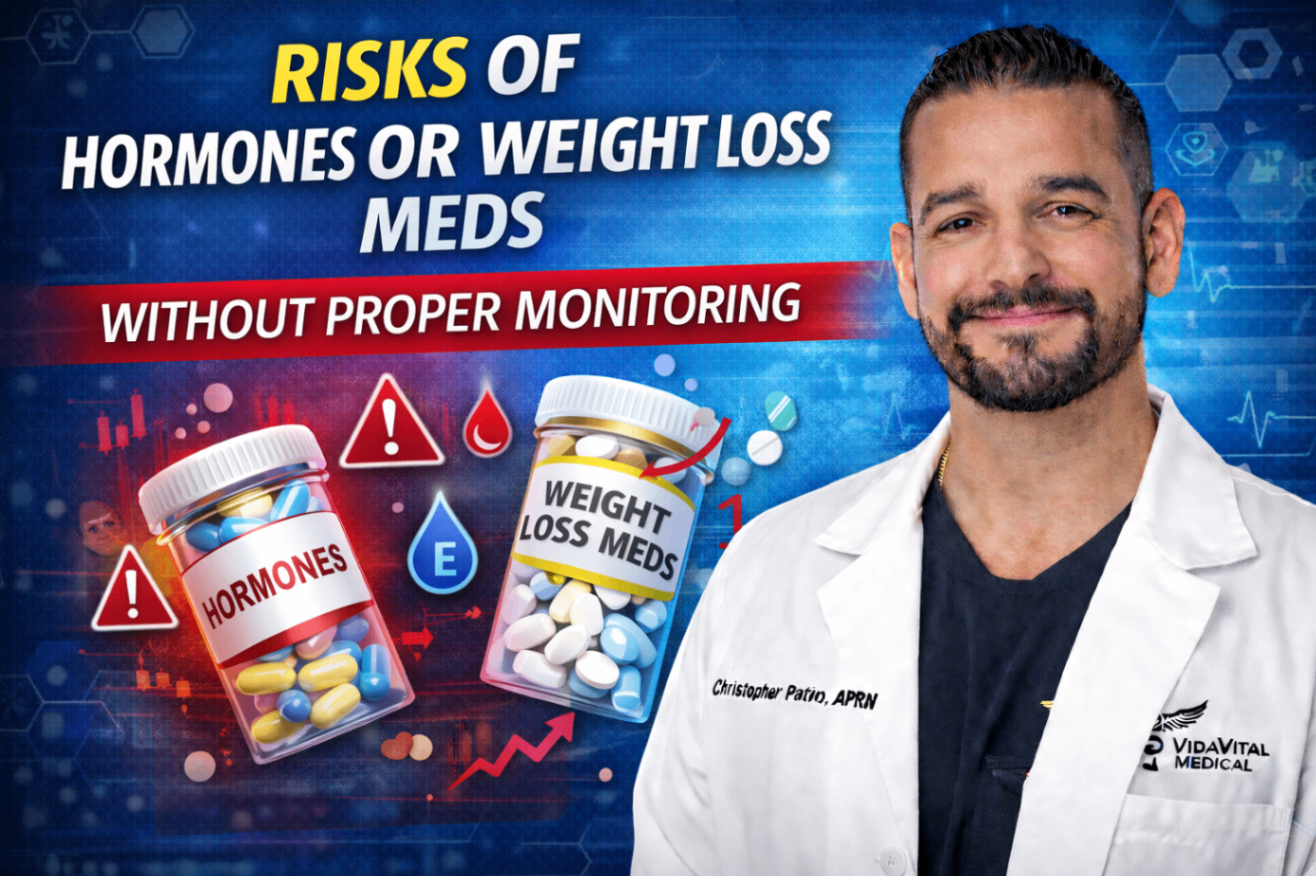
With the rise of "online pharmacies" and DIY health kits, it can be tempting to try and manage hormone health on your own. However, hormones are a delicate symphony. Pushing one lever can affect several others.
Taking testosterone without professional monitoring can lead to unwanted side effects like elevated red blood cell counts or imbalances in estrogen. Working with a clinical team ensures that your therapy is not only effective but safe for your heart and your long-term wellness.
Taking the Next Step
If you’ve been told your labs are "normal" but you still don’t feel like the man you used to be, it’s time for a second opinion. You don’t have to settle for "average." You deserve to feel optimal.
Think of your health as a team effort. You’re the owner of the team, and we’re your specialized coaching staff. Our job is to give you the tools and the data you need to perform at your highest level.
Are you ready to stop guessing and start optimizing? We invite you to reach out and start a conversation. Let's look beyond the "normal" range and find what's right for you.
Frequently Asked Questions
Q: Is TRT safe?
A: When performed under the supervision of medical professionals with regular blood work, TRT is considered safe and highly effective for men with clinical deficiencies or suboptimal levels.
Q: How long does it take to feel results?
A: While every man is different, many report improvements in mood and energy within the first few weeks. Physical changes, like body composition and strength, typically become more apparent after 3 to 6 months of consistent therapy.
Q: Do I have to stay on TRT forever?
A: TRT is generally a long-term commitment because it replaces what your body isn't producing naturally. If you stop treatment, your levels will likely return to their previous baseline. However, the goal is to maintain a high quality of life indefinitely.
Q: Does VidaVital Medical serve areas outside of West Palm Beach?
A: Yes! While we love our West Palm Beach community, we also have a dedicated presence in Boca Raton to serve men throughout the South Florida region.