
You wake up each morning, get through your day without major complaints, and go to bed feeling okay. Your last doctor's visit was routine, blood pressure's manageable, cholesterol's "not terrible," and your physician said to "keep doing what you're doing." You feel fine. But here's the uncomfortable truth: feeling fine might be the most dangerous place to be when it comes to your longevity.
If you're reading this, chances are you're somewhere in that gray zone, not sick enough to panic, but not confident about how you're aging either. You're what we call "comfortably unhealthy," and it's time we had an honest conversation about why that comfort might be costing you years of vitality.
The Deception of "Feeling Fine"
Let's be honest, your body is incredibly good at compensating. It's designed to keep you functional even when things aren't optimal underneath the surface. Think of it like a car that still starts every morning despite needing an oil change, new brakes, and a transmission service. It runs, but it's not running well, and eventually, those small maintenance issues become major breakdowns.
Your body does the same thing. When your hormones start declining in your 30s and 40s, you don't immediately feel it. When inflammation begins building in your arteries, joints, and organs, there's no alarm bell. When your metabolism slows and your muscle mass decreases, the changes are so gradual that you adapt without realizing what you've lost.
The research is clear: biological damage accumulates silently, and lifestyle factors slow biological aging at a fundamental level, affecting all age-related diseases, not just preventing a single condition. While global life expectancy has increased, this doesn't guarantee quality of life. Many people spend extended years with disability and illness despite living longer.

What's Really Happening Below the Surface
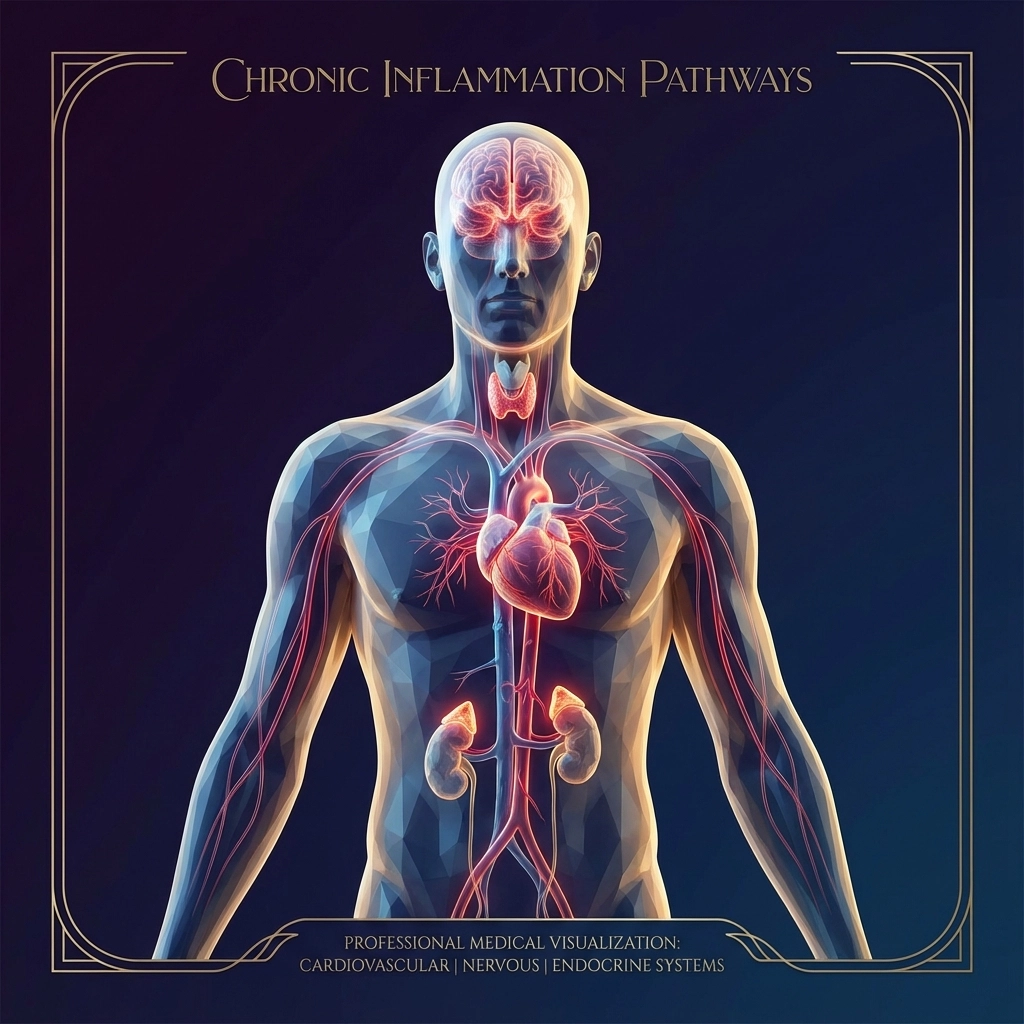
Silent inflammation is probably the biggest culprit in this "comfortable unhealthy" state. Unlike the inflammation you feel when you cut your finger or sprain your ankle, chronic inflammation operates quietly in your body for years or even decades.
This low-grade inflammation affects your cardiovascular system, your brain health, your hormone production, and your immune function. It's like having a small fire burning in your basement, you might not smell the smoke upstairs, but it's slowly damaging the foundation of your house.
You might notice subtle signs: you need more caffeine to feel alert, your energy dips in the afternoon, your sleep isn't as restorative as it used to be, or you recover more slowly from exercise or stress. These aren't just "normal aging", they're early warning signs that your body is working harder to maintain that feeling of "fine."
Your hormone levels are also shifting in ways that feel manageable day-to-day but have profound long-term effects. Testosterone decline in men and hormonal changes in women don't just affect libido or energy, they impact bone density, muscle mass, cognitive function, and cardiovascular health. You adapt to these changes gradually, so you don't realize how much vitality you've lost until you look back and wonder when you stopped feeling truly energetic.
The Medication Dependency Trap
Here's where many people get caught in a cycle that feels like healthcare but isn't actually promoting health. You start managing symptoms rather than addressing root causes. Blood pressure medication keeps your numbers in check, but it doesn't address why your blood pressure increased in the first place. Antidepressants might stabilize your mood, but they don't resolve the underlying inflammation, hormone imbalances, or lifestyle factors contributing to how you feel.
Don't get me wrong, medications save lives and have their place. But when they become your primary strategy for feeling "fine," you're not optimizing for longevity. You're managing decline rather than promoting vitality.
This approach creates a false sense of security. Your lab numbers might look acceptable on medication, but your biological age continues advancing. You're comfortable, but you're not addressing the foundational issues that determine how well you'll age over the next 20 or 30 years.
What "Comfortably Unhealthy" Really Looks Like
Let's get specific about what this state actually looks like in daily life. You might recognize yourself in some of these patterns:
You rely on caffeine to feel alert, but you crash in the afternoon. You sleep through the night but wake up feeling like you need more rest. You exercise occasionally but don't see the results you used to, or you've stopped exercising altogether because it doesn't seem worth the effort.
Your weight has gradually increased over the years, but not dramatically enough to feel urgent. Your skin doesn't bounce back like it used to, but it's "normal for your age." You don't get sick often, but when you do, it takes longer to recover.
Mentally, you might feel less sharp than you used to, maybe you forget names more often or lose focus during long meetings. Your mood is generally stable, but you don't feel the enthusiasm and energy you remember having in your younger years.
Socially, you might find yourself saying no to activities more often because you're tired, or you need more recovery time after social events. Your sex drive isn't what it used to be, but you've accepted that as part of getting older.
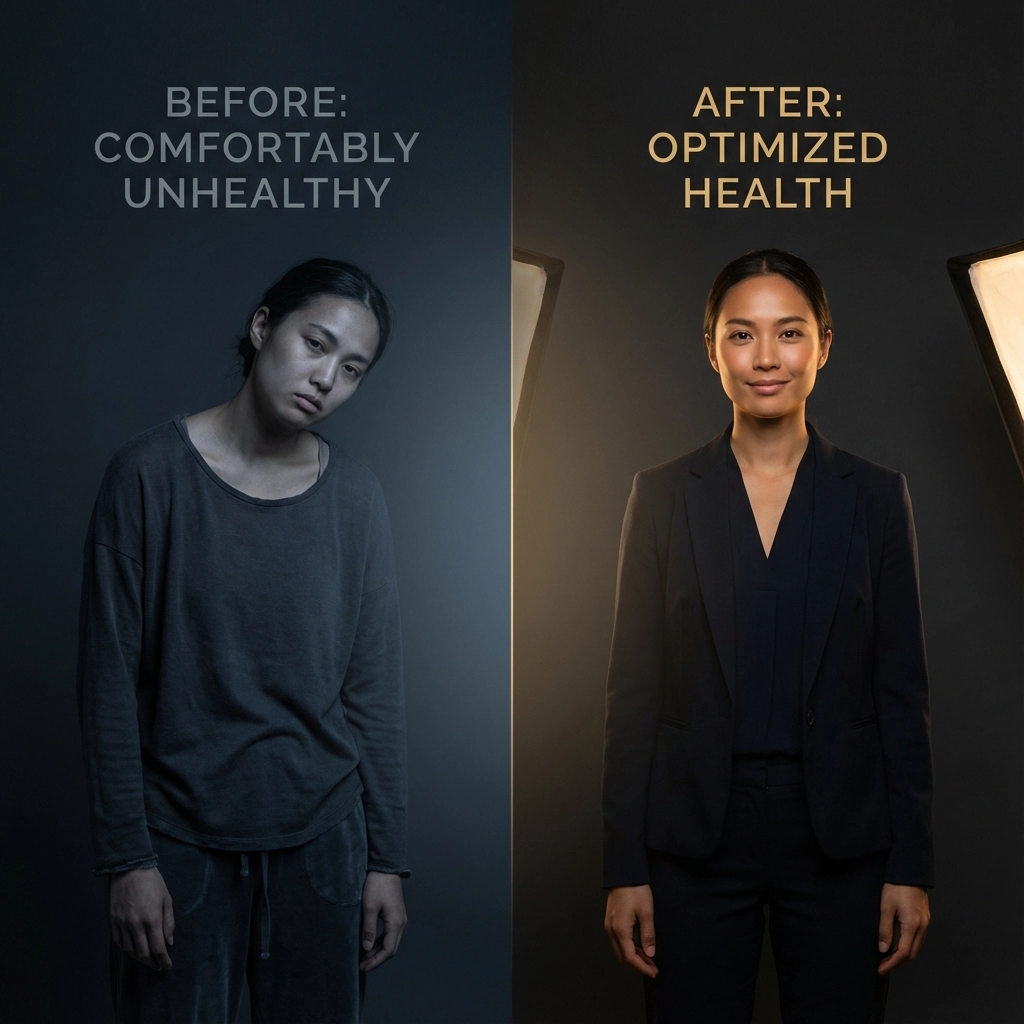
Sound familiar? This is what comfortably unhealthy feels like. It's not dramatic enough to cause alarm, but it's also not the vitality you deserve to have as you age.
The True Cost of Staying Comfortable
The real issue with remaining comfortably unhealthy isn't just how you feel today: it's what you're setting yourself up for in 10, 15, or 20 years. Research shows that people who optimize their health through lifestyle changes compress their illness toward the very end of life. Those who live to extreme old age (supercentenarians over 110) typically spend only about the last 5 years with significant disability and disease.
Compare that to the standard pattern in developed countries, where people often spend 15-20 years of their later life managing chronic conditions, taking multiple medications, and dealing with significant limitations on their independence and quality of life.
The difference isn't just genetics: it's the cumulative effect of years of choices. Every year you spend comfortably unhealthy is a year of missed opportunity to build resilience for your future self.
Think about it this way: if you're 45 and feeling "fine" but not optimizing your health, you might maintain that level until you're 55 or 60. But then the decline often accelerates. By contrast, if you address the root causes of aging now: inflammation, hormone optimization, metabolic health, and lifestyle factors: you could feel better at 55 than you do today, and maintain high function well into your 70s and beyond.

Breaking the Cycle: A Personalized Approach to Longevity
The good news is that you're not stuck in this cycle. Your body has remarkable capacity for renewal and optimization when you give it what it needs. But this requires moving beyond the conventional approach of managing symptoms and instead focusing on root causes.
Longevity medicine takes a fundamentally different approach. Instead of waiting for problems to develop and then treating them, we identify and address the underlying factors that drive aging before they become symptomatic. This might include optimizing your hormone levels, reducing inflammation, improving your metabolic health, and supporting your body's natural repair processes.
The key is personalization. What your body needs to thrive is different from what someone else needs, based on your genetics, your current health status, your lifestyle, and your goals. Cookie-cutter wellness programs can't account for these individual differences, which is why so many people try various health approaches without seeing lasting results.
A personalized longevity approach might include bioidentical hormone optimization to restore the energy and vitality you've lost. It could involve targeted nutritional strategies based on your specific metabolic profile. You might benefit from specific supplements, peptides, or other interventions that support your body's natural healing and regeneration processes.
The goal isn't to turn back the clock, but to ensure that your biological age moves more slowly than your chronological age. You want to feel and function better at 50 than many people do at 40, and maintain that high level of function for decades.
The Power of Proactive Health Optimization
Here's what many people discover when they move from comfortably unhealthy to actively optimizing their longevity: they didn't realize how much better they could feel until they experienced it. Energy levels that felt normal suddenly seem low by comparison. Sleep quality improves dramatically. Mental clarity and focus return. Physical performance increases, and recovery times decrease.
This isn't about perfection or extreme measures. It's about giving your body the support it needs to function optimally. The evidence consistently shows that core lifestyle factors: eating a nutrient-dense diet, exercising regularly, getting quality sleep, maintaining strong relationships, and managing stress: directly slow biological aging processes.
But here's where personalized medicine makes the difference: we can identify exactly which factors are most important for your individual situation and optimize them specifically for your body's needs.
Your Longevity is an Investment, Not an Expense
Let's be realistic about what staying comfortably unhealthy actually costs over time. The financial burden of chronic disease management in later life is significant. The average American spends more on healthcare in their last years of life than in all their previous years combined.
But beyond the financial cost, consider the personal cost. How much is it worth to maintain your independence as you age? To continue doing the activities you love? To have the energy to spend quality time with family and friends? To feel confident in your body and mind?
Investing in longevity optimization now: whether through hormone therapy, nutritional support, personalized health protocols, or other interventions: is among the best investments you can make. You're not just preventing future problems; you're actively building a better version of your future self.
The truth is, feeling "fine" isn't good enough if your goal is to age well. Comfort in mediocrity today becomes significant limitation tomorrow. Your body is designed to thrive, not just survive, and you have more control over how you age than you might realize.
Ready to break the cycle of Comfortably Unhealthy? Book a free consultation with our longevity specialists at VidaVital Medical to discover your personalized path to optimal aging.