
By Christopher Patino, APRN
VidaVital Medical
When patients walk through the doors of VidaVital Medical, they often arrive with a specific list of symptoms: "I’m always tired," "I can’t lose this weight no matter what I eat," "My libido is gone," or "I just feel like I’m aging faster than I should."
Whether the primary complaint is fatigue, stubborn weight gain, low testosterone, or general metabolic slowing, one clinical truth becomes clear very quickly: These issues rarely exist in isolation.
In modern medicine, we are often taught to look at the body as a collection of separate parts. If your hormones are low, you see an endocrinologist. If your metabolism is sluggish, you see a weight loss specialist. If you are tired, you might be told to drink more coffee or get more sleep. But at VidaVital Medical, we understand that your body doesn’t work in "departments." It is one integrated system where hormonal balance, metabolic function, and cellular energy production are inextricably linked.
Understanding how these systems interact, and how they can break down, is the first step toward finding a lasting solution rather than a temporary "quick fix."
🎥 Watch the full provider explanation:
👉 https://youtu.be/jH-FkEgFlmM
Why This Connection Matters for Your Health
Many people view hormones or metabolism as separate, unrelated problems. You might think, "I have a hormone problem," or "I have a slow metabolism." In reality, these are two sides of the same coin.
Isolated treatments, like taking testosterone without a metabolic evaluation, or starting a generic weight loss plan without addressing sleep, stress, or thyroid function, often produce inconsistent or short-lived results. This is because the body’s systems work together at a fundamental biological level.
If you try to "fix" one area while ignoring the others, the system remains out of balance. A comprehensive approach begins with understanding the three pillars of vitality: Hormones, Metabolism, and Cellular Health.
Pillar 1: Hormones, The Chemical Messengers
Hormones are chemical "messengers" released by glands throughout your body. They travel through your bloodstream to tissues and organs, where they provide instructions on how to function. They regulate nearly every major system, including:
- Energy production and expenditure
- Appetite and satiety signals
- Muscle mass maintenance and growth
- Fat storage and distribution
- Mood, cognition, and "brain fog"
- Libido and sexual function
- Sleep-wake cycles
Common hormones that we monitor closely include Testosterone, Estrogen, Cortisol, Thyroid hormones (T3, T4), Insulin, and Leptin. When these messengers are sending the wrong signals, or when the cells aren't "listening" to the signals, your entire physical and mental state can shift.
Pillar 2: Metabolism, The Body’s Engine
Metabolism refers to the complex chemical processes that maintain life. Every cell in your body requires energy to function, and your metabolism is the "engine" that converts the food you eat and the oxygen you breathe into that energy.
Hormones act as the "gas pedal" and "brake" for this engine. For example:
- Insulin directs how your cells use glucose (sugar). When insulin signaling is impaired (insulin resistance), glucose builds up in the bloodstream, leading to fat storage and metabolic dysfunction.
- Thyroid hormones act as the primary regulator of your metabolic rate. If your thyroid is underactive, your "engine" idles too low, leading to weight gain and cold intolerance.
- Testosterone is highly anabolic, meaning it supports lean muscle mass. Since muscle is metabolically active tissue, having more muscle means a higher resting metabolic rate.
This explains why two people can follow the exact same diet and exercise plan but see vastly different results. It isn't about "willpower"; it's about the internal hormonal environment and metabolic efficiency.
🔗 Related reading: Why weight loss isn’t about willpower , it’s metabolic
Pillar 3: Cellular Health, The Foundation of Energy
At the smallest level, every function in your body depends on cellular energy production. Inside your cells are tiny structures called mitochondria. Often called the "powerhouses" of the cell, mitochondria generate ATP (adenosine triphosphate), the molecule that powers every heartbeat, every thought, and every muscle contraction.
When mitochondrial function declines, due to aging, toxins, chronic inflammation, or nutrient deficiencies, the impact is felt throughout the body:
- Persistent fatigue that doesn't go away with rest.
- Slow recovery after exercise or injury.
- Decreased cognitive clarity (brain fog).
- Metabolic inefficiency, where the body struggles to burn fat for fuel.
Even if your hormone levels look "normal" on a standard lab test, if your cellular "batteries" are drained or damaged, you will still feel suboptimal. Cellular health is the foundation upon which hormones and metabolism sit.
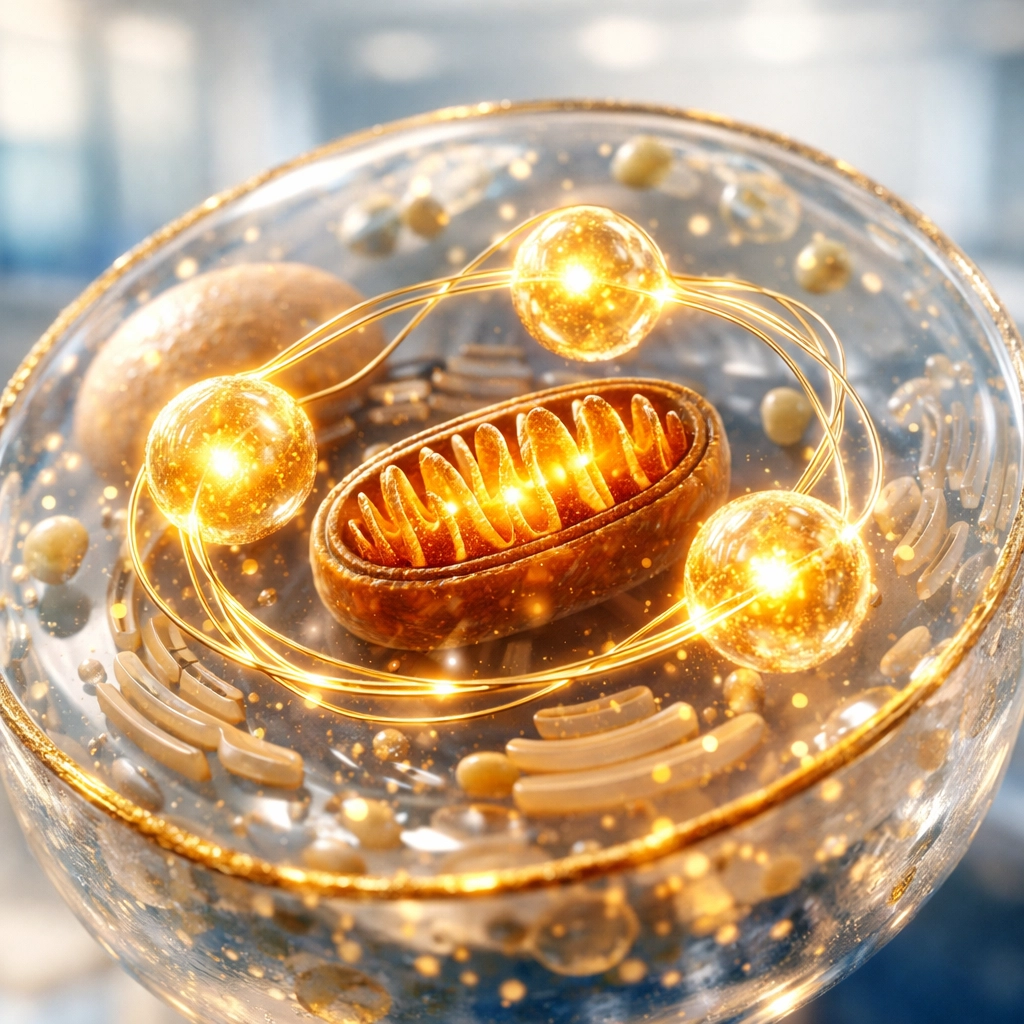
Alt-text: A diagram showing the interconnected loop between Hormones, Metabolism, and Cellular Health (Mitochondria).
The Hormone–Metabolism–Cellular Health Loop
To truly understand your health, you have to see how these three pillars feed into one another. It is a continuous feedback loop:
- Hormones Regulate Metabolism: Imbalanced hormones (like high cortisol or low thyroid) disrupt glucose regulation and fat burning.
- Metabolic Dysfunction Impairs Cellular Energy: Insulin resistance and chronic inflammation damage the mitochondria, making them less efficient at producing ATP.
- Cellular Dysfunction Feeds Back into Hormone Imbalance: When cells are stressed or energy-depleted, they signal the brain and endocrine organs to adjust hormone output, often in a way that further slows the metabolism to "save" energy.
This can create a vicious cycle: Fatigue leads to hormonal disruption, which causes a metabolic slowdown, which increases cellular stress, which results in sustained, chronic fatigue. Breaking this cycle requires addressing all three points of the triangle simultaneously.
Why "One-Size-Fits-All" Models Often Fail
In the world of "men's health clinics" or online weight loss programs, it is common to see fixed protocols. You might be prescribed a standard dose of testosterone or a trendy weight loss medication without a deep dive into why you are feeling this way.
These "cookie-cutter" approaches often:
- Start treatment without comprehensive lab work.
- Ignore the metabolic context (e.g., treating low T while ignoring high insulin).
- Treat symptoms rather than root causes.
- Lack long-term clinical monitoring.
While these methods might improve a number on a blood test in the short term, they frequently miss the underlying network of systems that produced the symptoms in the first place. This is why some people on TRT still feel tired, or why some people lose weight on a drug only to gain it all back (and more) once they stop.
The VidaVital Approach: Systems-Based Medical Evaluation
At VidaVital Medical, we believe in a systems-based evaluation. We don't just look for "high" or "low" markers; we look for how those markers are communicating with each other. A truly comprehensive evaluation includes:
- Deep-Dive Lab Work: We look at complete hormone panels, but we also check glucose and insulin markers, lipid profiles, inflammatory markers, and nutrient levels.
🔗 Related reading: What your blood work reveals about your heart and hormones - Metabolic Assessment: We review how your body handles fuel. Are you "metabolically flexible," or is your body stuck in fat-storage mode?
- Cardiovascular Evaluation: Circulation is the "highway" for your hormones. If your vascular health is poor, your hormones can't reach their destination effectively.
- Lifestyle & Recovery Review: We evaluate sleep patterns, stress levels, and activity. These aren't just "lifestyle choices", they are biological inputs that change your chemistry.
- Symptom Pattern Mapping: We listen to your story. Your symptoms provide the "map" that helps us interpret your lab results.
How Treatment Is Personalized
Once we understand your unique biological blueprint, we create a plan tailored specifically to you. This might include:
- Hormone Optimization: Using bioidentical hormones (when clinically indicated) to restore balance and signaling.
- Metabolic Support: Strategies to improve insulin sensitivity and metabolic flexibility.
- Nutrient & Cellular Therapies: Using targeted IV therapy or pharmaceutical-grade supplements to support mitochondrial function and reduce oxidative stress.
- Personalized Lifestyle Strategies: Adjustments to nutrition, exercise, and sleep that align with your specific hormonal needs.
Our goal is not just to "normalize" a lab value. Our goal is alignment, ensuring your hormones, metabolism, and cells are all working together to help you feel like yourself again.
Real Results Start With Understanding
If you are struggling with persistent fatigue, a metabolism that feels "broken," or the frustrating symptoms of hormonal decline, please know that you are not alone. It is not a personal failing, and it isn't just "part of getting older."
The answer isn't usually found in a single pill or a generic protocol. It’s found in understanding the connection between your hormones, your metabolism, and your cellular health.
At VidaVital Medical, we are here to help you navigate this complexity. We invite you to move beyond the "quick fix" and join us in a partnership for long-term vitality.
🎥 Watch the full provider explanation:
👉 https://youtu.be/jH-FkEgFlmM
🔗 Ready to take the first step?
Schedule a consultation with our team or meet our providers.
About the Author
Christopher Patino, APRN is a dedicated medical provider at VidaVital Medical. He specializes in hormone optimization, metabolic health, and preventative care. His approach is rooted in personalized, lab-guided treatment that focuses on treating the whole person, not just the symptoms.