
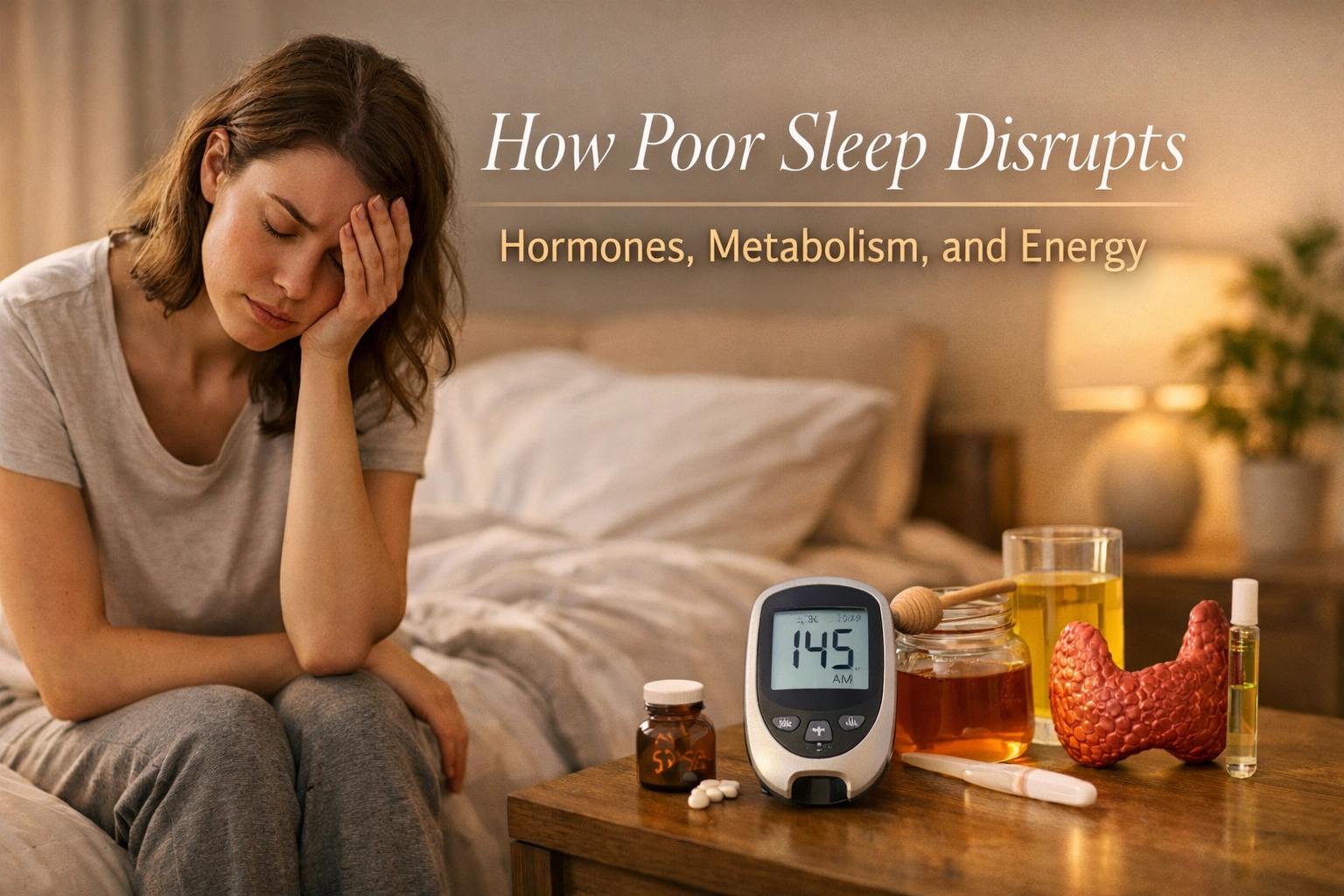
Living in Las Vegas, we take pride in being part of the "City That Never Sleeps." Between the bright lights of the Strip, demanding careers, and the 24/7 nature of our community, many of us treat sleep as a luxury, something we’ll "catch up on" over the weekend. But as Christopher Patino, APRN, at VidaVital Medical often discusses with our patients, sleep is far more than just a period of inactivity. It is a highly active, biologically essential state where your body performs its most critical maintenance.
When you consistently miss out on high-quality sleep, you aren't just feeling tired the next day. You are essentially throwing your internal chemistry into a state of chaos. From your ability to burn fat and build muscle to your mood and long-term brain health, everything relies on the foundation of restorative rest.
In this guide, we’re going to pull back the curtain on the "invisible" side of sleep. We will explore how sleep deprivation acts as a primary disruptor for your hormones, metabolism, and cellular energy, and why addressing sleep is often the "missing link" in Hormone Optimization and Medical Weight Loss.
The Hormonal Factory: What Happens While You Dream?
Your body follows a 24-hour internal clock known as the circadian rhythm. This rhythm dictates when certain hormones should peak and when they should ebb. When this rhythm is broken by poor sleep habits or insomnia, your hormonal "factory" starts missing its deadlines.
1. Testosterone: The Nighttime Surge
For men, the vast majority of testosterone production occurs during sleep, specifically during deep, restorative sleep. If you are only getting 4 or 5 hours of sleep, or if your sleep is frequently interrupted, your body never gets the "green light" to produce the testosterone it needs for the coming day.
Low testosterone isn't just about libido; it impacts your energy, muscle mass, and mental clarity. At VidaVital Medical, we often find that patients seeking a testosterone doctor near me are surprised to learn that their late-night habits are directly sabotaging their levels. Even the most advanced Testosterone Replacement Therapy works best when supported by a body that is allowed to rest and recover.
2. Growth Hormone: The Body’s Repair Specialist
Growth Hormone (GH) is often called the "fountain of youth" hormone. It’s responsible for tissue repair, muscle growth, and bone density. Like testosterone, GH is primarily released in pulses during the deep stages of sleep. Without enough of these deep cycles, your body loses its ability to repair the "wear and tear" of daily life. This is why sleep-deprived individuals often feel physically "older" than they are, experiencing slower recovery from workouts and more frequent aches and pains.

Alt-text: A diagram showing the different stages of sleep and the corresponding peaks of growth hormone and testosterone production.
3. Cortisol: The Morning Alarm Clock
Cortisol is our primary stress hormone. In a healthy cycle, cortisol should be at its lowest point around midnight (allowing you to sleep) and peak early in the morning to help you wake up and feel alert.
When you are sleep-deprived, this rhythm flips. Cortisol levels stay elevated late into the evening, making it even harder to fall asleep, a frustrating cycle often described as being "tired but wired." High evening cortisol doesn't just keep you awake; it also promotes the storage of visceral fat (belly fat) and increases systemic inflammation.
Metabolism and Weight: Why "Willpower" Isn't Enough
Many of our patients in Las Vegas struggle with weight management despite eating well and exercising. When we dig deeper, we often find a significant sleep deficit. As Christopher Patino, APRN, highlights in his clinical insights, sleep deprivation creates a metabolic environment where weight loss becomes an uphill battle.
The Hunger Hormones: Ghrelin and Leptin
Think of Ghrelin and Leptin as the "gas pedal" and "brake pedal" for your appetite.
- Ghrelin tells your brain you are hungry.
- Leptin tells your brain you are full.
Research shows that even just a few nights of poor sleep cause Ghrelin levels to spike and Leptin levels to plummet. This means you feel hungrier throughout the day and less satisfied after you eat. Furthermore, a tired brain craves "quick energy", usually in the form of high-calorie, high-sugar foods. It’s not a lack of willpower; it’s a hormonal imbalance.
Insulin Sensitivity: The Blood Sugar Connection
Sleep deprivation significantly reduces your insulin sensitivity. When your cells become less responsive to insulin, your body has to pump out more of it to manage blood sugar. High insulin is a "fat-storage" signal. Over time, this can lead to weight gain and an increased risk of Type 2 diabetes.
If you're struggling to see results from your efforts, doctor-supervised weight loss can help identify these hormonal roadblocks. We focus on evidence-based weight loss that looks beyond the scale to address these underlying metabolic triggers.
Cellular Energy and the Brain’s "Dishwasher"
Beyond hormones and metabolism, sleep is a time of intense cellular "housekeeping."
Mitochondrial Restoration
Your mitochondria are the "power plants" of your cells. They produce the energy (ATP) that keeps your heart beating and your brain thinking. During sleep, your body repairs damaged mitochondria and clears out oxidative stress. Without this downtime, your cellular batteries never fully recharge, leading to the chronic fatigue and "brain fog" that so many professionals in Las Vegas experience.
Brain Waste Clearance (The Glymphatic System)
One of the most fascinating discoveries in recent medical science is the Glymphatic System. Think of it as your brain’s dishwasher. While you sleep, the space between your brain cells increases, allowing cerebrospinal fluid to wash away metabolic waste and toxins (like beta-amyloid) that accumulate during the day. If you don't sleep, those "dishes" stay dirty, leading to cognitive decline, irritability, and poor decision-making.
Recognizing the Signs: Is Your Sleep Sabotaging You?
You might think you’re "getting by" on six hours of sleep, but your body might be telling a different story. If you are experiencing the following, it’s time to look at your sleep and hormonal health:
- Persistent Fatigue: Feeling tired even after a full night’s rest.
- Brain Fog: Difficulty concentrating or remembering simple tasks.
- Low Libido: A noticeable drop in sexual desire or performance.
- Stubborn Weight Gain: Especially around the midsection, despite diet and exercise.
- Mood Swings: Increased irritability, anxiety, or feelings of being overwhelmed.
At VidaVital Medical, we believe in treating the whole person. We don't just look at a lab value; we look at how you live. We might suggest starting with same-day lab results to see exactly where your hormone levels stand.

Alt-text: A checklist showing common symptoms of sleep deprivation and hormonal imbalance, encouraging readers to self-assess.
Taking Control: Your Path to Restoration
If any of this sounds familiar, don't feel discouraged. Hormonal and metabolic disruptions are common, manageable, and, most importantly, reversible with the right approach.
1. Prioritize Your "Sleep Hygiene"
- Consistency is King: Go to bed and wake up at the same time every day, even on weekends.
- Darken Your Room: Use blackout curtains (a must in the bright Las Vegas nights).
- Cool the Temperature: Your body needs to drop its core temperature to enter deep sleep.
- Limit Blue Light: Turn off screens at least an hour before bed to allow melatonin to rise naturally.
2. Seek Professional Guidance
Sometimes, lifestyle changes aren't enough because the hormonal "reset button" is stuck. This is where Hormone Optimization comes in. Our team, led by experts like Christopher Patino, APRN, specializes in identifying these gaps and creating personalized plans to get your system back in sync.
3. A Holistic Partnership
Think of us as your "personal health team." We are here to guide you through the process, whether that involves medical weight loss in Las Vegas or helping you navigate the complexities of low-T clinics.
Conclusion: You Deserve to Feel Vibrant
In a world that prizes "the grind," choosing to sleep is a radical act of self-care. It is the most powerful, natural performance enhancer available to us. By respecting your body's need for rest, you provide the foundation for your hormones to thrive, your metabolism to burn efficiently, and your energy to remain steady.
If you’re ready to stop guessing and start feeling like yourself again, we invite you to reach out. Whether you’re interested in longevity clinic services or a comprehensive metabolic evaluation, VidaVital Medical is here to help you reclaim your vitality.
Don’t let another restless night drain your potential. Your journey to better health starts with a single, restorative night of sleep, and a partner who understands the science behind it.
Frequently Asked Questions
Can I just take melatonin instead of sleeping more?
Melatonin can help signal to your body that it’s time to sleep, but it isn't a substitute for the actual hours of rest. It’s a tool, not a cure-all.
How long does it take for hormones to normalize after improving sleep?
While some people feel better within a few days, it can take several weeks for hormones like testosterone and cortisol to find their new "homeostasis."
Is "social jetlag" real?
Yes! Staying up late on Friday and Saturday and then trying to "reset" on Monday creates a state of permanent jetlag that is very taxing on your metabolism.

For more information on how we can help you optimize your health, visit us at VidaVital Medical.