

Feeling tired, losing strength, and noticing a drop in sex drive can leave many men questioning what changed as the years go by. The connection between lifestyle choices and hormonal health is more powerful than most realize, with factors like excess body fat and poor sleep directly tied to lower testosterone. This guide brings together practical steps backed by clinical research, helping you identify and address the real habits that impact your energy, mood, and sexual vitality.
Table of Contents
- Step 1: Assess Lifestyle And Current Health Status
- Step 2: Optimize Diet And Nutrient Intake
- Step 3: Enhance Physical Activity And Exercise Routine
- Step 4: Reduce Stress And Improve Sleep Habits
- Step 5: Verify Progress With Medical Supervision
Quick Summary
| Key Insight | Explanation |
|---|---|
| 1. Assess Your Current Health | Document your weight, sleep, exercise routines, and health conditions to understand your testosterone levels. |
| 2. Improve Your Diet Choices | Eliminate processed sugars; include proteins, healthy fats, and micronutrients to support testosterone production. |
| 3. Prioritize Strength Training | Focus on resistance exercises like weight lifting to significantly boost testosterone levels; aim for three to four sessions weekly. |
| 4. Establish Consistent Sleep | Aim for 7 to 9 hours of quality sleep nightly to optimize testosterone production and recovery. |
| 5. Schedule Regular Blood Tests | Get blood tests 8 to 12 weeks after lifestyle changes to assess testosterone levels and ensure progress. |
Step 1: Assess lifestyle and current health status
Before you make any changes to boost testosterone naturally, you need a clear picture of where you stand right now. This means taking an honest look at your daily habits, health conditions, and how you feel overall. Think of it like checking your car’s oil before a long road trip—you can’t fix what you don’t understand. Your lifestyle choices over the past months and years directly affect your hormone levels, and understanding this connection gives you the power to change things.
Start by examining the major lifestyle factors that influence testosterone production. Your weight and body composition matter significantly, since testosterone is linked to excess fat and poor health outcomes. Write down your current weight, and be honest about whether you carry extra weight around your midsection—this is where it counts most for hormone health. Next, assess your sleep patterns. Are you consistently getting 7 to 9 hours of quality sleep each night, or are you running on 5 to 6 hours and telling yourself it’s fine? It’s not. Sleep directly affects testosterone production, so track a typical week’s sleep schedule. Then evaluate your physical activity level. How often do you exercise? What type of exercise do you do? Strength training and weight lifting have a measurable impact on testosterone, so knowing your baseline matters. Finally, consider any chronic health conditions you have like diabetes, heart disease, or high blood pressure. These conditions and the stress that comes with them can suppress testosterone production, so list them out.
Documenting your current emotional and sexual health is equally important. How is your mood day to day? Do you feel mentally sharp or foggy? How is your libido compared to years past? Since testosterone drives libido, muscle mass, bone health, and emotional wellbeing, these observations give you real baseline measurements. You don’t need to feel embarrassed about this—these are medical realities that matter. Write these down in a simple notes file or journal. Before you proceed with lifestyle changes, strongly consider scheduling a blood test to check your actual testosterone levels. This gives you a concrete number to work with and shows whether your symptoms are truly hormone related or something else entirely. VidaVital Medical can help you with proper testing and assessment.
Pro tip: Create a one-page “health snapshot” documenting your weight, sleep hours per night, weekly exercise frequency, major health conditions, mood, and sexual function—this becomes your before picture and keeps you motivated when changes take time to show up on the scale.
Here’s a summary of key lifestyle factors that influence testosterone and their typical impact:
| Lifestyle Factor | Typical Negative Effect | Typical Positive Effect |
|---|---|---|
| Excess body fat | Lowers testosterone | Healthy weight raises levels |
| Poor sleep (under 6h) | Suppresses hormone production | 7-9 hours optimizes hormones |
| Sedentary lifestyle | Reduces testosterone output | Regular exercise increases |
| Chronic stress | Raises cortisol, lowers T | Stress reduction supports T |
| Unhealthy diet | Promotes hormonal imbalance | Balanced diet boosts T |
Step 2: Optimize diet and nutrient intake
Your diet is one of the most direct levers you can pull to influence testosterone levels. What you eat directly affects your hormones, energy, and sexual function. The foods you choose today shape your testosterone tomorrow. Rather than chasing expensive supplements or restrictive diets, focus on building sustainable eating habits that naturally support hormonal balance. This step is about making smarter food choices that work with your body, not against it.

Start by eliminating processed sugars and refined carbohydrates from your daily meals. These foods trigger blood sugar spikes that lead to inflammation and weight gain, both of which suppress testosterone production. Swap sugary drinks, pastries, and packaged snacks for whole foods like eggs, chicken breast, fatty fish, and vegetables. Speaking of fish, salmon and sardines are testosterone powerhouses because they contain omega 3 fatty acids and selenium. Healthy fats matter more than you might think. Include avocados, olive oil, nuts, and seeds in your meals. Your body needs adequate fat to produce testosterone, so going too low on fat intake is counterproductive. Protein should be a cornerstone of every meal. Aim for at least 0.8 to 1 gram per pound of your body weight daily. This supports muscle maintenance and provides the building blocks your body needs for hormone synthesis. Beyond individual foods, understand that foods and supplements can increase testosterone by regulating luteinizing hormone and suppressing testosterone degradation. Antioxidant rich foods like berries, dark leafy greens, and tomatoes help protect your testosterone from being broken down in your body.
Calorie balance is equally critical. Many men think eating less will help them lose fat faster, but severe calorie restriction actually lowers testosterone levels. You need a moderate calorie deficit, not an extreme one. A healthy diet supporting hormonal balance prevents obesity and chronic disease that lower testosterone. Focus on nutrient density rather than calorie counting. Fill your plate with foods that are packed with vitamins, minerals, and protein. Micronutrients like zinc, magnesium, and vitamin D play specific roles in testosterone production, so if you’re deficient in any of these, supplementation might help. Track your eating for one week without changing anything. Write down what you eat and when. This reveals patterns you might not notice otherwise, like drinking three energy drinks a day or eating processed foods at nearly every meal. Once you see the pattern, you can make one or two targeted changes instead of overhauling everything at once.
Pro tip: Plan and prepare three simple meals you enjoy that hit your protein and micronutrient targets, then rotate them throughout the week to remove decision fatigue and ensure consistency without boredom.
The table below contrasts common food choices and their effect on testosterone health:
| Food Group | Impact on Testosterone | Recommendation |
|---|---|---|
| Processed sugars/carbs | Suppress hormone levels | Minimize or avoid daily |
| Lean proteins (eggs, fish) | Support T production | Include with each meal |
| Healthy fats (avocados, nuts) | Essential for hormone synthesis | Add regularly to diet |
| Berries/leafy greens | Protect against T breakdown | Eat frequently |
Step 3: Enhance physical activity and exercise routine
Exercise is your most powerful tool for naturally raising testosterone. Your muscles are like factories that manufacture hormones, and the more you stimulate them through intentional training, the more testosterone your body produces. This step transforms you from sedentary to active in a way that directly boosts your hormone levels and reclaims your vitality. The key is understanding what types of exercise work best and how to avoid the trap of doing too much too soon.
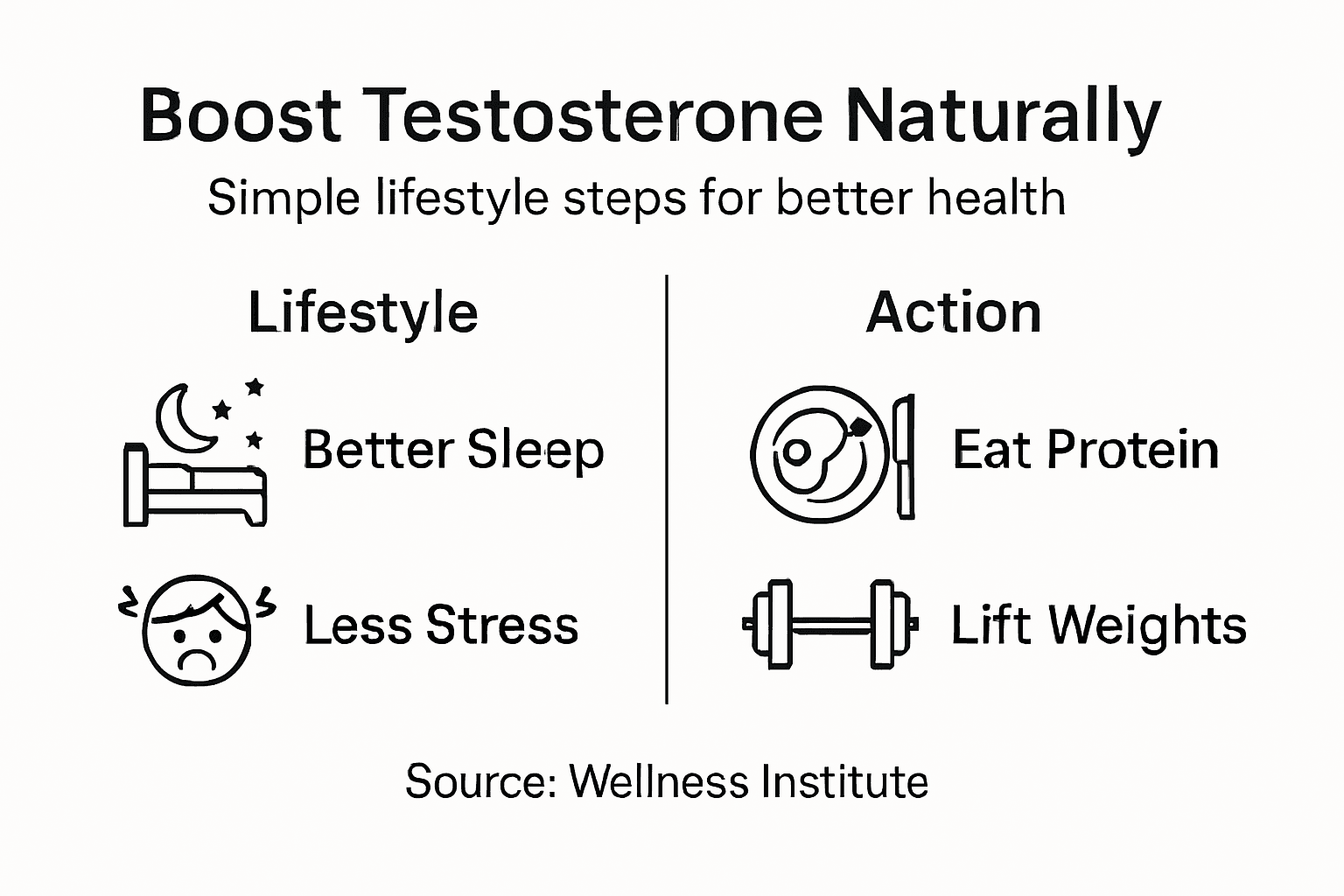
Focus on resistance training as your primary weapon. Lifting weights, especially compound movements like squats, deadlifts, and bench presses, triggers significant testosterone production. These movements engage multiple muscle groups simultaneously, creating a hormonal response throughout your body. Start with moderate weight that challenges you for 8 to 12 repetitions, then gradually increase as you get stronger. You don’t need to spend two hours in the gym. Three to four sessions per week lasting 45 minutes each delivers superior results compared to marathon training sessions. Regular exercise, especially resistance training and high intensity interval training, can transiently increase testosterone for up to an hour post exercise. This means you get an immediate hormonal boost right after your workout, which is why timing matters. Beyond weights, incorporate 20 to 30 minutes of aerobic activity like jogging, cycling, or rowing twice weekly. This combination of resistance and aerobic training creates a powerful synergy that maximizes testosterone production while building cardiovascular health. Many men make the mistake of overtraining, thinking more is always better. It’s not. Excessive training without adequate recovery actually suppresses testosterone and leaves you exhausted. Your body produces testosterone during rest, not during the workout itself.
Recovery between sessions is where the magic happens. Take at least one full rest day weekly where you do no formal exercise. Sleep 7 to 9 hours each night because testosterone production peaks during deep sleep. Exercise, especially weight lifting, has clear evidence to boost testosterone and human growth hormone when combined with proper recovery. Listen to your body. If you feel constantly fatigued, irritable, or experience persistently elevated heart rate, you’re likely overtraining. Scale back for a week and let your system recover. Start where you are right now. If you haven’t exercised in years, begin with bodyweight exercises or light weights for two weeks before progressing. This prevents injury and builds the foundation for sustainable training.
Pro tip: Track your workouts in a simple notebook or phone app noting the exercises, weight used, and repetitions, then aim to increase either the weight or reps every week, which keeps your nervous system engaged and prevents testosterone adaptation plateaus.
Step 4: Reduce stress and improve sleep habits
Stress and poor sleep are testosterone killers. When you’re stressed, your body floods itself with cortisol, a hormone that directly opposes testosterone production. Think of cortisol and testosterone as competitors fighting for the same biological resources. Your sleep quality matters just as much as diet and exercise because most testosterone production occurs during deep REM sleep. Without quality sleep, your body simply cannot manufacture adequate testosterone no matter what else you do right. This step addresses both sides of the equation so your hormones can thrive.
Start by establishing a consistent sleep schedule. Go to bed at the same time every night and wake at the same time every morning, even on weekends. Your body has an internal clock, and respecting it signals your nervous system to prepare for deep sleep. Aim for 7 to 9 hours nightly because anything less consistently drops testosterone levels. Create an actual sleep environment rather than just a place where you happen to close your eyes. Your bedroom should be cool, dark, and quiet. A temperature around 65 to 68 degrees Fahrenheit is optimal for sleep. Remove your phone from the bedroom or at least keep it across the room so you’re not tempted to scroll at 11 PM. Blue light from screens suppresses melatonin production, the hormone that signals your body to sleep, so stop using screens one hour before bed. Improving sleep hygiene and managing stress are critical for maintaining healthy testosterone levels. Conditions like sleep apnea actively destroy testosterone production, so if you snore heavily or wake gasping for air, schedule a sleep study immediately.
For stress management, pick one practice and do it consistently rather than sampling everything. Meditation works brilliantly, but only if you actually do it. Start with just five minutes daily using a meditation app like Insight Timer or Headspace. Alternatively, deep breathing exercises deliver measurable results in just three minutes. Sit quietly and breathe in for a count of four, hold for four, then exhale for four. Repeat ten times. This activates your parasympathetic nervous system, which is your body’s natural stress relief switch. Many men dismiss these practices as too simple, but they work because they’re based on actual physiology. Beyond these techniques, managing stress with mindfulness, relaxation, and lifestyle adjustments supports testosterone health. Additionally, reduce alcohol consumption and avoid tobacco entirely, as both suppress testosterone and destroy sleep quality. If work stress is relentless, schedule one thing weekly that you genuinely enjoy that has nothing to do with productivity. This is not laziness. This is maintenance.
Pro tip: Set a phone alarm for one hour before your target bedtime as a reminder to stop working, dim the lights, and begin your wind-down routine so your body chemistry naturally shifts toward sleep rather than fighting against your schedule.
Step 5: Verify progress with medical supervision
You cannot manage what you do not measure. After weeks of diet changes, consistent exercise, better sleep, and stress reduction, you need concrete proof that your efforts are actually working. This is where medical supervision comes in. Blood tests reveal your actual testosterone levels and show whether your lifestyle changes are delivering results or if you need additional intervention. Working with a healthcare provider keeps you accountable, ensures your approach is safe, and prevents you from wasting months on ineffective strategies.
Schedule a follow-up testosterone test approximately 8 to 12 weeks after you began your lifestyle modifications. This timeframe allows enough time for changes to show up in your blood work. Your doctor should order a morning fasting test because testosterone levels peak in the early morning hours. Clinical guidelines advise thorough assessment including confirming low testosterone levels with morning fasting tests and evaluating symptoms. When you get your results, you’ll have specific numbers to compare against your baseline assessment from Step 1. Did your testosterone increase by 100 points, 200 points, or more? Are your symptoms improving alongside the numbers? Your doctor can also check other hormonal markers and overall health indicators to ensure your lifestyle changes are working holistically. Beyond testosterone itself, your physician should assess your cardiovascular health, prostate health if relevant, and metabolic markers like cholesterol and blood glucose. These indicators matter because they show whether you’re building genuine health, not just chasing one hormone number.
If your testosterone improved significantly, continue exactly what you are doing. Do not change a winning formula. If progress is slower than expected, your doctor can help you identify what might be limiting your results. Perhaps your sleep is still disrupted by undiagnosed sleep apnea. Maybe your stress levels are higher than you realize. Possibly your body needs additional micronutrient supplementation. Endocrine Society guidelines emphasize diagnosis based on consistent low testosterone and symptoms with reliable laboratory assays, and after initiation of any therapy, regular follow-up is necessary to monitor hormone levels, safety, and therapy efficacy. This ongoing monitoring creates accountability and prevents you from spinning your wheels. Some men find that lifestyle changes alone bring testosterone into the normal range and resolve their symptoms completely. Others discover that medical interventions like hormone replacement therapy become appropriate once their lifestyle foundation is solid. Either way, you have real data driving your decisions instead of guessing.
Pro tip: Keep a simple three-column log documenting your test date, testosterone level, and a note about your top three lifestyle habits during that period, so you can identify exactly which changes correlate with your best results and replicate them.
Take Control of Your Testosterone and Vitality Today
Struggling with low energy, diminished libido, or feeling less like yourself? This article details how lifestyle factors such as sleep, diet, stress, and exercise directly affect testosterone levels and overall men’s health. If you identify with challenges like excess body fat, poor sleep quality, or stress disrupting your hormone balance, you are not alone. At VidaVital Medical, we specialize in personalized, medically supervised solutions to complement natural lifestyle changes for restoring hormonal health and vitality.

Discover how our advanced wellness services can support your journey toward optimal testosterone levels and renewed energy. From comprehensive hormone testing and individualized treatment plans to expert guidance on weight management and stress reduction, we provide a holistic approach tailored to your unique needs. Do not wait for symptoms to worsen. Take the next step now by visiting VidaVital Medical and start your path to renewed strength and confidence today. Explore how our hormonal therapy options and dedicated medical team can help you achieve lasting results.
Frequently Asked Questions
How can I assess my current testosterone levels?
To assess your current testosterone levels, consider scheduling a blood test with your healthcare provider. This will give you a concrete number to work with, typically within a few days after the appointment.
What lifestyle changes can I make to boost testosterone naturally?
Focus on improving your diet, increasing physical activity, managing stress, and ensuring quality sleep. Start by eliminating processed sugars and aiming for at least 30 minutes of exercise three to four times a week, then evaluate your progress within 8 to 12 weeks.
How important is sleep for testosterone production?
Sleep is crucial for testosterone production, with most testosterone being produced during deep REM sleep. Aim for 7 to 9 hours of quality sleep each night to optimize your hormone levels.
What types of exercises are best for increasing testosterone levels?
Resistance training, particularly compound movements like squats and deadlifts, is most effective for boosting testosterone. Incorporate these exercises into your routine at least three times a week, ensuring you challenge yourself with proper weights.
How can I manage stress to support testosterone health?
To manage stress, practice consistent relaxation techniques such as deep breathing or meditation. Start with five minutes a day, gradually increasing your practice, which can significantly lower cortisol levels and support testosterone production.
When should I retest my testosterone levels after making lifestyle changes?
Plan to retest your testosterone levels approximately 8 to 12 weeks after implementing lifestyle changes. This timeline allows enough time for improvements to be reflected in your blood work and helps you track your progress effectively.