
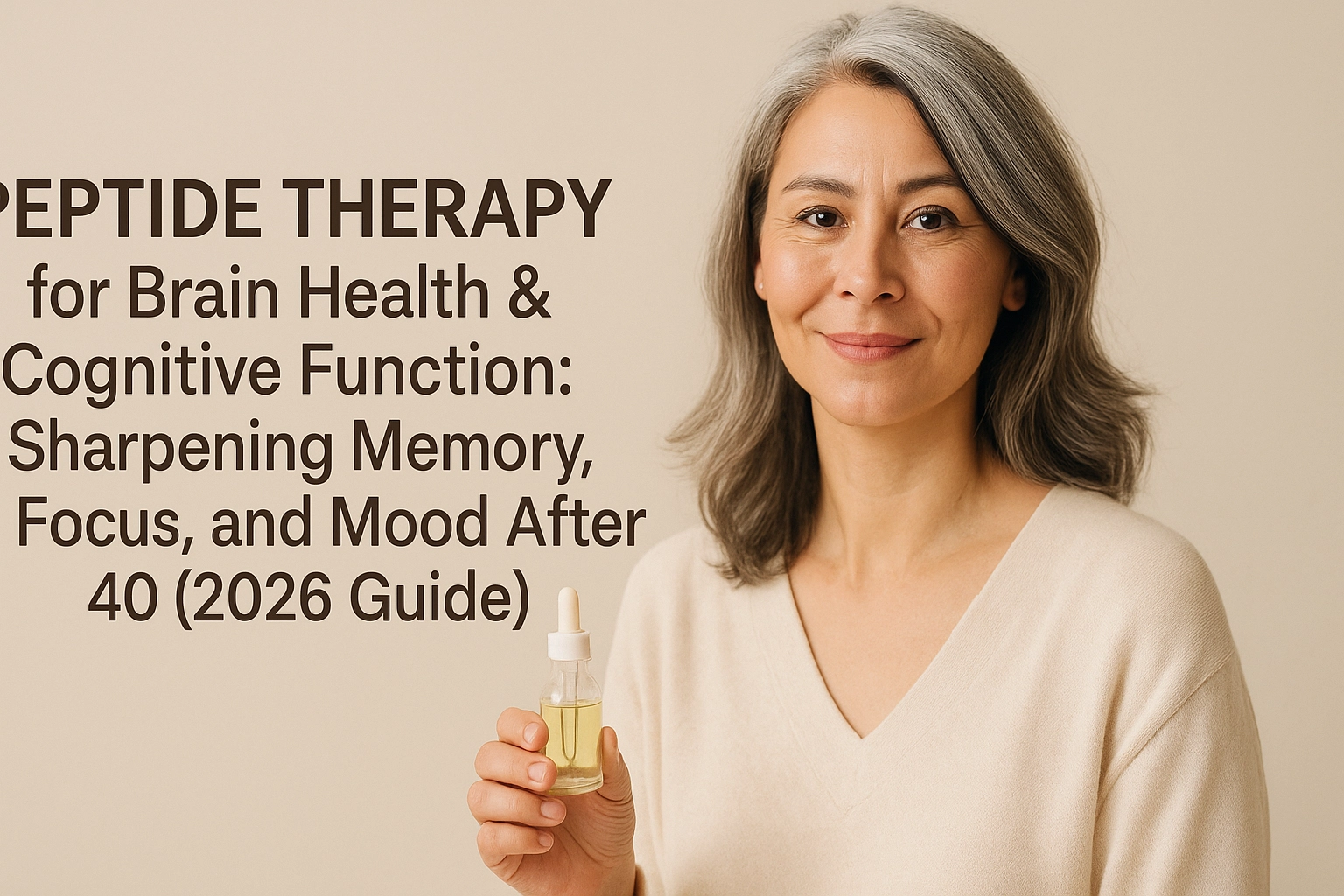
Meta Description: Discover how peptide therapy enhances memory, focus, and mood for adults over 40. Learn about safe, effective treatments that combat brain fog and age-related cognitive decline.
Published: January 8, 2026 | Author: Dr. Sarah Martinez, VidaVital Medical
You know that moment when you walk into a room and completely forget why you went there? Or when you're mid-conversation and the perfect word just… disappears? If you're over 40, you're probably nodding right now. Sound familiar?
Here's the thing most people don't realize: that occasional brain fog, difficulty concentrating, or memory hiccup isn't just "getting older." Your brain is actually experiencing measurable changes in neurotransmitter production, blood flow, and cellular repair processes. But here's what's exciting, peptide therapy is emerging as a game-changing solution that works with your body's natural systems to restore cognitive sharpness.
Let's get real about what's happening to your brain after 40, and more importantly, what you can do about it.
Is Brain Fog After 40 Really "Normal"?
You're not imagining things. Research shows that cognitive processing speed naturally declines by about 1-2% per year after age 40, while working memory and attention span can decrease even more noticeably. But here's where conventional medicine gets it wrong, just because something is common doesn't mean you have to accept it.
Your brain contains naturally occurring peptides (short chains of amino acids) that act as signaling molecules, helping neurons communicate effectively. As we age, our bodies produce fewer of these crucial peptides, leading to:
- Reduced neurotransmitter efficiency
- Decreased cerebral blood flow
- Slower neural repair processes
- Increased neuroinflammation
The good news? Peptide therapy can replenish these declining signals, essentially giving your brain the tools it needs to function at its best again.

What Exactly Are Cognitive-Supporting Peptides?
Think of peptides as your brain's personal maintenance crew. These naturally occurring compounds work behind the scenes to:
Enhance Neural Communication: Peptides improve how brain cells talk to each other, making information processing faster and more efficient.
Stimulate Neurogenesis: They actually help grow new brain cells and strengthen existing neural pathways, yes, even after 40.
Reduce Inflammation: Many cognitive issues stem from chronic brain inflammation. Peptides help calm this inflammatory response.
Optimize Blood Flow: Better circulation means more oxygen and nutrients reaching your brain tissue.
Unlike prescription stimulants or nootropics that force temporary changes, peptide therapy works by restoring your brain's natural repair and optimization processes. It's like the difference between pushing a tired horse harder versus feeding it properly so it can run strong again.
Which Peptides Actually Improve Memory and Focus?
Not all peptides are created equal when it comes to cognitive function. Here are the research-backed options showing real results:
Selank: This powerhouse peptide acts as a natural anxiolytic (anti-anxiety agent) while simultaneously boosting learning, memory, and cognitive energy. Clinical studies demonstrate that Selank increases serotonin levels without the side effects or addiction risks of pharmaceutical alternatives. Patients report feeling mentally clearer within 2-4 weeks of starting therapy.
Semax: Originally developed to treat stroke-related brain damage, Semax supports neuron growth, maturation, and survival. It's particularly effective for adults with ADHD-like symptoms, difficulty concentrating, or those recovering from cognitive stress or trauma.
Pinealon: This peptide specifically targets learning and memory enhancement by modulating gene expression and neurotransmitter activity. Research shows measurable improvements in complex problem-solving and memory recall tasks.
Delta Sleep-Inducing Peptide (DSIP): Quality sleep is crucial for memory consolidation. DSIP improves deep sleep architecture while modulating stress-related brain chemicals, leading to better next-day cognitive performance and emotional resilience.
Each of these peptides addresses different aspects of cognitive decline, which is why personalized treatment plans often combine multiple approaches based on your specific symptoms and goals.
How Long Before You Actually Notice Mental Clarity Improvements?
Let's be honest, you want to know when you'll start feeling sharper, not just hear about theoretical benefits. Here's the realistic timeline based on clinical experience:
Week 1-2: Most patients notice improved sleep quality and reduced afternoon mental fatigue first. You might find yourself less mentally "sluggish" after lunch.
Week 3-4: Enhanced focus during demanding tasks becomes apparent. Many report being able to work on complex projects for longer periods without mental fatigue.
Week 6-8: Memory improvements become noticeable, better recall of names, improved ability to follow complex conversations, and enhanced working memory.
Month 3+: Peak benefits typically emerge here, including improved problem-solving abilities, enhanced creativity, and better stress resilience during mentally demanding situations.
The key is consistency. Peptide therapy works by gradually restoring optimal cellular function, not delivering instant pharmaceutical-like effects.

Can Peptides Really Help With Mood and Stress Resilience?
Absolutely, and here's why this matters more than you might realize: chronic stress literally shrinks brain tissue in areas responsible for memory and executive function. When you're constantly stressed, your brain operates in survival mode rather than optimization mode.
Peptides like Selank work by modulating your stress response system. Instead of blocking stress hormones (which you actually need), they help your brain process and recover from stress more efficiently. Patients consistently report:
- Feeling more emotionally balanced during challenging situations
- Improved ability to "bounce back" from stressful events
- Reduced anxiety without feeling sedated or "dulled"
- Better emotional regulation during hormonal changes
This isn't about masking symptoms, it's about giving your brain the resources to maintain equilibrium naturally.
What Makes Peptide Therapy Different From Other Brain Health Approaches?
You've probably tried the usual suspects: omega-3 supplements, meditation apps, brain training games, maybe even prescription medications. While these can be helpful, peptide therapy addresses the root cause rather than just managing symptoms.
Unlike Stimulants: No jittery energy, crashes, or dependency risk. Peptides work with your natural rhythms.
Unlike Antidepressants: No sexual side effects, weight gain, or emotional blunting. You feel like yourself, just sharper.
Unlike Supplements: Peptides are identical to what your body naturally produces, ensuring optimal absorption and utilization.
Unlike Lifestyle Changes Alone: While diet and exercise matter, peptides can restore function even when lifestyle optimization has plateaued.
The safety profile is remarkable, clinical studies show virtually no side effects, contraindications, or addiction potential because you're essentially replacing what your body should naturally produce.
How Do You Know If Peptide Therapy Is Right For Your Cognitive Goals?
This is where honest self-assessment comes in. Peptide therapy tends to be most beneficial for adults experiencing:
- Mental fatigue by mid-afternoon most days
- Difficulty concentrating during important conversations or tasks
- Forgetting words, names, or details you used to recall easily
- Feeling less creative or mentally "flexible" than before
- Increased irritability or mood swings under stress
- Sleep disruption affecting next-day mental performance
You're an ideal candidate if you're generally healthy but notice your cognitive "edge" has dulled. This therapy works best for optimization and restoration rather than treating severe neurological conditions.
The beauty of peptide therapy is that it's highly individualizable. During your consultation at VidaVital Medical, we assess your specific cognitive goals, current symptoms, and health history to design a targeted approach.

What Should You Expect During Cognitive-Focused Peptide Treatment?
Here's the real-world experience most patients have:
Initial Consultation: We dive deep into your cognitive concerns, sleep patterns, stress levels, and mental performance goals. This isn't a 15-minute rushed appointment, we take time to understand your unique situation.
Customized Protocol: Based on your assessment, we design a peptide regimen targeting your specific needs. This might combine cognitive-enhancing peptides with sleep or stress-support options.
Administration: Most cognitive peptides are administered via small subcutaneous injections (similar to insulin injections diabetics use). Don't worry, the needles are tiny, and most patients find the process surprisingly easy.
Monitoring and Adjustment: We track your progress through regular check-ins and objective assessments, adjusting your protocol as needed to optimize results.
Ongoing Support: You're not left to figure this out alone. Our team provides guidance on lifestyle factors that enhance peptide effectiveness.
The entire process is designed around your schedule and comfort level. Many of our patients with busy professional lives particularly appreciate how seamlessly peptide therapy integrates into their routines.
Are There Any Risks or Side Effects to Consider?
This is probably the most refreshing aspect of peptide therapy, the side effect profile is remarkably clean compared to most cognitive-enhancement approaches.
Because peptides are bioidentical to what your body naturally produces, serious adverse reactions are extremely rare. The most commonly reported experiences include:
- Mild injection site tenderness (resolves within hours)
- Occasional vivid dreams when starting sleep-supporting peptides
- Initial mild headaches as brain circulation improves (typically resolves within a week)
Contraindications are minimal, though we carefully review your medical history and current medications during consultation. Peptide therapy is generally not recommended during pregnancy or if you have active cancer (though this varies by specific peptide and situation).
The absence of dependency risk is particularly important for cognitive peptides. You won't experience withdrawal symptoms or rebound cognitive decline if you discontinue treatment.
How Do You Get Started With Brain-Focused Peptide Therapy?
Ready to reclaim your mental sharpness? Here's how to move forward:
Schedule Your Consultation: Contact VidaVital Medical to book your comprehensive cognitive health assessment. We have locations in Omaha, Las Vegas, Coral Gables, Boca Raton, Albuquerque, and Milwaukee.
Come Prepared: Bring a list of your current supplements, medications, and specific cognitive concerns. The more detailed you are about your goals, the better we can customize your treatment.
Commit to the Process: Peptide therapy requires consistency for optimal results. Most patients see their best outcomes with 3-6 months of treatment, though many choose to continue long-term for ongoing cognitive optimization.
Your brain deserves the same attention and care you give to your physical fitness. After 40, cognitive health becomes just as important as cardiovascular health, and peptide therapy offers a science-based solution that works with your body's natural systems.
You don't have to accept mental fog, poor concentration, or memory lapses as inevitable parts of aging. Your best cognitive years don't have to be behind you.
Frequently Asked Questions
Q: How quickly will I notice improvements in memory and focus?
A: Most patients report initial improvements in mental energy and focus within 2-4 weeks, with memory enhancement becoming noticeable around 6-8 weeks of consistent treatment.
Q: Are cognitive peptides safe for long-term use?
A: Yes, clinical research shows peptide therapy has an excellent safety profile for extended use, with no addiction potential or serious side effects when properly administered.
Q: Can I combine peptide therapy with other brain health supplements?
A: Generally yes, though we'll review all your current supplements during consultation to ensure optimal compatibility and prevent any interactions.
Q: Will peptide therapy interfere with my current medications?
A: Peptides rarely interact with medications, but we always conduct a thorough review of your current prescriptions to ensure safety and compatibility.
Q: What's the difference between peptide therapy and nootropics?
A: Nootropics are synthetic compounds that temporarily alter brain chemistry, while peptides are bioidentical to your body's natural signaling molecules, supporting long-term brain health restoration.
Schema Markup: FAQ, Article, Medical
Breadcrumb: Home > Blog > Cognitive Health > Peptide Therapy for Brain Health
About the Author: Dr. Sarah Martinez is a board-certified physician specializing in regenerative medicine and cognitive health optimization at VidaVital Medical. With over 12 years of experience in peptide therapy, she has helped hundreds of patients restore mental clarity and cognitive function using cutting-edge, science-based treatments.
Last Updated: January 8, 2026