

You know that feeling when you're lying awake at 3 AM, mind racing through tomorrow's to-do list while your body feels exhausted? Or when you snap at your family over something small because you're running on fumes? You're not imagining things, and you're definitely not alone.
If you're over 40 and feeling like stress has become your unwelcome roommate, constantly draining your energy and stealing your peace of mind, there's something you should know about. Peptide therapy is quietly revolutionizing how we approach stress management and resilience: not with Band-Aid solutions, but by actually repairing the biological systems that chronic stress has thrown out of whack.
Here's the thing most people don't realize: that constant overwhelm, brain fog, and emotional exhaustion aren't character flaws or signs you need to "tough it out" harder. They're often the result of your stress response system being stuck in overdrive, and peptides can help reset it back to normal.
What Are Peptides and Why Should You Care About Them for Stress?
Let's get real about what peptides actually are (without the medical textbook jargon). Peptides are essentially tiny messengers made of amino acids that tell your body how to function properly. Think of them as the software updates your body needs to run smoothly, especially after years of chronic stress have corrupted the original programming.
Unlike medications that often mask symptoms, peptides work at the cellular level to restore the biological systems that stress has damaged. They're naturally occurring in your body, but production decreases as we age: especially after 40, and particularly when we've been under chronic stress.

Sound familiar? That afternoon crash, the inability to bounce back from setbacks like you used to, or feeling "tired but wired" at bedtime: these aren't inevitable parts of aging. They're often signs that your stress response system needs support, and that's exactly what specific peptides can provide.
The beautiful thing about peptide therapy for stress is that it doesn't just help you cope better; it actually helps rebuild your resilience from the ground up. Instead of white-knuckling through another overwhelming week, you're giving your body the tools to handle stress more effectively.
How Do Peptides Actually Work in Your Body for Stress Relief?
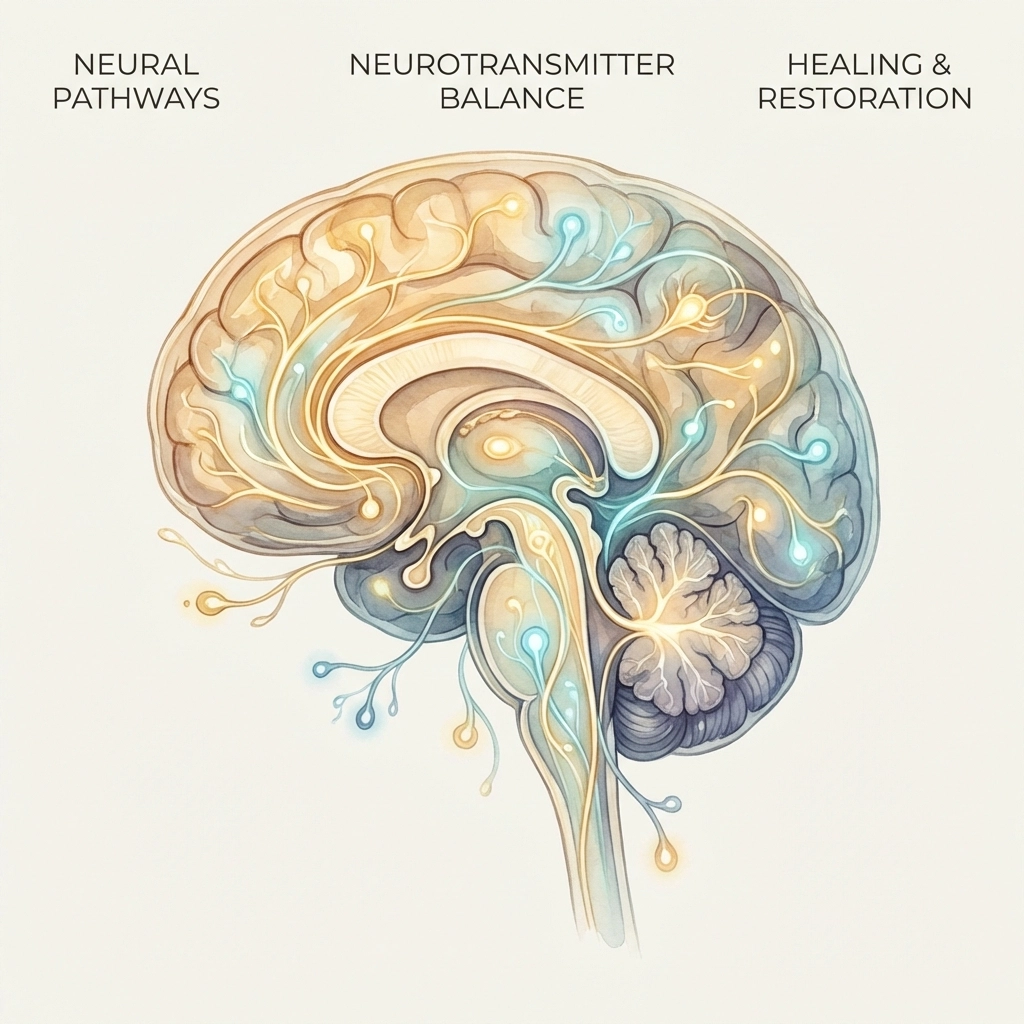
Here's where things get really interesting. Chronic stress wreaks havoc on three crucial systems in your body, and peptides can help restore each one:
Your Stress Response System Gets Stuck
Your hypothalamic-pituitary-adrenal (HPA) axis is supposed to ramp up during stress and then dial back down for recovery. But chronic stress keeps this system in constant fight-or-flight mode, flooding your body with cortisol even when you're trying to relax. Specific peptides help regulate your natural cortisol rhythm, allowing your body to actually recover between stressful events instead of staying permanently on edge.
Your Brain Chemistry Gets Disrupted
Chronic stress depletes serotonin and dopamine: the neurotransmitters responsible for mood regulation and motivation. This is why everything feels harder when you're stressed, and why small setbacks can feel overwhelming. Peptides like Selank and Semax work to enhance neurotransmitter activity, helping restore that sense of calm confidence you used to have.
Your Cellular Energy Takes a Hit
That bone-deep exhaustion you feel isn't just mental: it's cellular. Chronic stress damages your mitochondria (your cells' power plants), leaving you running on empty even after a full night's sleep. Peptides like NAD+ support mitochondrial health, providing sustainable energy that helps restore focus, motivation, and a more positive mental outlook.
The research is clear: rather than simply masking stress symptoms, peptides help rebalance the underlying systems that stress has knocked off course. It's like giving your body a roadmap back to its natural state of calm, focused energy.
What Can You Realistically Expect and When?
Let's be honest about timelines here, because peptide therapy isn't a magic overnight fix (though many people start feeling initial improvements within weeks). Your results will depend on how long you've been dealing with chronic stress and your overall health, but here's what most people experience:
Weeks 2-6: The Foundation Phase
This is when most people notice their sleep starting to improve: falling asleep easier, staying asleep longer, and waking up more refreshed. You might find you're not quite as reactive to daily stressors, and that overwhelming sense of dread about your to-do list starts to lift. Some people describe it as finally being able to take a full, deep breath.
1-3 Months: The Clarity Phase
Here's where things get exciting. Brain fog starts clearing, focus sharpens, and you begin having more consistent energy throughout the day. That 3 PM crash becomes less dramatic, and you might find yourself handling setbacks with more perspective. Many people report feeling more like "themselves" again: that person who could handle challenges without falling apart.

3-6 Months: The Resilience Phase
This is when peptide therapy really shines. Your stress tolerance fundamentally improves, not because you're avoiding stress, but because your body has the tools to handle it effectively. Energy levels become consistently higher, mental clarity is sharp, and you develop what many describe as "calm confidence": the ability to stay centered even when life gets chaotic.
Remember, these aren't just temporary improvements. Peptides are helping rebuild your body's natural resilience systems, creating lasting changes in how you respond to stress.
Which Peptides Are Best for Stress and Resilience?
Not all peptides are created equal when it comes to stress management. Here are the key players your healthcare provider might recommend:
Sermorelin and NAD+: The Recovery Duo
These work together beautifully to improve sleep quality and support overnight recovery. Better sleep leads to better mood, clearer thinking, and greater emotional balance during the day. NAD+ specifically supports cellular energy production, helping combat that chronic fatigue that comes with long-term stress.
Selank and Semax: The Mood Stabilizers
These peptides enhance neurotransmitter activity to reduce anxiety and improve mental clarity without making you feel sedated or "off." Many people describe feeling more emotionally stable and mentally sharp when using these peptides.
BPC-157: The System Healer
While known for physical healing, BPC-157 also supports overall system recovery, including the gut-brain connection that's often disrupted by chronic stress. A healthy gut contributes significantly to mood stability and stress resilience.
The specific peptide protocol that's right for you depends on your individual health profile and stress patterns. This is why working with a knowledgeable healthcare provider is crucial: they can design a personalized approach based on your specific needs and goals.
How Do You Maximize Your Results?
Here's something important: peptide therapy works best when you're also addressing the root causes of stress in your life. The peptides give your body the biological tools to handle stress better, but combining them with stress-reduction strategies amplifies the benefits dramatically.
Support Your Sleep
Since many stress-related peptides work during overnight recovery, prioritizing sleep hygiene maximizes their effectiveness. This means consistent bedtimes, a cool, dark room, and avoiding screens before bed. The peptides will help improve your sleep quality, but you can support the process.

Address Underlying Stressors
Peptides aren't a substitute for addressing toxic relationships, overwhelming work situations, or other major life stressors. But they can give you the mental clarity and emotional stability to make necessary changes in your life. Many people find they have better judgment and more courage to set boundaries when their stress response system is functioning properly.
Consider Complementary Therapies
Meditation, therapy, regular exercise, and stress management techniques work synergistically with peptide therapy. The peptides provide the biological foundation for resilience, while these practices help you develop healthy coping strategies.
Monitor Your Progress
Keep track of your energy levels, sleep quality, mood stability, and stress tolerance. This helps your healthcare provider adjust your protocol as needed and ensures you're getting maximum benefits.
For those interested in comprehensive approaches to wellness, our cognitive health peptide therapy programs often complement stress management protocols beautifully.
Getting Started with Stress-Focused Peptide Therapy
You don't have to keep living in survival mode. If you're tired of feeling overwhelmed, exhausted, and emotionally depleted, peptide therapy might be the missing piece in your wellness puzzle.
At VidaVital Medical, we understand that stress affects everyone differently. That's why we start with a comprehensive assessment of your stress patterns, health history, and wellness goals. We're not interested in one-size-fits-all solutions: we want to understand your unique situation and design a protocol that addresses your specific needs.
The consultation process involves detailed lab work to assess your current stress markers, hormone levels, and overall health status. From there, we create a personalized peptide protocol designed to restore your body's natural resilience systems.

Your best years don't have to be behind you, and that overwhelming stress doesn't have to be your new normal. Peptide therapy offers a science-based approach to reclaiming your calm, energy, and emotional balance: not temporarily, but as a lasting foundation for the life you want to live.
Remember, seeking help for chronic stress isn't a sign of weakness; it's a sign of wisdom. Your body has been working overtime to keep you functioning under chronic stress, and it deserves the support that peptide therapy can provide.
Ready to explore how peptide therapy can help you build lasting resilience? Contact VidaVital Medical today to schedule your comprehensive stress and wellness assessment. Your future, calmer self will thank you.
Published: January 10, 2026
Author: VidaVital Medical Team
Medically Reviewed: Dr. Justin Pulliam, President, VidaVital Medical
The information provided in this article is for educational purposes only and is not intended to replace professional medical advice, diagnosis, or treatment. Always consult with qualified healthcare providers before beginning any peptide therapy program.