
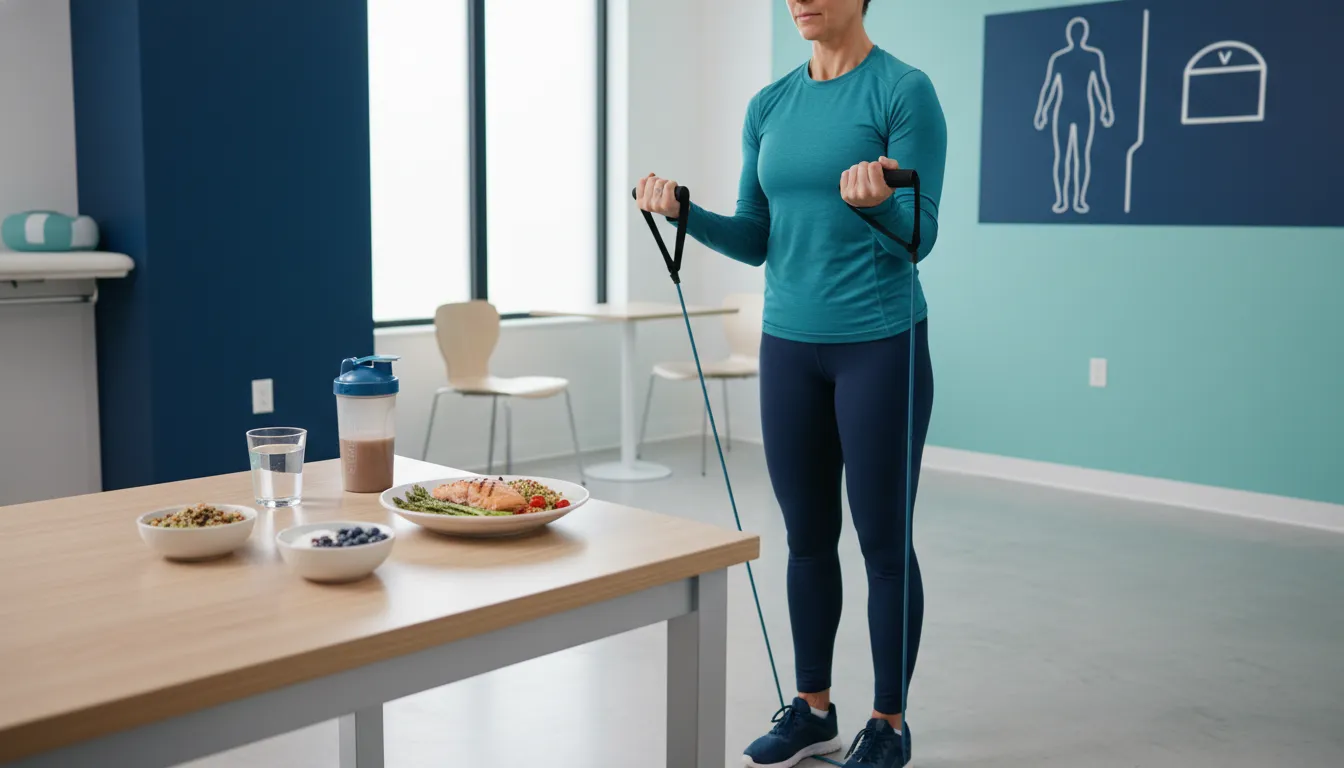
When a medical weight loss plan is working, it can be tempting to judge progress by one number: the scale. Yet the quality of that change matters too. Preserving muscle during GLP-1 weight loss can support strength, mobility, energy, and the activities that make daily life feel easier. That is why a well-designed plan looks beyond pounds lost and considers body composition, nutrition, movement, recovery, and ongoing medical follow-up.
Schedule a medical weight loss consultation with VidaVital Medical to discuss a plan built around your health, strength, and goals.
GLP-1 therapy can reduce appetite and help some people follow a lower-calorie eating pattern. If food intake drops sharply, however, it may become harder to eat enough nutrient-dense food or stay active. Weight loss can then include both fat mass and lean mass. This does not mean muscle loss is inevitable. It means your care plan should be individualized, monitored, and adjusted as your needs change.
The following guide explains practical questions to discuss with your healthcare provider. It is educational and does not replace medical advice, a personalized nutrition plan, or an exercise clearance.
Why preserving muscle during GLP-1 weight loss matters
VidaVital Medical treats muscle preservation as an important part of health-focused medical weight loss because muscle supports mobility, energy, balance, and daily independence. Muscle tissue also plays a role in how your body uses energy and glucose, so progress should be evaluated beyond pounds lost.
Body composition tells a fuller story
Scale weight combines many things, including fat, muscle, water, bone, and the contents of the digestive system. A lower number cannot tell you which tissues changed. Two people can lose the same amount of weight while experiencing very different changes in strength, energy, and body composition.
A useful goal is not simply to lose weight as quickly as possible. It is to improve health while supporting lean tissue and everyday function. Your clinician may consider changes in measurements, strength, energy, laboratory results, symptoms, and body composition when appropriate.
Strength supports long-term function
If you feel strong enough to move comfortably, exercise, and complete daily tasks, it may be easier to maintain healthy routines. On the other hand, noticeable weakness or fatigue can make activity more difficult. That is one reason to tell your care team about meaningful changes in strength, stamina, or food tolerance rather than waiting for the next scheduled visit.
Why can lean mass change during GLP-1 therapy?
VidaVital Medical encourages patients to discuss lean mass because any meaningful weight loss can include some lean tissue, whether or not medication is involved. Reduced appetite, earlier fullness, digestive symptoms, and lower activity may all affect how much nourishment and muscle stimulus a person receives.
A larger calorie deficit can affect more than fat
Your body needs energy and nutrients to maintain tissue. When intake falls substantially, the body may draw on stored energy while adapting to the change. Without adequate nutrition and a reason to keep muscle, such as regular resistance activity, some lean tissue may be lost along with fat.
Faster is not automatically better. A pace that looks exciting on the scale may not match your energy, nutrition tolerance, or health needs. Your provider can review your progress and decide whether the current approach remains appropriate. Related factors may include the connection between hormones, metabolism, and cellular health.
Lower appetite can make meal quality more important
When portions become smaller, each meal has less room for foods that support your goals. Skipping meals or filling up on foods with little nutritional value can make it difficult to meet your needs. A practical plan prioritizes foods that provide protein, fiber, vitamins, minerals, and hydration in forms you tolerate.
Inactivity reduces the signal to maintain muscle
Muscle responds to use. If fatigue, nausea, discomfort, or a busy schedule causes activity to fall, the body receives less stimulus to maintain strength. This is not a reason to push through concerning symptoms. It is a reason to discuss them with your clinician and find a safe, realistic movement plan.
Build a nutrition plan that supports lean tissue
VidaVital Medical uses an individualized approach because there is no single meal plan that fits everyone using GLP-1 therapy. Appropriate intake depends on health history, body size, activity, treatment plan, food preferences, and tolerance, so a provider or qualified nutrition professional should guide significant changes.

Make protein-rich foods easier to choose
Protein supplies amino acids used throughout the body, including in muscle tissue. Consider discussing protein-rich options that fit your preferences and digestion. Examples may include eggs, fish, poultry, lean meats, Greek yogurt, cottage cheese, tofu, beans, lentils, or other foods recommended by your care team.
If you feel full quickly, planning the order and composition of a meal may help you prioritize nourishing foods. Your provider can also help if certain textures, portions, or meal timings are difficult. Do not add supplements or make major dietary changes without checking how they fit your medical needs.
Create a meal rhythm you can maintain
Long gaps between meals may make it harder for some people to eat enough nourishing food across the day. Others may tolerate smaller meals better than larger ones. The most useful pattern is one you can consistently follow without worsening symptoms.
Simple preparation can reduce friction. Keep easy options available, plan a few repeatable meals, and decide what you can tolerate on a busy day. If your usual foods suddenly become unappealing, tell your care team rather than allowing low intake to continue unnoticed.
Do not overlook hydration and recovery
Hydration supports normal function and can influence how you feel during activity. Your needs may change with exercise, weather, health conditions, or digestive symptoms. Ask your clinician what is appropriate for you, especially if you have been given fluid restrictions or experience persistent vomiting or diarrhea. For broader education, review how hydration and fatigue can affect wellness.
Sleep and recovery matter too. A plan that combines inadequate food, poor sleep, and excessive exercise can be difficult to sustain. Rest is part of the strategy, not evidence that you are failing.
How can movement help protect muscle?
VidaVital Medical includes movement in the conversation because using your muscles signals that strength and function are still needed. Resistance exercise challenges muscles directly, while aerobic activity and everyday movement support stamina and mobility. Ask your healthcare provider about readiness and limitations before changing an exercise program.

- Start with your current ability. A useful plan meets you where you are. For one person, that may mean supervised strength training. For another, it may begin with chair-based movements, resistance bands, or short walks.
- Use resistance consistently. Strength-focused activity can include weights, machines, bands, or body-weight movements. Technique and gradual progression matter more than trying to do the hardest workout immediately.
- Keep everyday movement in the plan. Walking, taking stairs when appropriate, gardening, and completing daily tasks can help reduce long periods of inactivity.
- Allow time to recover. Muscles need recovery between challenging sessions. Adequate sleep, nutrition, and rest help you return to activity safely.
- Report concerning symptoms. Stop and contact your clinician if you experience chest pain, fainting, unusual shortness of breath, severe weakness, or another concerning symptom. Seek urgent care when appropriate.
Progress should feel purposeful, not punishing
An effective exercise plan does not need to leave you exhausted. It should provide enough challenge to support adaptation while respecting your health and recovery. Track what you can do, how it feels, and whether daily tasks become easier. These signals can be more helpful than soreness or calories burned. You can also explore VidaVital Medical’s educational perspective on muscle, metabolism, and longevity.
Track progress beyond the number on the scale
VidaVital Medical looks beyond regular weigh-ins because they are only one source of feedback. A broader view helps your care team understand whether the plan supports your health, nutrition, and function. Read more about a beyond-the-scale approach to sustainable weight loss.
| What to monitor | Why it can be useful | What to discuss with your provider |
|---|---|---|
| Strength and daily function | Shows how you are managing stairs, lifting, walking, and routine tasks | New weakness, reduced stamina, or difficulty with usual activities |
| Food and fluid tolerance | Helps identify whether reduced appetite or symptoms are limiting nutrition | Persistent nausea, vomiting, very low intake, or hydration concerns |
| Energy and recovery | Provides context for activity and overall well-being | Ongoing fatigue, dizziness, poor sleep, or slow recovery |
| Measurements or body composition | May add context that scale weight cannot provide | Which tools are appropriate and how often they should be used |
| Treatment response | Helps the clinician evaluate the overall plan | Questions about medication, symptoms, goals, or progress |
Look for trends instead of single-day changes
Hydration, digestion, sleep, and many other factors can affect weight and how you feel on a given day. Trends over time are usually more informative. Bring notes about food tolerance, activity, strength, and symptoms to follow-up appointments so the conversation is specific and useful.
Body-composition tools can provide estimates, but no single measurement is perfect. Use them as one piece of information interpreted by a qualified professional, not as a grade on your effort.
Why provider follow-up belongs in your plan
VidaVital Medical views medical weight management as more than a prescription followed by occasional weigh-ins. Regular follow-up creates opportunities to review changing appetite, weight, activity, symptoms, health markers, and whether the current plan still supports your needs.
Your plan should adapt to your response
A provider can help connect the pieces: your goals, treatment response, nutrition, movement, health history, and daily experience. If eating has become difficult, exercise feels unsafe, or progress differs from what you expected, the answer may be to adjust the broader plan. Never change the dose or schedule of a prescribed medication on your own.
At VidaVital Medical, a consultation-oriented approach allows patients to discuss individualized goals and questions about medical weight loss support. Your conversation may include the quality of weight change, not only the amount.
Know when to contact the care team
Do not wait for a routine appointment if you have persistent trouble eating or drinking, unusual weakness, dizziness, repeated vomiting, severe digestive symptoms, or another concern. Contact your healthcare provider for guidance. Seek emergency care for urgent or severe symptoms.
Follow-up is also the right time to ask ordinary questions. If you are unsure how to structure meals, begin resistance activity, or interpret changing measurements, bring those questions forward. An individualized plan works best when your care team knows what you are experiencing.
A sustainable muscle-support plan
VidaVital Medical focuses on habits patients can repeat. Instead of trying to perfect every part of your routine at once, focus on a few actions that support health and are realistic within your life.
- Define success with your provider using health, function, and body-composition goals, not only a target scale weight.
- Choose nourishing meals and protein-rich foods that fit your individualized nutrition guidance and tolerance.
- Include resistance activity and everyday movement at a level your clinician considers safe.
- Protect time for sleep and recovery rather than treating rest as optional.
- Monitor strength, energy, food tolerance, hydration, and symptoms alongside weight trends.
- Attend follow-up visits and share concerns early so the plan can evolve with you.
Consistency is more valuable than extremes
Very restrictive eating or aggressive exercise may seem like a shortcut, but extremes can be hard to sustain and may not support your broader health. Small, repeatable choices give you and your care team better information about what works.
If you are considering treatment, start by learning how the program approaches nutrition, movement, monitoring, and follow-up. Visit VidaVital Medical to learn more about its personalized restorative healthcare approach, then discuss whether it fits your needs.
Frequently asked questions
Does GLP-1 weight loss always cause muscle loss?
No. Weight loss can include changes in both fat and lean mass, but each person’s response is different. Nutrition, resistance exercise, activity, rate of loss, health history, and provider follow-up can all influence an individualized plan.
What foods can support muscle during medical weight loss?
Protein-rich foods can help support lean tissue, but the right choices and portions depend on your needs and tolerance. A clinician or qualified nutrition professional can help you build a practical eating pattern rather than relying on a one-size-fits-all target.
Is strength training safe while using GLP-1 therapy?
Resistance exercise can be an important part of a muscle-support plan. Ask your healthcare provider about exercise readiness and safe progression, especially if you are new to training, have a health condition, or notice weakness or dizziness.
How can I tell whether I am losing muscle?
Scale weight alone cannot show what type of tissue is changing. Your care team may review strength, daily function, energy, measurements, nutrition tolerance, and body-composition data when appropriate.
When should I contact my provider?
Contact your care team if you have persistent trouble eating or drinking, unusual weakness, dizziness, concerning symptoms, or questions about treatment. Do not change a prescribed plan without speaking with your clinician.
Build a stronger medical weight loss plan
Preserving muscle during GLP-1 weight loss begins with an individualized plan that considers more than the scale. VidaVital Medical can help you discuss nutrition, movement, body-composition goals, and appropriate follow-up as part of medically supervised weight management.
Schedule a weight loss consultation with VidaVital Medical to explore a plan designed around your health, goals, and daily life.