
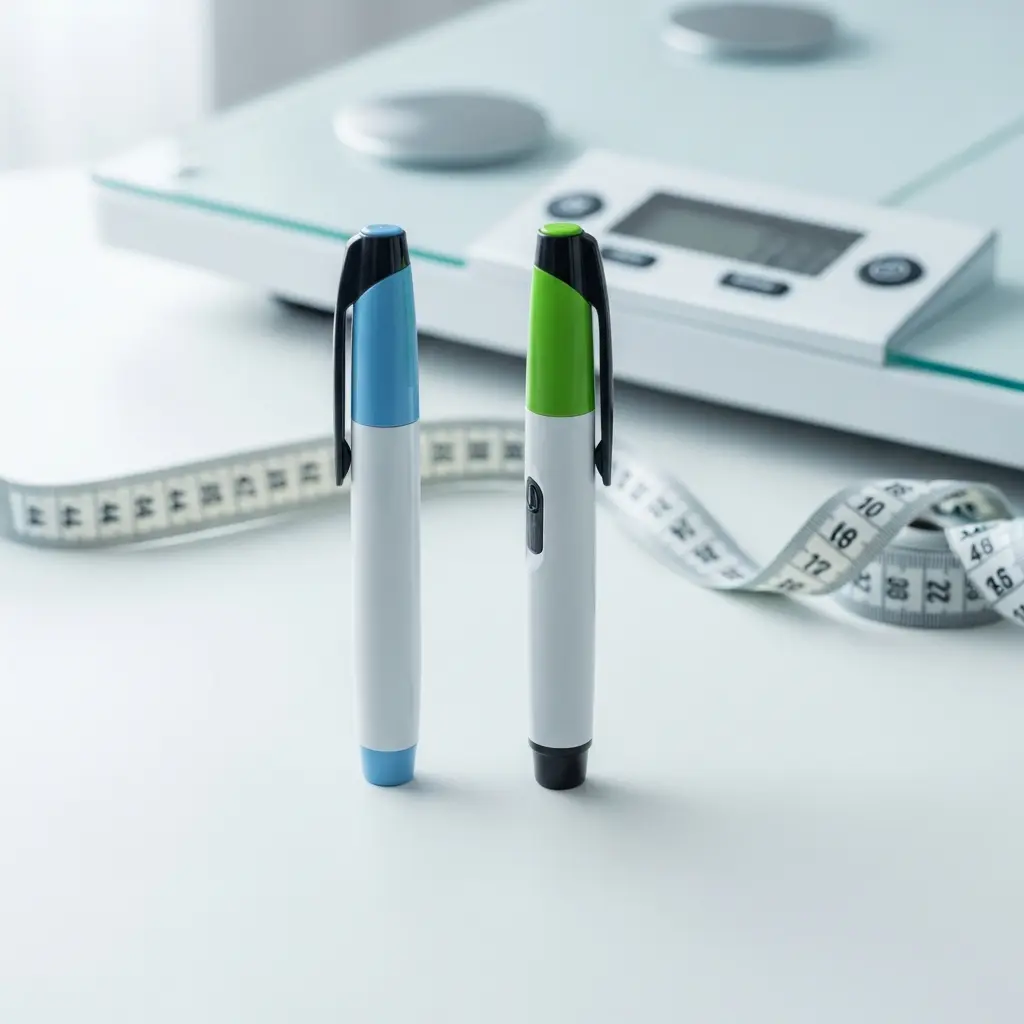
If you are comparing tirzepatide and semaglutide for weight loss, the short answer is that both medications are effective, FDA-approved GLP-1 treatments, but they work differently and produce different results. Tirzepatide (brand names Mounjaro and Zepbound) is a dual GIP/GLP-1 receptor agonist that targets two gut hormones simultaneously. Semaglutide (brand names Ozempic and Wegovy) targets only one: GLP-1. In the landmark SURMOUNT-5 head-to-head clinical trial published in The New England Journal of Medicine, tirzepatide delivered 20.2% average body weight reduction compared to 13.7% with semaglutide over 72 weeks. However, the best medication for you depends on your health history, weight loss goals, budget, and how your body responds to treatment. A medically supervised weight loss program ensures you get the right fit from day one.
Key Takeaways: Tirzepatide vs. Semaglutide for Weight Loss
- Tirzepatide is a dual GIP/GLP-1 receptor agonist; semaglutide targets GLP-1 only
- In the SURMOUNT-5 trial, tirzepatide produced 20.2% weight loss vs. 13.7% for semaglutide over 72 weeks
- Both medications share similar gastrointestinal side effects that are mostly mild and temporary
- Semaglutide has a longer safety record and proven cardiovascular benefits (SELECT trial)
- Cost is similar at $900-$1,350/month without insurance; manufacturer savings programs are available
- The right choice depends on your health profile, goals, and medical provider’s recommendation
- A medically supervised weight loss program maximizes safety and results with either medication
What Are Tirzepatide and Semaglutide?
Both tirzepatide and semaglutide belong to a class of medications known as incretin mimetics. They are injectable prescription drugs administered once weekly via a subcutaneous injection, and both were originally developed for type 2 diabetes management before gaining FDA approval for chronic weight management. For a broader overview of how this medication class supports weight loss, see our GLP-1 weight loss guide.
Tirzepatide is manufactured by Eli Lilly and sold under the brand name Mounjaro (for type 2 diabetes) and Zepbound (for weight loss). It was the first medication approved that targets both the GIP (glucose-dependent insulinotropic polypeptide) and GLP-1 (glucagon-like peptide-1) receptors simultaneously.
Semaglutide is manufactured by Novo Nordisk and sold under the brand name Ozempic (for type 2 diabetes) and Wegovy (for weight loss). It targets the GLP-1 receptor only and has been on the market longer, giving it a more established safety track record.
Both medications require a prescription and should be used under medical supervision as part of a comprehensive weight management plan that includes dietary changes and physical activity.
How Each Medication Works: Mechanism of Action
Understanding how these medications work inside your body can help you make a more informed decision with your healthcare provider.
Semaglutide: Single-Receptor GLP-1 Agonist
Semaglutide mimics the natural GLP-1 hormone your gut releases after eating. When it binds to GLP-1 receptors, it triggers several effects that support weight loss:
- Appetite suppression. It acts on appetite centers in the brain (the hypothalamus) to reduce hunger and increase feelings of fullness.
- Slower gastric emptying. Food moves through your stomach more slowly, which means you feel satisfied longer after meals.
- Improved blood sugar regulation. It stimulates insulin release and suppresses glucagon in a glucose-dependent manner, helping stabilize blood sugar levels.
These combined effects make it significantly easier to reduce caloric intake without the constant feeling of deprivation that undermines most diet plans.
Tirzepatide: Dual GIP/GLP-1 Receptor Agonist
Tirzepatide does everything semaglutide does through the GLP-1 pathway, but it adds a second mechanism by also activating GIP receptors. This dual action produces a more comprehensive metabolic effect:
- Enhanced appetite reduction. By targeting both GIP and GLP-1 pathways, tirzepatide creates a stronger satiety signal than GLP-1 activation alone.
- Improved insulin sensitivity. GIP receptor activation enhances the body’s insulin response beyond what GLP-1 alone achieves, which supports better metabolic function.
- Greater fat metabolism. Early research suggests the dual-receptor approach may influence how the body stores and burns fat, contributing to the higher weight loss percentages seen in clinical trials.
- Slower gastric emptying. Like semaglutide, tirzepatide slows digestion to prolong the feeling of fullness after meals.
Think of it this way: semaglutide turns one key to unlock weight loss, while tirzepatide turns two. That second key, the GIP receptor, appears to amplify the metabolic benefits and is the primary reason tirzepatide produces greater average weight loss in clinical studies.
Clinical Efficacy: What the Research Shows
The most meaningful way to compare these medications is through clinical trial data, particularly head-to-head studies where both drugs are tested in the same population under the same conditions.
The SURMOUNT-5 Trial: Head-to-Head Comparison
The SURMOUNT-5 trial, published in The New England Journal of Medicine in May 2025, was the first large-scale, randomized, Phase 3b trial directly comparing tirzepatide and semaglutide for weight loss in adults with obesity (without type 2 diabetes). Here are the key findings from 751 participants over 72 weeks:
| Outcome | Tirzepatide | Semaglutide |
|---|---|---|
| Average weight loss (%) | 20.2% | 13.7% |
| Average weight loss (lbs) | 50.3 lbs (22.8 kg) | 33.1 lbs (15.0 kg) |
| Achieved 15%+ weight loss | 64.6% | 40.1% |
| Waist circumference reduction | 7.2 inches (18.4 cm) | 5.1 inches (13.0 cm) |
Tirzepatide met the primary endpoint and all five key secondary endpoints, demonstrating statistical superiority over semaglutide across every measure. Tirzepatide delivered 47% greater relative weight loss.
Broader Trial Data
Beyond the head-to-head comparison, each medication has its own extensive trial program:
- SURMOUNT-1 (Tirzepatide): Participants on the 15 mg dose lost an average of 22.5% of body weight over 72 weeks.
- STEP trials (Semaglutide): Participants on semaglutide 2.4 mg (Wegovy) lost an average of approximately 15% of body weight.
- SURPASS-2 (Head-to-head in type 2 diabetes): Tirzepatide 15 mg produced roughly double the weight loss of semaglutide 1 mg over 40 weeks in patients with type 2 diabetes.
Both medications produce clinically meaningful weight loss that far exceeds what is achievable through lifestyle changes alone. However, the data consistently favors tirzepatide for greater absolute and percentage weight reduction.
Ready to explore your weight loss options? Schedule a consultation with VidaVital Medical today.
Side Effect Profiles: What to Expect
Both tirzepatide and semaglutide share similar side effect profiles because they both act on the GLP-1 pathway. Most side effects are gastrointestinal and occur primarily during the dose escalation period (the first several weeks as your dose gradually increases).
Common Side Effects (Both Medications)
| Side Effect | Tirzepatide | Semaglutide |
|---|---|---|
| Nausea | Common (most frequent) | Common (most frequent) |
| Diarrhea | Common | Common |
| Vomiting | Common | Common |
| Constipation | Common | Common |
| Abdominal pain | Common | Common |
| Decreased appetite | Common | Common |
| Fatigue/headache | Less common | Less common |
| Injection site reactions | Mild, infrequent | Mild, infrequent |
In the SURMOUNT-5 trial, gastrointestinal side effects were the most frequently reported adverse events in both groups. Most were mild to moderate in severity and occurred primarily during dose escalation. The overall safety profiles were comparable between the two medications.
Serious but Rare Side Effects
Both medications carry warnings for:
- Pancreatitis. Severe abdominal pain radiating to the back requires immediate medical attention.
- Gallbladder problems. Rapid weight loss from any cause can increase the risk of gallstones.
- Kidney injury. Usually related to dehydration from nausea, vomiting, or diarrhea.
- Thyroid C-cell tumors. A boxed warning based on animal studies; the relevance to humans is under ongoing investigation. Both are contraindicated in patients with a personal or family history of medullary thyroid carcinoma (MTC) or Multiple Endocrine Neoplasia syndrome type 2 (MEN 2).
Managing Side Effects
The key to minimizing side effects is gradual dose escalation under medical supervision. Starting at a low dose and increasing slowly allows your body to adjust. Other evidence-based strategies include:
- Eating smaller, more frequent meals
- Avoiding high-fat or greasy foods during the adjustment period (learn more about GLP-1 injection safety and side effects)
- Staying well hydrated
- Timing injections consistently each week
A medically managed program ensures your provider monitors your response at every dose increase and adjusts your treatment plan to keep side effects manageable while maximizing results.
Cost Comparison: What You Will Pay
Cost is a significant factor for most patients. Both medications are expensive at retail prices, but actual out-of-pocket costs vary widely depending on your insurance coverage, eligibility for manufacturer savings programs, and whether compounded versions are available.
Approximate Monthly Costs (2026)
| Cost Factor | Tirzepatide (Zepbound/Mounjaro) | Semaglutide (Wegovy/Ozempic) |
|---|---|---|
| Retail price (without insurance) | ~$1,000-$1,200/month | ~$900-$1,350/month |
| With commercial insurance | $25-$500/month (varies widely) | $25-$500/month (varies widely) |
| Manufacturer savings programs | Available for eligible patients | Available for eligible patients |
Both Eli Lilly and Novo Nordisk offer manufacturer savings cards and patient assistance programs that can significantly reduce costs for eligible patients. Insurance coverage for weight loss medications has expanded in recent years but remains inconsistent across plans.
The bottom line: Do not choose a medication based solely on price. The right medication is the one that works best for your body and health profile, prescribed and monitored by a qualified medical provider. Many patients find that medically managed weight loss programs offer better value because they include comprehensive care, lab monitoring, and ongoing provider access rather than just a prescription.
Who Is a Good Candidate for Each Medication?
Both medications are FDA-approved for chronic weight management in adults with a BMI of 30 or greater (obesity) or a BMI of 27 or greater (overweight) with at least one weight-related health condition such as high blood pressure, type 2 diabetes, or high cholesterol.
Tirzepatide May Be a Better Fit If You:
- Need to lose a larger amount of weight (BMI 35+). Learn more in our tirzepatide weight loss guide.
- Have not achieved sufficient results with GLP-1-only medications
- Have insulin resistance or metabolic syndrome alongside obesity
- Are looking for the maximum clinically demonstrated weight loss
- Want a medication that addresses both GIP and GLP-1 pathways
Semaglutide May Be a Better Fit If You:
- Have cardiovascular risk factors (semaglutide has proven 20% MACE reduction in the SELECT trial)
- Prefer a medication with a longer established safety record
- Are looking for a well-studied first-line GLP-1 option
- Have responded well to GLP-1 medications previously
Neither Medication Is Appropriate If You:
- Have a personal or family history of medullary thyroid carcinoma (MTC) or MEN 2
- Have a history of severe pancreatitis
- Are pregnant, planning to become pregnant, or breastfeeding
- Have severe gastrointestinal disease
The only way to determine which medication is right for you is through a thorough medical evaluation that includes lab work, a review of your health history, and an honest conversation with a qualified provider about your goals.
Take the first step. Request your appointment with VidaVital Medical.
Why Medical Supervision Matters
GLP-1 medications are powerful tools, but they are not over-the-counter solutions. Patients who achieve the best long-term outcomes are those who use these medications as part of a comprehensive, medically supervised weight loss program rather than obtaining a prescription in isolation.
Medical supervision provides:
- Baseline lab work and health screening to identify the safest and most effective medication for your body
- Gradual dose titration managed by a provider who monitors your response at each step
- Ongoing metabolic tracking including bloodwork to ensure your body is responding safely
- Nutritional guidance and lifestyle coaching to build sustainable habits that maintain results after treatment
- Side effect management with a provider who can adjust your plan in real time
- Accountability and support throughout your weight loss journey
At VidaVital Medical, our medically managed weight loss programs combine advanced clinical tools, including GLP-1 agonist therapies, with personalized nutrition plans, ongoing coaching, and comprehensive lab monitoring. Every treatment plan is built around your unique biology and health goals, whether you are seen in-person at our Florida clinics or through our nationwide telehealth platform.
Our providers specialize in metabolic health and can help you determine whether tirzepatide, semaglutide, or another approach is the right fit based on your lab results, health history, and personal objectives.
Frequently Asked Questions
Is tirzepatide better than semaglutide for weight loss?
In clinical trials, tirzepatide has consistently produced greater average weight loss than semaglutide. The SURMOUNT-5 trial showed 20.2% body weight reduction with tirzepatide compared to 13.7% with semaglutide over 72 weeks. However, “better” depends on your individual health profile. Semaglutide has a longer safety track record and demonstrated cardiovascular benefits. The best choice is the one your healthcare provider recommends after evaluating your specific needs.
How much weight can I lose on tirzepatide vs. semaglutide?
In the SURMOUNT-5 head-to-head trial, participants on tirzepatide lost an average of 50.3 pounds (22.8 kg), while those on semaglutide lost an average of 33.1 pounds (15.0 kg) over 72 weeks. Individual results vary based on starting weight, dosage, adherence, diet, and physical activity.
What are the side effects of tirzepatide vs. semaglutide?
Both medications share similar gastrointestinal side effects including nausea, diarrhea, vomiting, and constipation. These are most common during the initial dose escalation period and typically improve over time. The SURMOUNT-5 trial found comparable safety profiles between both treatments, with most adverse events being mild to moderate.
Can I switch from semaglutide to tirzepatide?
Yes, switching between GLP-1 medications is possible and sometimes recommended if you are not achieving adequate results or are experiencing intolerable side effects. However, any medication change should be done under medical supervision with appropriate dose adjustments and monitoring.
How much do tirzepatide and semaglutide cost?
Without insurance, both medications typically cost between $900 and $1,350 per month at retail. With insurance or manufacturer savings programs, costs can drop significantly. A medically managed program often provides better overall value by including comprehensive care alongside the prescription.
Do I need a prescription for these medications?
Yes. Both tirzepatide and semaglutide are prescription-only medications. They require a medical evaluation, and in most cases, lab work before a provider can determine if they are safe and appropriate for you.
This article is for educational purposes only and does not constitute medical advice. Always consult a qualified healthcare provider before starting any new medication or weight loss program. Results vary by individual.