
Do you ever feel like you’re doing everything “right”: eating relatively well, trying to stay active, and getting to bed at a decent hour: yet you still wake up feeling exhausted? Perhaps you’ve noticed that your midsection is holding onto weight more stubbornly than it used to, or your focus isn't as sharp during afternoon meetings.
For many adults over 30, these symptoms are often dismissed as "just getting older." We tell ourselves that fatigue, brain fog, and a slowing metabolism are inevitable parts of the aging process. However, at VidaVital Medical, we look deeper. Often, these seemingly unrelated symptoms are connected by a single, hidden thread: chronic inflammation.
In this article, Christopher Patino, APRN, breaks down how low-grade inflammation acts as a silent disruptor to your internal systems, and more importantly, what you can do to regain control of your health.
Watch the Expert Breakdown
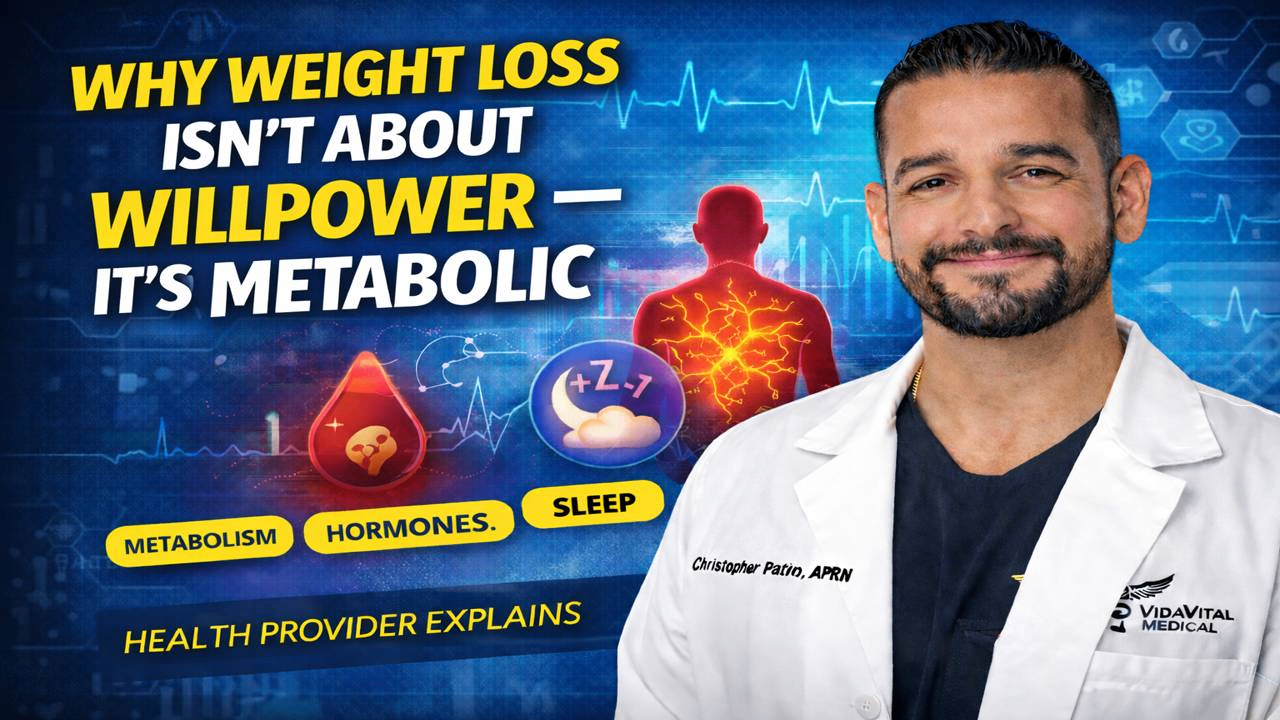
Before we dive into the details, watch this provider-led video where Christopher Patino, APRN, explains the complex relationship between inflammation, your hormones, and your daily energy levels.
🎥 Watch the full video here: https://youtu.be/XZVBghOabU4
Understanding the "Hidden" Role of Chronic Inflammation
Inflammation is not inherently "bad." In its acute form, it is your body’s frontline defense. When you scrape your knee or catch a cold, your immune system rushes to the scene, causing temporary swelling and heat to facilitate healing. This is healthy and necessary.
The problem arises when the "fire" of inflammation never fully goes out. Chronic inflammation is a low-grade, systemic state where your body remains on high alert indefinitely. Unlike a swollen joint, you can’t see or feel this type of inflammation directly. Instead, it manifests as a slow erosion of your metabolic and hormonal health.
Think of chronic inflammation as background noise that never stops; eventually, your body’s delicate chemical messages: your hormones: get drowned out or misinterpreted.

What Causes the "Slow Burn"?
Chronic inflammation is rarely the result of a single event. Especially for our patients in South Florida navigating high-stress careers and busy lifestyles, it is usually a combination of factors:
- Poor Sleep: Inadequate rest prevents the body from clearing out metabolic waste.
- Chronic Stress: High cortisol levels trigger inflammatory signaling.
- Processed Nutrition: Diets high in refined sugars and seed oils act as fuel for the inflammatory fire.
- Metabolic Dysfunction: Conditions like insulin resistance both cause and are worsened by inflammation.
- Environmental Exposures: Toxins and pollutants can keep the immune system in a state of constant irritation.
Because these factors often overlap, inflammation becomes part of a broader pattern rather than an isolated issue. It’s a cycle that can feel impossible to break without a personalized, systems-based approach.
How Inflammation Disrupts Your Hormones
Hormones are the body’s messengers. When inflammation levels are high, these messages are intercepted. Research shows that inflammatory cytokines (signaling proteins) can interfere with how hormones are produced and utilized.
1. The Impact on Testosterone
For men, chronic inflammation is a major contributor to low testosterone. Inflammation can inhibit the signaling between the brain and the testes, leading to reduced production. This often results in:
- Decreased muscle mass and strength.
- Lowered motivation and "drive."
- Changes in body composition (increased body fat).
- Reduced energy.
If you are considering Testosterone Replacement Therapy (TRT), it is crucial to address the underlying inflammation to ensure the treatment is as effective as possible.
2. Thyroid Function and the T4 to T3 Conversion
Your thyroid is the master controller of your metabolism. However, inflammation can prevent your body from converting the inactive thyroid hormone (T4) into the active form (T3) that your cells actually use. Studies indicate that elevated cytokines can correlate with up to a 40% reduction in thyroid function. This explains why some patients have "normal" lab results but still feel all the symptoms of an underactive thyroid, like weight gain and lethargy.
3. Insulin Resistance
Inflammation and insulin are closely linked. When your body is inflamed, your cells become less responsive to insulin. This forces your pancreas to pump out even more insulin to manage your blood sugar, which signals your body to store fat: particularly around the abdomen. This creates a vicious cycle: more fat leads to more inflammation, which leads to more insulin resistance.
Metabolism and the "Mitochondrial Drain"
Metabolism is the process of turning the food you eat into the energy you use. This happens inside your cells within structures called mitochondria.
When chronic inflammation is present, it acts like "sludge" in your cellular engine. It interferes with mitochondrial function, meaning your body produces less ATP (the universal energy currency of your cells).
Signs that inflammation is affecting your energy and metabolism include:
- Persistent Fatigue: Feeling tired even after a full night's sleep.
- Brain Fog: Difficulty concentrating or remembering tasks.
- Reduced Endurance: Feeling winded or exhausted faster than usual during exercise.
- Stubborn Weight: Difficulty losing weight despite consistent diet and exercise efforts.
If you've struggled with weight loss, it's important to realize that it isn't always a matter of willpower. It is often a biological hurdle. You can learn more about how we address this in our guide to medically managed weight loss.
The Vicious Cycle: Stress, Sleep, and Inflammation
Inflammation doesn't exist in a vacuum. It interacts with your lifestyle in a feedback loop that Christopher Patino often describes to patients as the "Stress-Sleep-Inflammation Triangle."
- Stress triggers the release of cortisol.
- Chronic Cortisol elevation increases inflammatory signaling.
- Inflammation disrupts the brain's ability to enter deep, restorative sleep.
- Poor Sleep prevents the body from regulating inflammation, leading back to higher stress.
Breaking this cycle requires more than just a prescription; it requires a holistic look at your daily habits and biological markers.

Taking a Systems-Based Approach to Wellness
At VidaVital Medical, we believe that treating a single symptom: like giving a stimulant for fatigue or a generic diet plan for weight gain: is often just a "Band-Aid" fix. To achieve long-term health, we must look at the body as an interconnected system.
A comprehensive evaluation should include:
- Hormone Optimization: Assessing Testosterone, Thyroid, and Growth Hormone levels.
- Metabolic Markers: Looking at insulin, glucose, and lipid profiles.
- Inflammatory Markers: Testing for specific indicators of systemic inflammation.
- Lifestyle Assessment: Reviewing sleep hygiene, stress management, and nutrition.
By identifying where the "leak" is in your energy and metabolism, we can create a personalized plan to help you feel like yourself again. Whether you are looking for a sexual wellness clinic or support for hormone therapy in Boca Raton, our goal is to treat the root cause, not just the symptom.
Practical Steps to Support Healthy Inflammation Levels
While medical intervention is often necessary for chronic cases, there are several steps you can take today to begin supporting your body:
- Prioritize Sleep: Aim for 7–9 hours of quality sleep to allow your glymphatic system to "clean" the brain and body.
- Move Daily: Regular, moderate physical activity helps "flush" inflammatory markers, but avoid overtraining, which can actually increase inflammation if recovery is ignored.
- Anti-Inflammatory Nutrition: Focus on whole foods, healthy fats (like Omega-3s), and plenty of colorful vegetables while reducing processed sugars.
- Manage Stress: Techniques like breathwork, meditation, or even a daily walk can significantly lower cortisol levels.
- Support Recovery: Consider professional guidance on peptide therapy or targeted supplementation to aid cellular repair.
Summary and Next Steps
Inflammation is a natural part of being human, but when it becomes a permanent resident in your body, it can hijack your hormones, stall your metabolism, and drain your energy.
Key Takeaways:
- Chronic inflammation is a silent disruptor of Testosterone and Thyroid function.
- It causes insulin resistance, making weight loss difficult.
- It drains cellular energy by affecting your mitochondria.
- A "whole-person" approach is the most effective way to address these issues.
You don't have to accept fatigue and brain fog as your new normal. By understanding the link between inflammation and your health, you are already one step closer to recovery.
Are you ready to investigate the root cause of your symptoms?
Visit us at VidaVital Medical to learn more about our personalized wellness programs, or watch our full provider explanation video to gain a deeper understanding of your body’s internal chemistry.
🎥 Watch the video again: https://youtu.be/XZVBghOabU4
About the Author
Christopher Patino, APRN is a provider at VidaVital Medical specializing in hormone optimization, metabolic health, and personalized, systems-based approaches to improving long-term wellness. He is dedicated to helping patients in South Florida and beyond achieve peak performance and vitality through evidence-based medical care.