
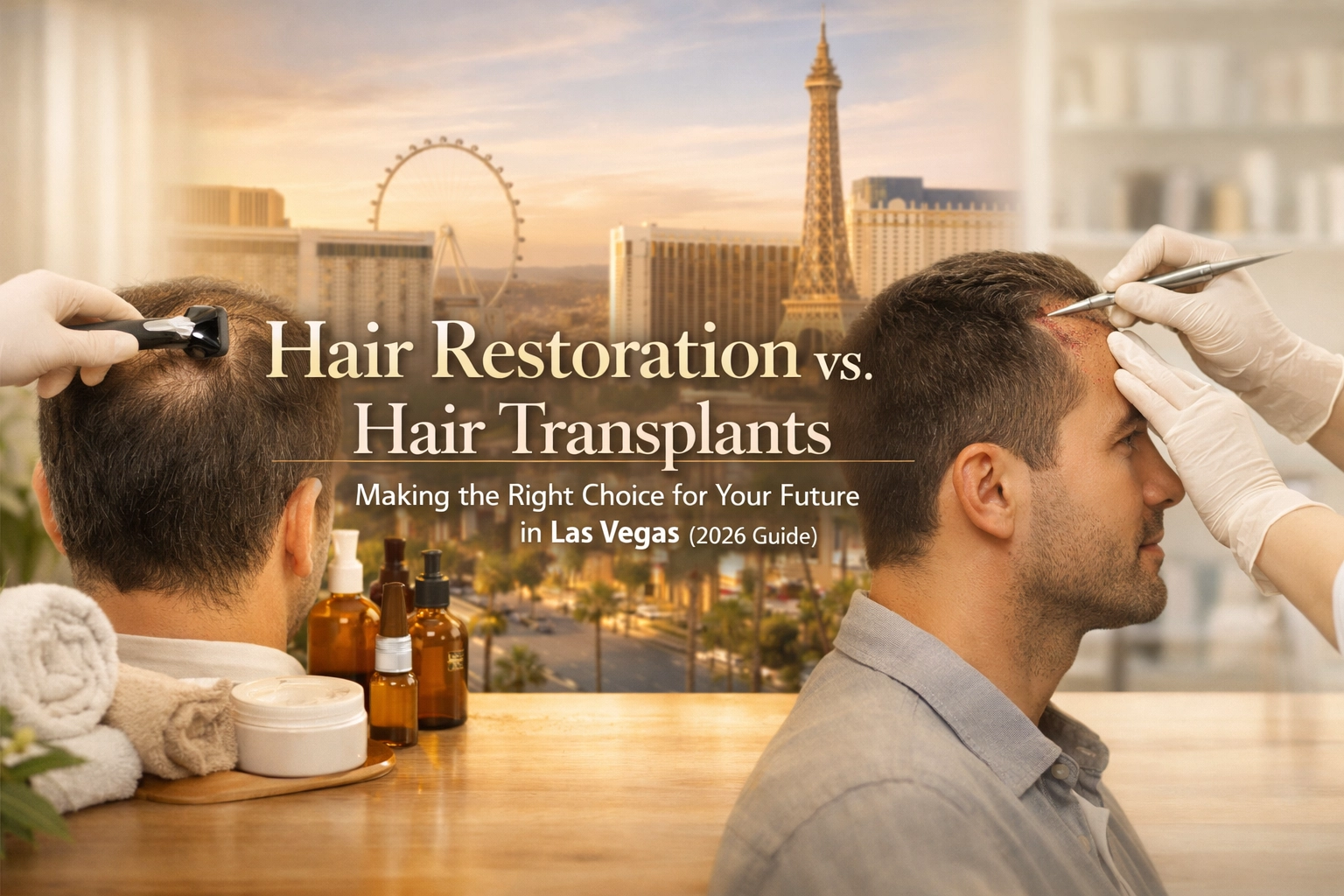
You've noticed it, maybe in the shower drain, or in photos where the light hits your scalp just right. Your hair isn't what it used to be. And if you're like most people staring down the reality of thinning hair, you've probably started Googling late at night, reading forums, and wondering if you're stuck choosing between doing nothing or going straight to a surgical hair transplant.
Here's the good news: you have more options than you think. And the earlier you address it, the better your results will be, whether you choose non-surgical restoration, a transplant down the line, or a combination approach.
Let's clear up the confusion between hair restoration and hair transplants, explore what actually works in 2026, and explain why a medical clinic like VidaVital Medical in Las Vegas offers something a standalone transplant center simply can't: a comprehensive, clinical approach that treats the reason behind your hair loss, not just the visible symptom.
What's the Real Difference Between Hair Restoration and Hair Transplants?
This is where most people get confused. The terms get used interchangeably online, but they're not the same thing.
Hair transplants are surgical procedures. A surgeon moves hair follicles from one part of your scalp (usually the back or sides) to areas where you're thinning or bald. The most common methods are FUT (Follicular Unit Transplantation, also called the "strip method") and FUE (Follicular Unit Extraction), where individual follicles are removed and relocated. Newer tech like NeoGraft automates FUE for more precision.
Transplants are permanent. Once those follicles take root, they grow like normal hair. But here's what most people don't realize: a transplant doesn't stop the underlying hair loss process. If you're losing hair due to hormonal imbalances, nutritional deficiencies, or other medical issues, you'll continue thinning in untransplanted areas unless you address the root cause.
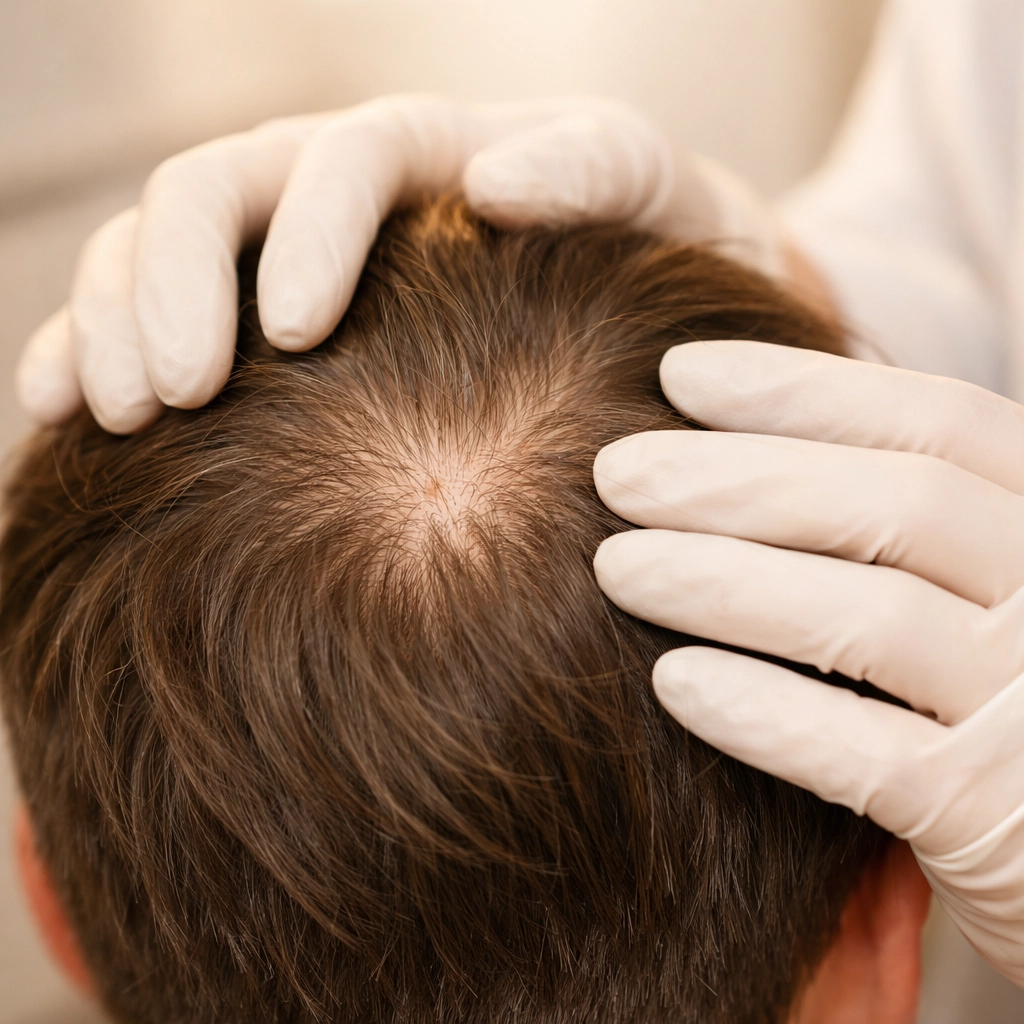
Hair restoration, on the other hand, refers to non-surgical, evidence-based medical treatments designed to slow, stop, or reverse hair loss by addressing the biological factors causing it. This includes:
- Prescription medications like finasteride and minoxidil
- Platelet-Rich Plasma (PRP) therapy to stimulate follicle regeneration
- Peptide therapy targeting hair growth signals at a cellular level
- Hormone optimization, especially for androgenic alopecia (pattern baldness)
- Nutritional and lifestyle interventions guided by lab work
Hair restoration is about preserving and regrowing what you still have, and often, that's more than you think.
Why Non-Surgical Hair Restoration Should Be Your First Stop
If you're seeing early signs of thinning, a widening part, a receding hairline, less density on top, you're in the perfect window for non-surgical intervention. And here's why starting here makes sense:
1. You May Not Need Surgery at All
Many people respond incredibly well to medical therapies, especially when started early. PRP injections can reactivate dormant follicles. Finasteride blocks the hormone (DHT) that shrinks hair follicles in androgenic alopecia. Peptides like GHK-Cu and thymosin beta-4 support tissue repair and follicle health.
Combine these with hormone optimization, because yes, hormones play a massive role in hair health: and you may see significant regrowth without ever going under the knife.
2. It's Less Invasive, Lower Risk, and More Affordable
Non-surgical treatments don't require anesthesia, sutures, or recovery time. You're not taking time off work or dealing with post-op complications. And while they do require ongoing commitment, they're generally more budget-friendly than a $10,000–$20,000 transplant.
3. It Treats the Cause, Not Just the Symptom
This is the big one. If your hair loss is hormonal (low testosterone, thyroid imbalance, elevated DHT), nutritional (iron deficiency, vitamin D issues), or related to chronic stress or inflammation, a transplant won't fix that. You'll spend thousands moving hair around while the underlying problem continues unchecked.
A medical clinic runs labs. They look at your thyroid function, hormone levels, nutrient status, and inflammatory markers. They create a treatment plan that doesn't just transplant follicles: it optimizes your biology so your hair has the best chance to thrive.

4. You Can Always Add a Transplant Later
Here's the strategic play: start with restoration, stabilize your hair loss, and then consider a transplant if you want additional density or coverage. Many patients find that after 6–12 months of medical treatment, they're happy with their results and don't need surgery. Others use restoration to prepare for a transplant, ensuring they get the best possible outcome.
When Does a Hair Transplant Make Sense?
Let's be clear: transplants absolutely have a place. They're best suited for:
- Advanced hair loss where large areas are already bald and non-surgical options won't provide enough coverage
- Stable hair loss patterns where the thinning has plateaued (this is why you want to address the underlying cause first)
- Patients who've already optimized their medical treatments and want additional density or a more defined hairline
- Those willing to commit to ongoing maintenance (like finasteride or PRP) to protect non-transplanted hair
The key is timing and expectations. A transplant works best when your hair loss is medically managed, not actively progressing. Otherwise, you risk a patchy, uneven look as surrounding hair continues to thin.
The VidaVital Medical Advantage in Las Vegas: A Concierge Clinical Approach
Here's where VidaVital Medical stands apart from a typical hair transplant center or cosmetic clinic.
We're a medical wellness practice. That means we don't just offer hair treatments: we look at your entire health profile. Hair loss is often a downstream effect of hormonal imbalances, metabolic dysfunction, or nutritional gaps. Our providers run comprehensive labs, assess your hormone levels (including testosterone, estrogen, thyroid, and DHEA), and create a personalized restoration protocol.
What a Typical Hair Restoration Plan at VidaVital Medical Looks Like:
-
Initial Consultation & Lab Work – We assess your medical history, examine your scalp, and order bloodwork to identify underlying causes (hormone imbalances, thyroid issues, nutrient deficiencies).
-
Customized Treatment Protocol – Based on your results, we may recommend PRP therapy, prescription medications (finasteride, minoxidil, or spironolactone for women), peptide therapy, and/or hormone optimization.
-
Ongoing Monitoring & Adjustments – Hair restoration isn't a one-and-done fix. We track your progress with follow-up labs and appointments, adjusting your protocol as needed.
-
Integration with Other Wellness Goals – Many of our patients are already working with us on testosterone replacement therapy, metabolic health, or peptide therapy. Hair restoration becomes part of a bigger optimization strategy.

Why This Matters in Las Vegas
Las Vegas is a city that values looking and feeling your best: whether you're in hospitality, entertainment, real estate, or running your own business. You don't have time for long recovery periods or trial-and-error approaches. You want results, backed by science, delivered by providers who understand the lifestyle demands of this city.
At VidaVital Medical, our concierge model means you're not rushed through 15-minute appointments. You get real access to your provider, thoughtful follow-up, and a treatment plan designed around your life.
How to Decide What's Right for You
Still unsure whether to start with restoration or go straight to a transplant? Here's a simple decision framework:
Consider Non-Surgical Hair Restoration First If:
- You're seeing early signs of thinning (not completely bald yet)
- You want to avoid surgery and downtime
- You're open to a medical approach that addresses root causes
- You're willing to commit to 6–12 months of treatment to see results
A Hair Transplant May Be a Better Fit If:
- You have significant bald patches with limited remaining follicles
- Your hair loss has been stable for at least a year
- You've already tried or are currently using medical treatments
- You're prepared for the upfront cost and recovery time
The Ideal Scenario?
Start with medical restoration to slow or stop your hair loss, then layer in a transplant later if you want more coverage. This gives you the best long-term result and protects your investment.
Your Next Steps
If you're in Las Vegas and you're tired of watching your hair thin while scrolling through conflicting advice online, it's time to bring in a medical team that actually understands the why behind your hair loss.
Here's what to do next:
- Schedule a consultation at VidaVital Medical to assess your hair loss and run comprehensive labs
- Ask about PRP therapy, peptide treatments, and hormone optimization as part of your personalized protocol
- Set realistic expectations: hair restoration takes time, but the results are worth it when done right
- Stay consistent: the biggest predictor of success is sticking with your treatment plan and following up regularly

You don't have to choose between doing nothing and going straight to surgery. There's a middle path: a medical, evidence-based approach that treats your hair loss as a health issue, not just a cosmetic one. And when you work with a clinic that sees the bigger picture, you're not just restoring hair. You're optimizing your health, confidence, and future.
Ready to take the first step? Reach out to VidaVital Medical and let's create a plan that's built for you: not a one-size-fits-all transplant brochure.
Your hair doesn't define you. But feeling like yourself again? That's worth investing in.