
How Long Does TRT Take to Work? A Practical Timeline
If you are considering testosterone replacement therapy, one of the first questions is simple: how long does TRT take to work? The honest answer is that TRT is not an overnight switch. Some men notice early changes in energy, mood, or motivation within the first few weeks, while changes in body composition, strength, and long-term health markers usually take several months.
Ready to understand whether low testosterone is part of your health picture? Explore VidaVital Medical’s low testosterone care for men and schedule a medically supervised evaluation.
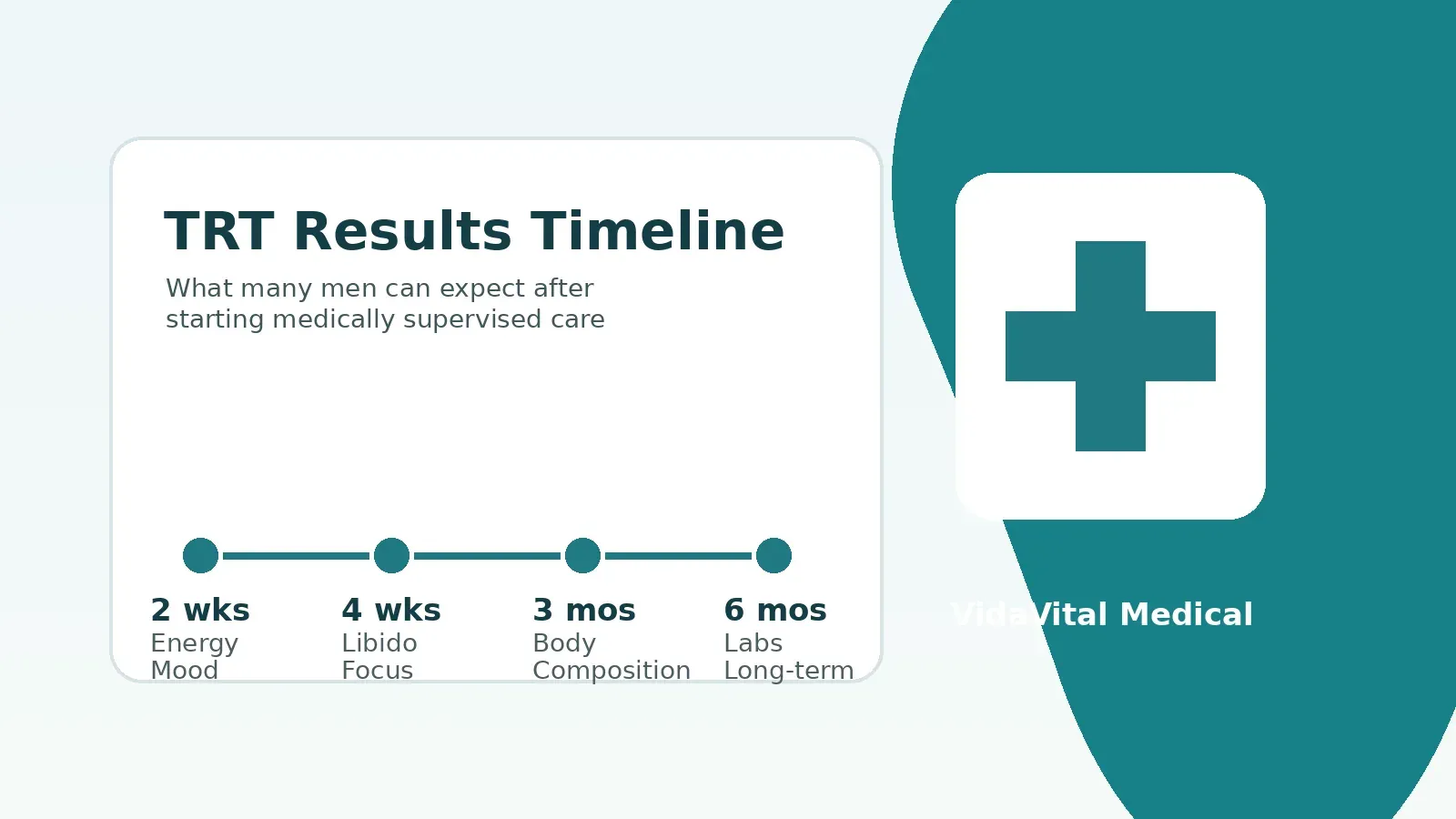
Testosterone replacement therapy works best when it is personalized, monitored, and paired with realistic expectations. Below is a patient-friendly timeline for what many men can expect at 2 weeks, 4 weeks, 3 months, and 6 months, plus the factors that may make results appear faster or slower.
Quick Answer: How Long Does TRT Take to Work?
Most men who are good candidates for TRT begin noticing some improvements within 2 to 6 weeks, especially in energy, mood, motivation, and libido. More measurable physical changes, such as improved muscle tone, reduced fat mass, or better workout recovery, often take 3 to 6 months. Lab values may change earlier, but symptoms do not always improve at the same speed as the numbers.
That is why TRT follow-up is so important. A provider should monitor testosterone levels, blood counts, symptoms, side effects, and treatment goals over time rather than judging success from the first injection, pellet, cream, or dose adjustment.
TRT Timeline: What to Expect at 2 Weeks
At the 2-week mark, changes are usually subtle. Some men describe a slight lift in energy, clearer thinking, improved motivation, or a better sense of well-being. Others do not feel much yet, and that can still be normal.
Early response depends on your starting testosterone level, how long symptoms have been present, sleep quality, stress, nutrition, and the type of therapy used. For example, some injectable protocols may create faster changes in blood testosterone levels, while pellet therapy is designed for steady release over a longer period.
During this early stage, the goal is not to chase dramatic results. The goal is to follow the plan consistently, track symptoms, and contact your medical team if you notice side effects such as acne, mood swings, swelling, worsening sleep apnea symptoms, or unusual irritability.
What Changes Around 4 Weeks?
By 4 weeks, many men who respond well to TRT begin to notice more consistent changes in day-to-day function. Energy may feel more stable. Workouts may feel less draining. Libido may start improving. Mood, drive, and focus may also feel better, especially when low testosterone was contributing to fatigue or low motivation.
Sexual symptoms can improve at different speeds. Desire often improves before erection quality. If erectile dysfunction is also related to circulation, diabetes, medication side effects, stress, or other health issues, TRT alone may not fully resolve it. A complete men’s health evaluation can help separate hormone-related symptoms from other treatable causes.
VidaVital Medical takes a comprehensive approach to hormone optimization, which may include lab testing, symptom review, lifestyle assessment, and related care when appropriate. Patients can also learn more about the broader hormone approach on the BHRT for men page.
What Happens by 3 Months on TRT?
Three months is an important checkpoint. By this point, many men have enough time on therapy to judge whether symptoms are moving in the right direction. Energy, mood, libido, and motivation may be noticeably better. Exercise performance and recovery may start improving, especially when TRT is combined with resistance training, adequate protein, consistent sleep, and reduced alcohol intake.
Body composition changes usually take longer than mental or sexual symptoms. Men may begin noticing better muscle fullness, reduced waist circumference, or easier fat loss around the 3-month point, but these changes are not automatic. TRT can support healthier body composition when low testosterone is part of the problem, but nutrition and training still matter.
If you are looking for a structured way to begin treatment, read VidaVital’s step-by-step guide to starting testosterone therapy online or request a consultation to review your options.
Your provider may also order follow-up labs around this stage, depending on your treatment plan. Common monitoring areas include total testosterone, free testosterone, estradiol when indicated, hematocrit, PSA when appropriate, metabolic markers, and symptom response. Do not adjust your dose on your own based only on how you feel in a single week.
What Results Are Typical by 6 Months?
By 6 months, TRT results are usually easier to evaluate. Men who respond well often report steadier energy, improved sexual desire, better mood, stronger workout recovery, and a greater sense of vitality. Body composition changes may be more visible, especially if the patient has been consistent with exercise and nutrition.
Some benefits continue beyond 6 months. Strength, lean mass, fat distribution, and bone density can keep improving over a longer timeline. The 6-month mark is also a good time to review whether the current treatment method, dose, and monitoring schedule are still the right fit.
TRT should not be treated as a one-size-fits-all plan. The best results come from matching treatment to the patient, then adjusting based on labs, symptoms, safety markers, and goals.
Which Symptoms Improve First and Which Improve Last?
TRT results often follow a pattern, though every patient is different.
- Often improves earlier: energy, mood, motivation, libido, mental clarity, and general sense of well-being.
- May take longer: erection quality, workout recovery, muscle gain, fat loss, and waist circumference.
- Usually takes longest: bone density, long-term metabolic changes, and sustained body composition improvements.
If low testosterone has been affecting your health for years, it may take time for the body to respond. It is also possible that symptoms such as fatigue or low libido have more than one cause. Sleep apnea, thyroid issues, depression, medication effects, insulin resistance, chronic stress, and nutrient deficiencies can all overlap with low testosterone symptoms.
Factors That Affect How Fast TRT Results Appear
Several variables influence how quickly TRT works.
Starting Testosterone Levels
Men with very low baseline testosterone and classic symptoms may feel changes sooner than men whose levels are borderline or whose symptoms are driven by multiple conditions.
Delivery Method
Injections, pellets, creams, and other forms can create different absorption patterns. What matters most is not just the delivery method, but whether the plan produces stable, appropriate levels with minimal side effects.
Age and Overall Health
Age, body fat, sleep quality, cardiovascular health, metabolic health, and medication use can all influence response. TRT is part of a broader health plan, not a replacement for one.
Lifestyle Consistency
Strength training, adequate protein, sleep, stress management, and limiting alcohol can help patients get more from treatment. Without these foundations, physical results may be slower.
When Should You Follow Up With Your Doctor?
Follow-up timing should be personalized, but many men should expect a check-in within the first several weeks to discuss symptoms and side effects, then lab monitoring around the 8 to 12 week range or as directed by the provider. Additional follow-ups may happen at 3 months, 6 months, and periodically after that.
You should contact your provider sooner if you develop concerning symptoms, feel emotionally unlike yourself, notice swelling, have worsening snoring or sleep apnea symptoms, experience chest pain, or have any new health changes. TRT should always be medically supervised.
Men who are still deciding whether symptoms could be related to testosterone can start with this guide to the signs of low testosterone in men. If weight gain is part of the concern, VidaVital also explains the relationship between low testosterone and weight gain.
How VidaVital Medical Helps Men Set Realistic TRT Expectations
VidaVital Medical focuses on personalized hormone optimization for men who want a clearer, medically guided path forward. With in-person clinics in South Florida and telehealth options where appropriate, the team supports patients through evaluation, lab review, treatment planning, and ongoing monitoring.
The goal is not to promise instant results. The goal is to identify whether low testosterone is truly contributing to your symptoms, build a safe treatment plan, and measure progress over time.
If you are ready to discuss your symptoms and goals, visit VidaVital Medical’s low testosterone service page to learn more about medically supervised TRT options.
The Bottom Line
So, how long does TRT take to work? Many men notice early improvements in energy, mood, or libido within 2 to 6 weeks. More visible changes in body composition, strength, and long-term health markers often take 3 to 6 months or longer. The safest way to judge progress is through a combination of symptoms, labs, provider follow-up, and healthy lifestyle habits.
If you suspect low testosterone is affecting your energy, sexual health, mood, or performance, a professional evaluation can help you understand what is happening and what options make sense for your body.